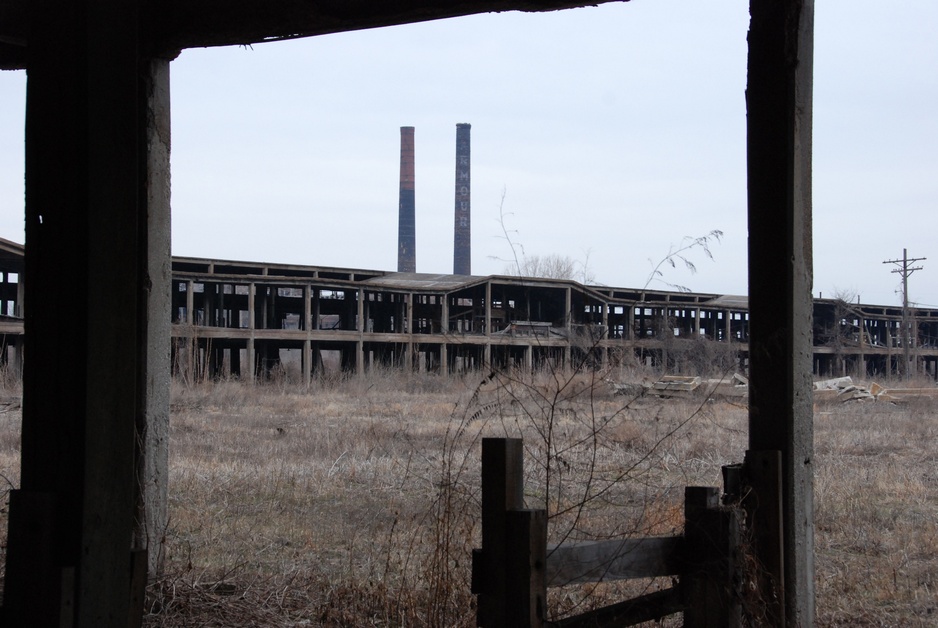
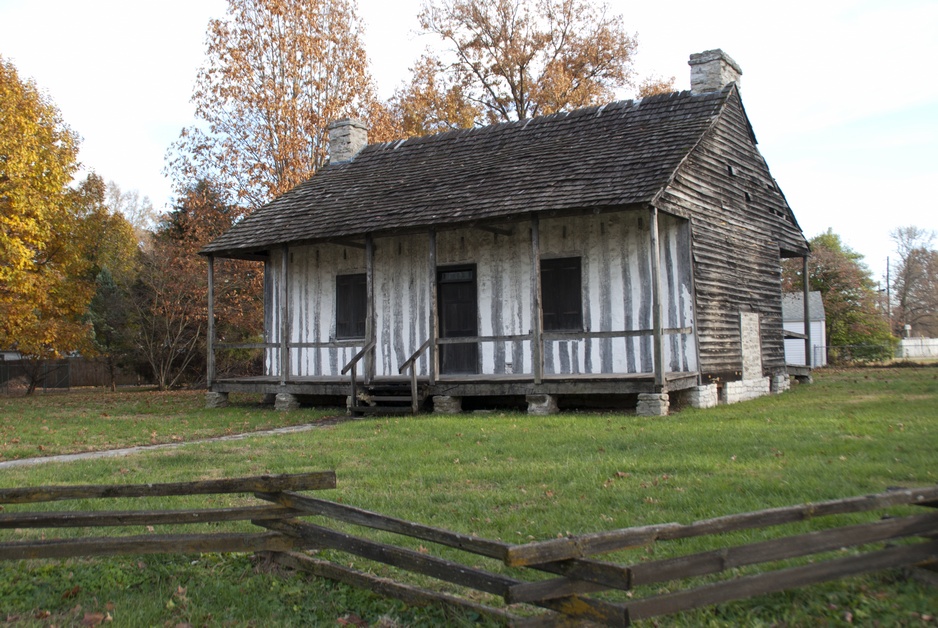
The area we call the American Bottom is a widening in the Mississippi River floodplain that runs some 70 miles in Illinois from Alton to the mouth of the Kaskaskia River just north of Chester. Just across the river from St. Louis, the area has a deep history. For thousands of years, Native Americans lived in and around the rich bottomland forests and wetlands. About a thousand years ago, one of the largest Native American cities sprung up practically overnight, the place we call Cahokia today. French colonists built communities at the southern end of the American Bottom, and Lewis and Clark based in the area before venturing west on the Missouri River. Before the Civil War, a small group of African Americans – some free, some who had recently escaped from enslavement – founded a little enclave called Freedom Village that later became Brooklyn (also known as Lovejoy). Brooklyn offered a sanctuary for generations of African Americans in an area defined by segregation and prejudice. By the twentieth century, companies eager to avoid the taxes and regulations of St. Louis bought land and founded municipalities they could dominate, then built large factories there: East St. Louis, Sauget, National City, East Alton. In the mid-1950s, organized crime got a foothold in and around Venice. As the American industrial economy declined, so did the communities in the American Bottom.
All that deep history, much of it long forgotten, caught the attention and lens of photographer Jennifer Colten. In this episode, I talk with her about her work photographing this area layered in sediment and history. After she describes her path to professional photography, we talk about the first project that pulled her into the American Bottom. We then talk about some of the history that is too easily overlooked, what catches her attention as she driving around, what remains of the original floodplain forest, how it feels to explore places many people are too afraid to visit, and some of the stories she’s telling with her photography. It was fascinating to learn about the American Bottom from the perspective of someone who has spent so much time documenting it in photographs.
Show Notes


Support the Show
If you are enjoying the podcast, please consider showing your support by making a one-time contribution or by supporting as a regular contributor through Patreon. Every dollar you contribute makes it possible for me to continue sharing stories about America’s Greatest River.
Don’t want to deal with Patreon? No worries. You can show some love by buying me a coffee (which I drink a lot of!). Just click on the link below.
Transcript
Sun, Aug 02, 2026 8:24PM • 58:44
SUMMARY KEYWORDS
American Bottom, Native American history, Cahokia Mounds, industrial history, urban decay, digital photography, environmental impact, community resilience, landscape documentation, cultural awareness, historical suppression, ecological changes, company towns, public space, photography ethics.
SPEAKERS
Dean Klinkenberg, Jennifer Colten
Jennifer Colten 00:00
It was it was it was a number of things, as you said, a really complicated history, and I mean, still unfolding for me now, 10 years later, you know. I’m learning new things and I’m having new ideas. But initially, yeah, it was the history. I mean, certainly the history of of Native American presence here that is all but you know unseen, and surprisingly, 10 years ago, I mean, a little bit more known now because of, I think, a little more cultural awareness and and a little more attention to Cahokia Mounds State Park. But even still, it is a region that has all of this History that is suppressed or unnoticed or intentionally disregarded, and that was super interesting to me that you know the why of that, the why and the how of that. So and that I knew I had lived in St. Louis for, you know, a long time, and I did not know any of this, and it was right there.
Dean Klinkenberg 01:29
Welcome to the Mississippi Valley Traveler podcast. I’m Dean Klinkenberg, and I’ve been exploring the deep history and rich culture of the people and places along America’s greatest river, the Mississippi, since 2007. Join me as I go deep into the characters and places along the river, and occasionally wander into other stories from the Midwest and other rivers. Read the episode show notes and get more information on the Mississippi at MississippiValleyTraveler.com. Let’s get going.
Dean Klinkenberg 01:55
Welcome to episode 81 of the Mississippi Valley Traveler podcast. Well, in this episode today, we’re going to dive deep into a very specific part of the Mississippi River Valley. An area that’s known as the American Bottom. It’s a stretch of 60 to 70 miles on the Illinois side of the river, directly across from St. Louis, basically running from Alton down to near Chester, Illinois. Today, it’s mostly farmland and some smaller towns, and and frankly, some towns that are struggling quite a bit, especially the ones closer to the river. But man, this area has a surprisingly big history, from the 1000s of years of Native American communities to the more modern era when it became a corridor of heavy industry when large factories went up. Basically, a whole string of single industry towns were founded, mostly to get away from taxes and regulation on the Missouri side of the river. So they founded places like East Alton, National City, East St. Louis, a whole bunch of places along the river that were basically founded by single companies.
Dean Klinkenberg 03:09
There’s also some organized crime history, particularly around Venice, Illinois. If you go to MississippiValleyTraveler.com/Venice, you can read more about that.
Dean Klinkenberg 03:20
And as I said today, it’s not-it’s an area a lot of people in St. Louis would probably not consider going to because there is so much urban decay and population loss. A lot of it looks kind of run down, especially where the communities are. But it’s just got this really fascinating history, and I’m not the only one who thinks so. Today’s guest is Jennifer Colten, who is a professional photographer, and she spent a lot of time over the American Bottom documenting the area as it looks today. So we, I had her on the podcast to talk about this, her impressions of this area. We begin by talking about her path to becoming a professional photographer, and we do a little geeking out about digital photography and our transition to that from film. And then we kind of talk about how she got interested in the American Bottom, the work that she has done documenting the landscape and history, some of the things that really got her attention. We talk about the contrast that’s really striking just across the river between the old mounds of Cahokia and a new mound that has sprung up that is basically a giant trash heap.
Dean Klinkenberg 03:20
So it’s a really fascinating, I think, and wide-ranging conversation. It’s absolute delight to learn about this area from the perspective of somebody who has spent so much time exploring it in detail, documenting it in photographs, but really just getting to know the area very deeply. So stick around for that.
Dean Klinkenberg 03:20
Thanks to all of you who continue to show me some love through Patreon. I am grateful for your ongoing support. You keep this podcast moving forward. If you want to join that community for as little as. $1 a month, go to Patreon.com/deanklinkenberg. And when you join, you get early access to all of the episodes. If Patreon’s not your thing, well, you can buy me a coffee. Go to MississippiValleyTraveler.com/podcast, and from there you’ll find out how you can just buy me a coffee and keep my caffeine habit sustained.
Dean Klinkenberg 03:20
At the same address, MississippiValleyTraveler.com/podcast, you’ll find a listing of all previous episodes, all 80 of them. And if you click on one of those, you’ll be able to listen to that episode as well as check out the show notes and see whatever photographs are associated with that one. So the show notes for this episode you can get to as well from that link.
Dean Klinkenberg 03:20
One final note: the Kickstarter campaign that I did tell you a lot about closed down a couple weeks ago. It ended and it ended successfully. Thanks so much to all of you who contributed to that.
Dean Klinkenberg 03:20
I will have more to say soon about a wider release of ‘Better Safe Than Sorry’ that is coming at the end of August, but we’ll save that for the next episode. So now, let’s get on with the interview.
Dean Klinkenberg 03:40
Jennifer Colten works with photography, focusing on landscapes where social, ecological, and cultural histories are buried, hidden, or unacknowledged. She focuses within communities and places of the American Bottom, a geographical stretch along the Mississippi River in Illinois, directly across from St. Louis. Collaboration is embedded within Colten’s work, where an interdisciplinary approach is part of a larger process of connecting with community, learning about local histories, and examining public space. Colton’s photographs have been included in private collections as well as in several national and international institutions, including museums in Germany, Colombia, Denver, and Vienna. She is currently Teaching Professor and Area Coordinator in the photography department in the Sam Fox School at Washington University in St. Louis. Jennifer, welcome to the podcast.
Jennifer Colten 07:18
Yeah, thank you so much. Thank you for inviting me.
Dean Klinkenberg 07:21
Yeah, I always like kind of start off to learn more about how people kind of got on the path to their current careers, and how did you get involved in the on the path to becoming a professional photographer?
Jennifer Colten 07:34
Well, it’s a long time ago when I was in college, midway through college, I really kind of stumbled upon photography. I took a weekend workshop class, and it was like instantly-you know-it was an instant thing that I knew that that that was a path that I wanted to pursue. And I finished my college degree while I took classes in photography in college, I finished my degree in English literature, but then I went to graduate school for photography, and it was there that it was like I was testing to see, you know, testing myself to see whether this passion of mine could potentially be something I could follow through on, and and that kind of led to some teaching and and just a way of being able to incorporate and make a living, incorporate the the passion of making the work with making a living.
Dean Klinkenberg 08:37
So, well, there’s so many different directions I suppose, a person could go with an interest in photography. So, in those early years, what was your interest? What did you do to kind of what interested you professionally, and how did you make a living from it?
Jennifer Colten 08:54
Well, I started. It was I was very lucky. I started teaching while I was in graduate school, and I didn’t initially think I would be interested in teaching, but I really liked it. But all at the same time, I was I was printing for some professional photographers, you know, some darkroom work, and because I really loved that part of the process too, and I tried my hand at a little wedding photography and graduation photography, and I realized that I was not interested in in that work personally. The business aspect of it was not something I really was good at or wanted to invest my my time in. So, yeah, the the lab work I really loved, and the teaching I really loved, and those were the two avenues. And I was lucky enough to get a teaching job here in St. Louis right out of graduate school, so kind of charted some path there.
Dean Klinkenberg 09:56
So I’m I’m going to make an assumption that perhaps when you started your career, you were we were all probably still mostly working with actual film and not with digital photography.
Jennifer Colten 10:07
Correct. Yes.
Dean Klinkenberg 10:09
So, what was that transition like from you? Like, were you kind of an early adopter to the digital photography? Did it take you a little while? I was slow. It took. I resisted it for a while. But what was that like for you?
Jennifer Colten 10:23
I don’t know that I was necessarily slow to adopting digital. I think that for me, working digitally, I mean, I was very satisfied working with film, and you know, facilities at school and all around were really attuned to film at the time, even color film, and I was working in color from the beginning. It took me having a project that, or an idea that kind of lended itself to digital to get me introduced to working digitally, and then, of course, eventually, color digital tools and printing and papers and all of that were just so much better. And then you know the film kind of fell away. And even if I use film now, you know that I will scan and then print digitally. So yeah, for me, it was like the tool, the project had to dictate the tool, and that’s how I found my way into digital.
Dean Klinkenberg 11:29
Did did digital photography change your approach to photography at all?
Jennifer Colten 11:36
Well, that first project was one in which my and my kids. I should also say my kids were very young at the time, and so finding and carving out some time to make photographs was hard. So I was making photographs at night, and that early digital work was actually something I have not followed through on since. But I was making, I was making video and then taking video grabs and then digitally manipulating them. So that’s kind of it’s it’s a it’s a funny way into digital, but that was what happened for me. But in terms of sort of more directly to your question about did my esthetic change or the way I approach subject matter change? No, I would say no. I really work digitally very much the way I work with or worked with film analog in that you know I’m I’m I’m interested in a slow or a kind of slow process of observation. I almost always have my camera on a tripod, and I walk through the landscape, you know, the way one would either with a view camera or maybe maybe not a view camera, but in a in a slower process. So I really love that considered compositional approach, and having the camera on the tripod slows you down, of course. So I would say no, except for that early introduction that kind of got me over the hump to work digitally, and was kind of by necessity in my life at the time.
Dean Klinkenberg 13:15
Yeah, I feel like I was kind of forced into it. I’m glad that I eventually did, but I think the the moment that really turned things around for me was we traveled to Southeast Asia for a few weeks, and I think I brought I don’t know like two dozen rolls of film with me, something crazy like that, and I had to get about half of them developed about halfway through the trip and mailed those home, and the logistics of the having a film camera on a longer trip. It’s like I’m not sure this is really the best way to handle this, and I think digital photography was really just beginning to get better, and the the sensors were getting better, producing higher resolution images. But that that moment was a pretty good education. But I like the way you describe the the slow, measured approach to things. I don’t think it would be very practical to carry a tripod around with me when I’m traveling around the country for a few few weeks.
Jennifer Colten 14:11
Yeah, it takes some getting used to. I mean, when I was doing most of my work, you know, even even my film photography, I guess I toggled back and forth between working with a tripod, sometimes working with view camera, and then you know I had a camera that I I forever regret selling, and it was a beautiful medium format camera that had great quality and hand holdable. And you know when I switched to thinking about making larger prints and really trying to refine my digital capability so that I could have a print that I was really happy with, I moved to working with the tripod, and that took some adjustment because, like I said, you you do have to slow down and and you do have to resist some certain kind of forced, I don’t know what how to describe, but a little bit stiffness. You know, I don’t. I want to. I want to have the compositions really well composed, but not stiff the way a tripod can sometimes lead you to make photographs. So it was a little adjustment there.
Dean Klinkenberg 15:35
Well, well, let’s let’s transition into more contemporary work then. You got interested at some point in documenting the American Bottom. So, when when did that happen? What caught your attention about the American Bottom? Before we do that, maybe you can just tell us a little bit about what the American Bottom is, where it is.
Jennifer Colten 15:53
Sure. Yes. So the American Bottom is. So I’m. I live in St. Louis, and I mean, you’re interested in the Mississippi River. You know, people probably know where St. Louis is located, and that the Mississippi River divides Missouri and Illinois. So the American Bottom is just across the Mississippi River from St. Louis, stretching along the river, well, bordered from the river and the bluffs, and stretching from about Alton, Illinois, 65 to 70 miles to the south along the river to the mouth of the Kaskaskia River. And it is a place that really encompasses so much, like physical and so much history and so much sort of physical material, and I’m sure we’ll we’ll talk about some of that. But that’s where the American Bottom is kind of defined and located.
Dean Klinkenberg 16:57
So then, how did it catch your attention?
Jennifer Colten 17:00
So a couple of colleagues at the time of mine who have now become you know dear friends and collaborators, Jesse Vogler and Matthew Fluharty. They were both at the time in 2015, I guess it was. We were all at Wash U together, and they had, they were looking for a photographer to contribute to their research, which is writing and you know other kinds of archival research about the the region. And I had in you know we were all in and around the Sam Fox School. I mentioned Jesse was part of the Landscape Architecture Program. Maybe I didn’t mention that, but he was, and Matt was in the American Culture Studies department, and we you know from very very early on, almost immediate, we realized that you know we had a bond, we had sympathetic kind of attention to the landscape and to history and cultural topics, and so they were the ones that introduced me to the American Bottom, and it was like it blew me away. Like it was instant. Like this is a place that’s literally been in my backyard, in my view, and I haven’t seen it. So.
Dean Klinkenberg 18:34
Do you remember like exactly what was it about the American Bottom that made that blew you away? The complicated history, the there’s so many layers to that. Like, what what sort of resonated with you at first?
Jennifer Colten 18:47
Well, it was it was it was a number of things, as you said, a really complicated history, and I mean, it’s still unfolding for me now 10 years later, you know, I’m learning new things and I’m having new ideas. But initially, yeah, it was the history. I mean, certainly the history of of Native American presence here that is all but you know unseen. And surprisingly, 10 years ago, I mean, a little bit more known now because of I think a little more cultural awareness and and a little more attention to Cahokia Mounds State Park, but even still, it is a region that has all of this history that is suppressed or unnoticed or intentionally disregarded, and that was super interesting to me. That that you know what the why of that, the why and the how of that. So and that I knew I had lived in St. Louis for you know a long time and I did not know any of this and it was right there. So I was really interested in all of that and of course both Jesse and Matt and their you know they they were relatively new in exploring the American Bottom too, but they had a little bit more understanding and research and archival research and literary people who had written about and archeologists. So they were introducing me to a lot of these ideas and then places, so yeah, it was it was the history that is so like unseen.
Dean Klinkenberg 20:32
There are so many stories to tell about that area, and.
Jennifer Colten 20:34
So many.
Dean Klinkenberg 20:35
So many different layers to those stories, as you said. So, so when you first got started then, what were some of the early places that you photographed when you were getting going with them?
Jennifer Colten 20:47
Well, for sure, the the mounds, and you know, both the mounds that are the Native American mounds, either mounds that we can see, and those that have that, or the sites where the mounds were, you know, places like like you know, highways have dismantled. You know, highway infrastructure has dismantled big mound complexes. And also, and with the work that Jesse and I do around the mounds, the Significant and Insignificant Mounds Project. We are looking at those Native American mounds and the contemporary 20th, 21st century mounds, which are like the slag heaps and the landfills and and those kinds of things that are literally adjacent to or on top of the Native American land and mound space. So that was the beginning but you can’t look at those, and you can’t look at the the the history of the mounds and their erasure without looking at the towns that are you know all the municipalities that are just adjacent and within those spaces. So it was all of that all at once. And later came some of the the the the work that I’m I think about as it’s all it’s all interrelated. But later came the work that I think about is more sort of ecologically centered. As I started photographing between the levee and the river, and learning because, of course, the levee infrastructure also displaced a lot. You know, even as it was protecting, it was also displacing a lot of things, so I started wandering between the levee and the river space, and that’s a whole entire different kind of feel to that that landscape.
Dean Klinkenberg 22:54
Why don’t we start with that since this is a program about the river.
Jennifer Colten 22:57
Sure.
Dean Klinkenberg 22:58
What did you encounter when you started exploring that area?
Jennifer Colten 23:02
So, and I also like like we were just saying, everything is interrelated and overlaps. So, I already had been photographing in that area. In fact, some of the first photographs I made were of a mound that resides between the levee and the river, an industrial mound. Or it’s it’s residue from the washings of coal so, and I so I was already in that space, but then in well, in 2020 during COVID, I you know wasn’t talking to people or going into municipal buildings, and I was wandering around a lot by myself. Which I do anyway but it was even more, obviously more. And I started talking about this place between the levee and the river, and it became this defined space that I would go to, and the area is like pretty much where the place where I go is pretty much well, it’s animals, hunters occasionally, and me, you know, and maybe some people on dirt bikes occasionally, but nobody is there is the point, and it’s wild. The vegetation is wild, and it’s changing all the time. Whether it’s changing because of weather conditions, or flooding, or whatever just happens to vegetation over the course of a year, and I got really interested in just being in that. It was a strange place that filled me with a kind of peace during the pandemic, and I was just going very regularly. And all of a sudden, I was like, “Wow, this is this is an amazing kind of landscape that is may be indicative of what happens when nature goes wild.” I mean, that sounds you know. I don’t like using this this this kind of language. Nature, what is that? We’re all nature. Wild, what is that? You know, that’s also. But it was a very compelling landscape to to watch over time and across seasons, and so that’s what I was doing there, or and still am, in fact.
Dean Klinkenberg 23:02
You know, I imagine a lot of people would think, you know, a stretch of river on the river side of the levee in a major urban area would probably be an area that draws criminals, or yeah, they would probably have a lot of unsavory associations with a place like that. Sounds like that is completely the opposite of what you what you found there.
Jennifer Colten 23:16
Yeah true. I mean, you know, you never know what you’re going to find, but I’m more afraid of. I bought some snake boots. You know, I’m more afraid of snakes. I’m not afraid of snakes, but I’m more wary of snakes than I am of people. And I have encountered, you know, some hunters and and some people who are doing maintenance on the levees. And I have not had, you know, any any danger. It does feel very much at the margins, though, and I’m interested in these kind of not marginal, but these kind of there. There’s a term called edgelands. They are these places that go unnoticed. You know, they’re often medians along the highway or office parks and all of that. And people ignore them, don’t even pay attention to them. But they’re in fact places that have this enormous ecological life happening in them. And so, interested in these kind of places where the the life that exists there is often very unseen by us humans for all kinds of reasons. Anyway, the the the place between the levee and the river is a kind of edgeland space. I mean, literally, it there’s a border, there’s a river, there’s levee, all of that, and but but also the ecology there is incredibly, sometimes it’s fierce, sometimes it’s gentle, sometimes you know it’s just very rich.
Dean Klinkenberg 26:31
Interesting, yeah. It it seems like it’s one of those areas that, like, so many of the spaces right next to the Mississippi have sort of been abandoned by most people, especially where there’s a tall levee like that. Interesting, like that would have been an area if we’re talking like around Venice and the McKinley Bridge at one time there would have been shantyboat communities there. There would have been river communities of you know folks living there that we don’t allow anymore. So, and after that, I guess really there weren’t that many people who were invested in spending any time down there.
Jennifer Colten 28:11
Yeah, yeah, sure. No, and and right, right around Venice and and the bridge, there was I don’t know if you know of Kerr Island, which was, you know, a place where people would go and and and recreate and you know have have time there and maybe even live there. Although I’m not positive about that, but does not exist anymore.
Dean Klinkenberg 28:38
Right. One of the things I was curious about, like since you’ve explored the American Bottom so much, you partially answered it here. But yeah, historically, before development happened, the American Bottom was mostly bottomland forests and wetlands, marshes, that kind of thing. Are there places you’ve discovered where there remnants of that old those old ecosystems, other than the spot along the levee that you were just describing?
Jennifer Colten 29:09
You know, it’s hard. I mean, every the entirety of the American Bottom is a wetland, right? And we as humans try to control that, and we build, and we you know, we we do all kinds of things to to keep that wetland at bay. But I think I was told by somebody relatively recently that it’s only six, I and I I don’t know if this is true, this is what they told me, six inches. You dig six inches and you start to reach the sand that then soon becomes the the water table, which is incredible. That is like nothing. So whether that is accurate, the six inches is accurate or not, the fact that this all wetland is is very true. So I cannot say that there’s a place. That I’ve identified that I go to that truly is as there’s nothing untouched. that I’ve found. You know, there are places, especially in high water, that look like they might it might have looked back in in in the day, and there are places that I’ve been taken to where people tell me, you know, decades ago they used to be able to walk from their homes to the river to fish or to swim or you know to do whatever. But I can’t say that that I know of any place.
Dean Klinkenberg 30:47
Right, right. I mean, I don’t certainly there’s no place that’s untouched. You know, there’s the Horseshoe Lake area is a remnant channel of the Mississippi River.
Jennifer Colten 30:56
Right. Very interesting. Yeah.
Dean Klinkenberg 30:58
Right. We wouldn’t recommend anybody go for a swim in it, though. It’s the water quality there, not not very good.
Jennifer Colten 31:05
Yeah, yeah, yeah. No, Horseshoe Lake is super interesting. I mean, it you know, it’s a was part of meander, and and it it now sort of, yeah, it is, it is a oxbow. That’s what it’s called. So, yeah, its ecology and its history and its age is really interesting.
Dean Klinkenberg 31:31
Hey, Dean Klinkenberg here interrupting myself. Just wanted to remind you that if you’d like to know more about the Mississippi River, check out my books. I write the Mississippi Valley Traveler guidebooks for people who want to get to know the Mississippi better. I also wrote ‘The Wild Mississippi,’ a guide that goes deep into the complex ecosystems supported by the Mississippi, the plant and animal life that depends on them, and where you can go to experience it all. If you like fiction, check out my Frank Dodge mystery series. Each book is set in places along the Mississippi River. My newest book is a travel memoir called ‘Better Safe Than Sorry: Slowboats, Chicken Busses, and the Radical Choice to Trust the World.’ The book explores a simple question: “What happens when you stop asking What if something goes wrong, and start asking, what if everything goes right?” Find out more at deanklinkenberg.com/bettersafethansorry.
Dean Klinkenberg 32:32
Well, there’s so many other layers to the history of this area. Like probably what a lot of people might be a little more familiar with is the industrial history, late 19th century into the 20th century. Tell us a little bit about that era of history in the American Bottom.
Jennifer Colten 32:50
Well, you know something that I talk about a lot is that, and I think about a lot is that St. Louis and the sort of development and economies of St. Louis owe a huge debt to the east side, to East St. Louis, you know, National City, which we were talking about earlier, Sauget, you know, these these these places that are directly across from St. Louis, where a lot of industry set up or was established there, because the regulations were much more lax on the Illinois side of the river. So St. Louis could, you know, St. Louis benefited from and on the backs of those municipalities in or on the east side.
Dean Klinkenberg 33:50
It was basically a series of company towns, right? Like there are a lot of these municipalities were founded by a single company that wanted to build a giant factory within the footprint of that city, so you had steel plants in Granite City.
Jennifer Colten 34:03
Yep.
Dean Klinkenberg 34:04
You had the stockyards and meat processing plants in National City.
Jennifer Colten 34:09
Yep.
Dean Klinkenberg 34:09
Aluminum processing. Then up and around Alton, glassworks and the ammunition plant. But most of these were like part. I think what people don’t always understand is what it means to be a company town for these places. They were they were founded to serve the needs of those individual companies, not to create sustainable communities over the long term.
Jennifer Colten 34:32
Yeah, 100%.
Dean Klinkenberg 34:33
Right. So yeah, something you’d like to add to that.
Jennifer Colten 34:37
No, I mean that was totally accurate, and you know places like Wood River and the the Shell Oil Corporation and and others that you mentioned. You know Monsanto also in Sauget and you know these communities still and of course all of the the industry that was in East Saint Louis and Granite City. I mean, it it it was it was vast and it was productive. You know, it was like, and yet there was a huge environmental impact on the people, their health. You know, and and it’s complicated because their livelihoods are all attached to working in these factories. And today, there are still, I mean, there are still people living in all of these towns, of course. And there are remnants of a lot of the environmental conditions. You can see it in in the landscape, and you know I’m really interested in in the contemporary contemporary people’s lives. There there’s a lot of complexity in this question about the relationship between the industry and the people who worked in these factories, and their their family members who worked in the factories, and and the social and environmental conditions that that that just sort of are part and parcel of living and working in these environments. It’s it’s not simple. I mean, and and yeah, it is all very complicated, and it really requires stepping back and trying not to impose judgment, which is something that you know I think a lot about with photography in particular and the history of photography, which can be a very and historically has been a very extractive medium. So yeah, a lot of things. I mean, just in that question, you touch off a lot of things that I think about all the time.
Dean Klinkenberg 36:55
So part of your work is going to the communities. You must you get a chance to talk with people who live there, and I will say a lot of people probably drive through these areas and are probably glad. You know, probably are are crossing their fingers and hoping their cars don’t break down because they’re afraid of some of these communities because they they’re poor. You know, many of them are are very poor at this point in time. When the people that you’ve met there, though, like how do they make sense? From what you can tell, how do they make sense of the state of their community today, given the history of those communities?
Jennifer Colten 37:28
You know, from my experience, well, let me speak first to this sort of drive through and hope you don’t have any kind of dangerous situation. I I have found that well, I’m not naive, and if I have intuition about something, I will pay attention. I’m not naive to think that you know, as a person, a woman, a small woman, somebody you know walking around with the camera that I am not being watched, and you know, for any kinds of reasons, you know, a camera is definitely something people are paying attention to. I I have not encountered danger, and in fact, most often people are either curious or and just want to know what I’m doing, which I’m very wanting to talk to people and and and and share with them and have them share whatever they want to share with me.
Jennifer Colten 38:31
I had a student who is from East St. Louis, and we did a little bit of collaborative work together, and she had and her family goes way back in East St. Louis, and she has huge pride in where she lives. And she told me that she feels that it is a very peaceful place. And we had spent a good amount of time together in East St. Louis, and she was super generous, sharing a lot of her experiences and places that were important to her, and that really, I mean, it made a big impression on me for a lot of reasons. Partly because of this dispelling of all of the myths of East St. Louis, that it could also be and is a place that is peaceful. So I started seeing things through her eyes and her experience in that way, and I understand it now having spent now you know a couple of years really dedicating in East St. Louis. So you know people are people, and people have lives that they’re living, and and they’re making their way in the world. And often people are have a kind of I don’t know resilience is an overused word, but a kind of fortitude and commitment and pride in where they’re from and the stories that they have been told by their own family members, and I really feel like places hold a lot of that. And so people share-that’s my experience-is people share all of that kind of stuff that dispels the myths that get told over and over again that cause people to drive quickly through some of the the you know municipalities.
Dean Klinkenberg 40:33
So in your work then, do you tend to photograph places or people or a little bit of both, or what’s your approach then to documenting the American Bottom?
Jennifer Colten 40:47
So almost well, primarily and really almost exclusively, it is it is the land and the infrastructure and the you know residues of whatever the river has brought. But I am slowly. I have been thinking for a long time about. Well, I should say before I talk about photographing people, people have always been very important to the making of the photographs of the places and the landscapes. Partly because people, obviously, they’re making an imprint on on these landscapes in all kinds of ways, just by by their presence. And I’m really interested in the way land and landscapes hold a certain kind of memory of what has occurred in those or on those places, so the people and and and people often tell me either through stories or telling me places, suggesting to me to places to go. People have been really important to how I’ve moved through and where I’ve moved through in the landscape. But relatively recently, I’ve been wondering whether or how I might include people’s physical bodies and presence in the landscape. I’m not really sure where that’s going. It’s not my usual impulse, and it’s not particularly easy for me, but I’m trying that just to see whether that’s a a piece of the story that I want to incorporate back in, or or incorporate in or not.
Dean Klinkenberg 42:32
Yeah, interesting. You mentioned earlier too. This kind of touches on this. I think that photography, particularly in places like this, has often kind of been extractive. Can you say a little bit more about what that means to you as a photographer, and then how do you document these places as a photographer without being extractive?
Jennifer Colten 42:53
So you know the history of photography, and especially like documentary photography, is one where, I mean, inherent in the medium, you’re, the photographer is observing, is you know even in the language, taking the picture, capturing the photograph, that kind of thing. There is there is a kind of distance that traditional photography has used in order to be able to observe and to record information and people and places. There’s also a history in documentary photography of photographers either going to places or photographing people that they are that are not their community and their their homeland, and I’m really sensitive to not doing that. I mean, I’m I’m aware of when a you know when when I’m walking around with a camera. Here’s to your second part of the questions, like what’s my strategy? This is part of why I have the camera on a tripod. I want very much to be present and visible and not hiding anything that I’m doing, my intentions or my own self in those places.
Jennifer Colten 44:31
And my students laugh at me, but I admonish them that they should never ever take a picture from their car. I mean, I you know, I firmly believe that if you are going to know something about a place, you need to be there, and so there’s that part of it. And then if you’re taking a photograph out of your car window, you really are taking something from those that community or those places without some kind of exchange, and I think that this kind of exchange is really important.
Jennifer Colten 45:12
If I make photographs of people, I always go back and give them some prints. I also have a part of my practice is to bring photographs that have been made in these areas and give them as gifts or you know as offerings to public places in the area, like libraries or post offices or village halls. So in many, not many, but a good handful now of places around the American Bottom, I’ve given framed photographs that they, you know, that that are things that people who come into those public spaces might see something of themself, so this idea of exchange is really important as a way to counter this extraction, because these stories and these places are not mine. You know, there I I I’m not I’m not even from the Midwest. You know, I’ve lived here a long time, but I’m from St. Louis, and I’m I’m not from these places. But this kind of exchange and this acknowledgement, like I I’m seeing you, and I’m wanting to celebrate, and I’m wanting to offer something back.
Dean Klinkenberg 46:37
Well, and it sounds like those interactions too, as you said before, like you learn about the places in a way that you would not have otherwise if you just stayed in your car and took pictures. You learned about the quiet in East St. Louis, and it changed the way that you approached photographing the place then too.
Jennifer Colten 46:54
100% yes.
Dean Klinkenberg 46:58
What are I know we’re an audio podcast. I can post some pictures or a link to your your website with photos too. But when you think back on the 10 years or so you’ve been photographing the American Bottom, are there a couple of images in particular that really stand out for you, or a few?
Jennifer Colten 47:19
Well, that is a really hard question. I mean, yes, and it’s a hard question because I I feel like to know the American Bottom, to know these multiple kinds of of conditions that exist in and histories and features that exist in the American Bottom is is it’s nothing is singular. So if I think about, for instance, you know the mounds, the the the Significant and Insignificant mounds, you can’t look at at least for this project, and and at least to understand some of the complexity of the region, you can’t look at a Native American mound without looking at the a landfill or you know a slag heap because they do coexist In the landscape. I photographed in 2018. A 2018, yeah, summer of 2018, a tornado blew through and and blew down a radio tower right behind. It was right behind the Milam Landfill, and I I found it the day after it came down, which was incredible because what I was and it was it blew my mind. I started photographing. It was massive, the steel structure that twisted and fell in the tornado in an open field. So I I started photographing it, and for the next year and a half, photograph for probably a couple times a week, and so that is like to look at those photographs requires the multiple because I go back, return over a long period of time, and I was observing all of the changes in the weather, in me, in the vegetation, and so for sure with each of the projects, I could pick out maybe a signature or a couple of you know images that might deliver the idea behind that project, but I feel like the complexity of the American Bottom is so deep that they kind of needs more than than just one or two.
Dean Klinkenberg 49:57
Right. So how. This may be a hard question to answer, but how do you think we can be more thoughtful as we go through these landscapes, particularly like the American Bottom that most St. Louisans are probably familiar with, if for no other reason that they’ve probably driven through it a dozen or more times? How can we maybe be a little more thoughtful about understanding what we’re actually driving through, or what that area means?
Jennifer Colten 50:28
Yeah, it’s a good question. I mean, you know, most people are not going to have the time, or take the time, or have, you know, the kind of deep interest to spend a decade and more on learning about a place. There was a project in East St. Louis too. It was part of the commemoration, the 100-year commemoration of the East St. Louis program they call it, you know the the race massacre, and the project there are plaques or there there’s signage. These they’re sacred sites and they’re positioned around East St. Louis at specific places that have that have historic significance to that race massacre, and it has a little bit of text, and it marks that spot. And I think that efforts to acknowledge the histories because they are so unseen and so complicated, these are important. And of course, people can go to Cahokia Mounds and, you know, visit visit the mounds and visit the interpretive center and all of that. And there’s history there, but I think that that these these signs that are around East St. Louis are the kind of idea that I think you know allows people to guide themselves and guide a kind of understanding about a complexity or a piece of history about the landscape.
Dean Klinkenberg 52:19
It’s always so striking to me when I’m coming into town, especially on Interstate 55, and off to the left you have Monk’s Mound, and then off to the right you have a giant garbage mound.
Jennifer Colten 52:30
Yeah, two mounds.
Dean Klinkenberg 52:33
Right, two. I guess if even if people were to stop and think for a minute, why was this one built? Why was this one built? What does that say about these two different societies or cultures. Yeah, that might be an interesting thought process to go through as well.
Jennifer Colten 52:47
Yeah, 100% In fact, that particular adjacency and confusion is exactly what inspired Jesse’s first thinking about this, you know, Significant and Insignificant Mounds, and because, as he tells it, you know, when he came into town, he thought he mistakenly thought Milam was Cahokia mounds. And he’s not the only one. Other people have have said that, you know, just in passing to me, and or asked that as a question, and yeah, it does exactly as you said. It raises this question: like, how how did this come to be?
Dean Klinkenberg 53:31
Absolutely.
Jennifer Colten 53:32
Yeah.
Dean Klinkenberg 53:33
Well, you’ve had a few years under your belt doing this. What stories are you still chasing?
Jennifer Colten 53:39
Yeah, I saw that on your on your list of questions. You know, I mean, in addition to just continuing to explore some of the places, and it’s important to me to explore over long periods of time these places that I already have identified because they change, and I’m also really interested in how can you find new ways of knowing or understanding a place, even when it’s familiar. But in addition to that, I’m also really thinking about how to show an audience, or you know, show people who live here parts of the geography that you know is a maybe an alternative kind of mapping. So, like for instance, there’s a route that the Native Americans would walk from Cahokia to the river, six mile, about six miles in in length. And I’m really interested and have been playing with walking and photographing that route as a way to map map with the body and map with an alternative kind of documentation that ancient route. It’s it’s Collinsville Road now, and then it also moves into East St. Louis, which is Collinsville Road in East St. Louis, and then winds its way in and to the river. So those kinds of ideas are really interesting to me, and then I mentioned earlier, I’m I’m attempting to get over a little trepidation of and and difficulty of of making portraits, and I don’t know where that will lead, but you know we’ll see.
Dean Klinkenberg 55:38
Yeah, it sounds like a great project to tackle, though it sounds like a good direction to go.
Jennifer Colten 55:44
Yeah, thank you, thank you.
Dean Klinkenberg 55:45
Well, we are out of time, unfortunately. This has gone very fast. Where, if people are interested in following your work, where would you suggest they go?
Jennifer Colten 55:56
Sure, they can go to my website. I’ve just recently redone my website, which is exciting. I worked with with a great person who helped me design and and implement a new website. New work is on there, so that’s jennifercolten.com, and also on Instagram. Oh, what is it? I think it’s j_colten. So those, I on my Instagram, I almost exclusively post about the American Bottom. I don’t use it for other kinds of things. It really, and I used to post, It was my practice to post one photograph every day as a as a way of, you know, developing a a kind of rhythm and a practice, and almost all of those photographs are made with the cell phone as distinct from the camera. So those are just a few things about like some constraints I put on the Instagram, and the website has it’s almost exclusively American Bottom because I have that many interrelated projects. There are a couple on there that are are not American Bottom that I’m still you know still interested in. But yeah, those are the two best places. And I suppose anybody could contact me. You can contact me through my website. My email is on my website.
Dean Klinkenberg 57:26
Fantastic. I will post links to those in the show notes. And thanks. Thank you so much for making time to talk with me today. This was a fantastic discussion. I really appreciate
Jennifer Colten 57:37
Yeah. Thanks so much for, yeah, for inviting me. It was great.
Dean Klinkenberg 57:44
Thanks for listening. If you enjoyed this episode, subscribe to the series on your favorite podcast app so you don’t miss out on future episodes. I offer the podcast for free, but when you support the show with a few bucks through Patreon to help keep the program going, just go to Patreon.com/deanklinkenberg. If you want to know more about the Mississippi River, check out my books. I write the Mississippi Valley Traveler guidebooks for people who want to get to know the Mississippi better. I also write the Frank Dodge Mystery Series that’s set in places along the river. Find them wherever books are sold. The Mississippi Valley Traveler podcast is written and produced by me, Dean Klinkenberg. Original music by Noah Fence. See you next time.