A thousand years ago, the largest city north of Mexico rose from the floodplain across the river from present-day St. Louis. In part two of our look at Native America along the Mississippi, we trace Cahokia’s explosive birth around 1050 CE — a planned metropolis of mounds, plazas, and processional roads aligned to the movements of the sun and moon. We’ll piece together what we know about Monk’s Mound, chunkey matches, the pilgrims’ acropolis, and consider what the shell-bead burials of Mound 72 reveal about power and sacrifice. We’ll also ask why a city of twenty thousand quietly emptied out by 1400, and follow the Mississippian world downriver as it carried on without its old capital.
Then, in 1541, Hernando de Soto’s army reaches the river. What the Spanish army found was a densely settled valley of thriving communities — some at odds with each other — and what they left behind was starvation, disease, and shattered lives. We’ll follow the invasion from Casqui and Pacaha to de Soto’s death at Guachoya, his body sunk in the river he had claimed to command, and the stunning painted canoe fleets of Quigualtam that chased the survivors toward the Gulf.
Show Notes
Support the Show
If you are enjoying the podcast, please consider showing your support by making a one-time contribution or by supporting as a regular contributor through Patreon. Every dollar you contribute makes it possible for me to continue sharing stories about America’s Greatest River.
Don’t want to deal with Patreon? No worries. You can show some love by buying me a coffee (which I drink a lot of!). Just click on the link below.
Transcript
Sun, Aug 30, 2026 3:51PM • 59:29
SUMMARY KEYWORDS
Cahokia, Mississippian culture, Hernando de Soto, Spanish invasion, Spanish expedition, Indigenous communities, Mississippi River, Monk’s Mound, Woodhenge, Chunky game, Emerald Acropolis, Oneota Indians, Plaquemine tradition, Celestial alignment, Earthen mounds, Mantle of sun
SPEAKERS
Dean Klinkenberg
Dean Klinkenberg 00:00
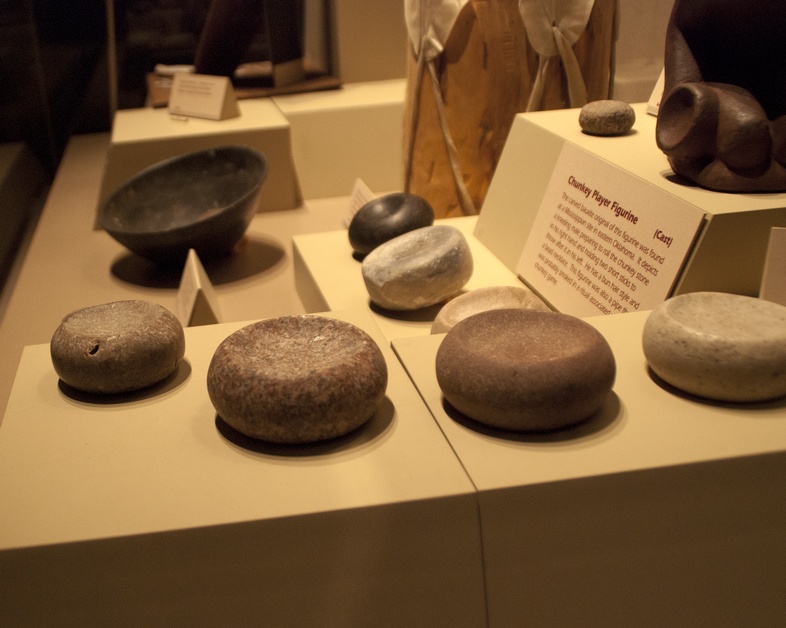
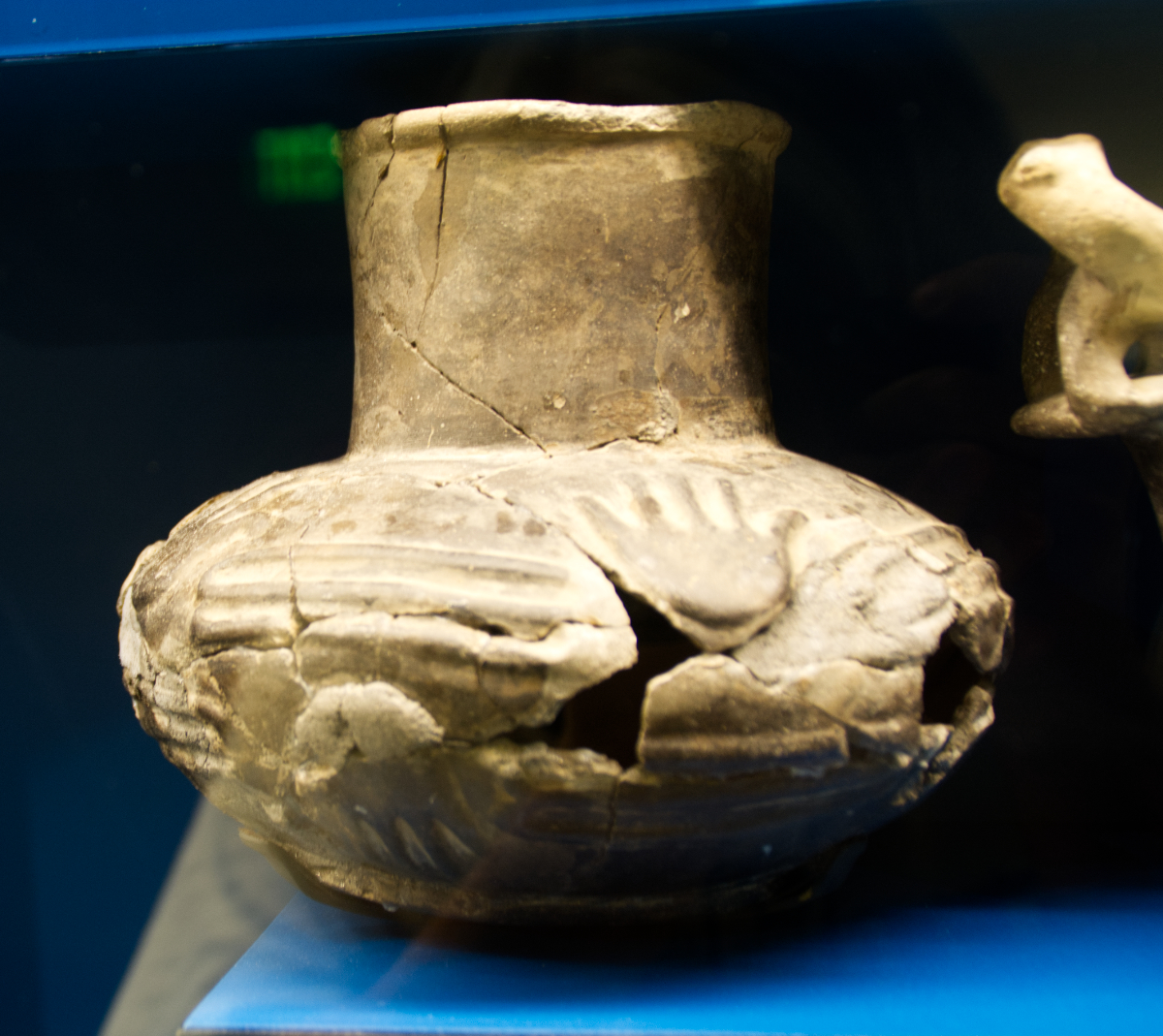
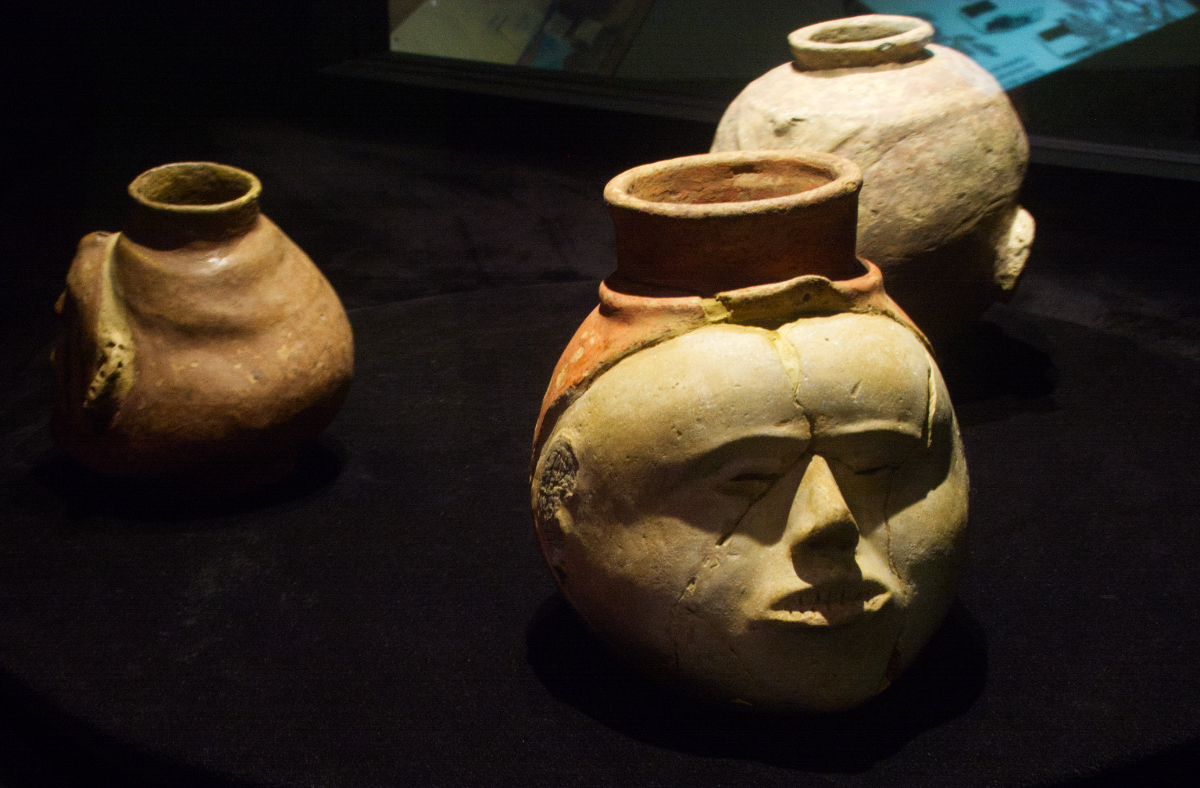
Cahokians didn’t spend all their time working, though. They also enjoyed a rich cultural life. They played music and danced. They made extensive use of pottery, creating different types of vessels for different purposes and adding mussel shells as a tempering agent to strengthen them. Tattooing was common for men and women, and many people wore jewelry. They played and gambled on sports like chunkey, a game in which a round stone rolled down a plaza, and competing team members threw a javelin-shaped pole at the spot where they believed the stone would stop. The game drew big crowds and bets, possessions, and sometimes lives were wagered. Cahokians produced their own unique style of chunky stones that were adopted by people across North America.
Dean Klinkenberg 01:07
Welcome to the Mississippi Valley Traveler podcast. I’m Dean Klinkenberg, and I’ve been exploring the deep history and rich culture of the people and places along America’s greatest river, the Mississippi, since 2007. Join me as I go deep into the characters and places along the river, and occasionally wander into other stories from the Midwest and other rivers. Read the episode show notes and get more information on the Mississippi at MississippiValleyTraveler.com. Let’s get going.
Dean Klinkenberg 01:40
Welcome to episode 83 of the Mississippi Valley Traveler podcast. In this episode, I have part two of my history of indigenous communities along the Mississippi River. In the previous episode, we covered the first oh, nine to ten thousand years, ending just before Cahokia. And in this episode we pick up with the city of Cahokia and Mississippian culture, and then we continue on through to the invasion of North America led by Hernando de Soto.
Dean Klinkenberg 02:16
You’ll get to hear me stumble and bumble my way through some of this, as I try to pronounce and mispronounce many of the names, so it’s an extra element of entertainment for you. And I just want to remind you, this is I put this all together after I don’t know two or three years of substantial deep research, pulling together whatever I could from published records, from archeologists and historians from tribal historical sites, trying to piece it all together into a relatively coherent narrative about the sequence of events for Native communities along the Mississippi. So that’s what you’ve got in this episode is the story as best I could piece it together, of the people who were here before Europeans arrived.
Dean Klinkenberg 03:07
I previously did an episode on Cahokia. If you go back to MississippiValleyTraveler.com/podcast, look up episode 72. I had a full hour-long discussion with Julie Zimmerman, where we sort of emphasize the power of story in the development of Cahokia itself. And you know one quick note on convention. You know technically, when you’re when you’re talking about Spanish names, if you’ve got a name like de Soto, then you would refer to that person as Soto, not de Soto. And I, I know in a lot of academic writings the tendency has been to just revert to calling him Soto. I think we’re also accustomed to hearing de Soto as the name. I’m just going to stick with that convention, but I do understand that it is technically not the way people who are native Spanish speakers would reference that name.
Dean Klinkenberg 03:59
Also, some of the communities that de Soto encountered are now archeological sites that do a relatively decent job of telling the stories of those communities. I had a chance to visit a few of those, oh, maybe five years ago, and I wrote a short blog post about that. So I will put a link to that in the show notes. It’s a list that includes Spiro Mounds in Oklahoma, and then in Arkansas, Parkin and Hampson Archeological State Parks. But there are a whole bunch of others throughout the Southeast. You’ll find the show notes for this episode at MississippiValleyTraveler.com/podcast. There’s a full list of all previous episodes there. Just click on the episode you’re interested in, and you can find the show notes for that episode, including for this one.
Dean Klinkenberg 04:45
Also, one other quick note: my travel memoir, ‘Better Safe Than Sorry,’ is out wide in all the online marketplaces. At this at this point, you should be able to find it pretty much anywhere you can buy a book online. The audio book is rolling out a little. more slowly, but the audiobook is currently available now for sale through Amazon, if you’re more of an audiobook person.
Dean Klinkenberg 05:08
Thanks to all of you who continue to show me some love through Patreon. For as little as $1 a month, you can join that community where you get early access to each of these episodes and the satisfaction of knowing you are contributing to the continued existence of this podcast. If Patreon isn’t your thing, you can buy me a coffee. Go to MississippiValleyTraveler.com/podcast, and there you’ll find instructions on how to join the Patreon community, or just how to buy me a coffee. And now let’s get on with the episode.
Dean Klinkenberg 05:51
Part Four: The Big Bang.
Dean Klinkenberg 05:56
A thousand years ago, pilgrims streamed into a acropolis atop a low bluff, 15 miles east of Cahokia. They carried offerings for the Earth Mother, the mother of all people, whose body is sculpted from soil and framed by bones made of rock. Flowing grass adorned her head, and when she breathed, the wind blew.
Dean Klinkenberg 06:18
The pilgrims came in hopes that the Earth Mother would bless them with children and abundant crops. After they arrived at the Acropolis, they purified their bodies in a sweat lodge, a sacred space that unified the elements of earth, fire, and water. Some would later thank the deities by burning a blanket, then gently splashing spring water over the ashes to cleanse the area.
Dean Klinkenberg 06:44
As the sun went down, the full moon rose over a great mound, the light radiating down a row of a dozen mounds perfectly aligned for this occasion. Priests dressed in elaborate clothes and adorned with copper images of the long-nosed god that hung from their ears, waved smoke around the crowd and chanted. People in the crowd followed in kind, bowing and chanting for the blessing of prosperity. The next day, many of the pilgrims would march 15 miles along a processional road that led into the heart of the lively city of Cahokia, then return to their daily routine in the fertile American Bottom along the Mississippi River, hopeful that Earth Mother had been sufficiently satisfied to ensure a fruitful future.
Dean Klinkenberg 07:33
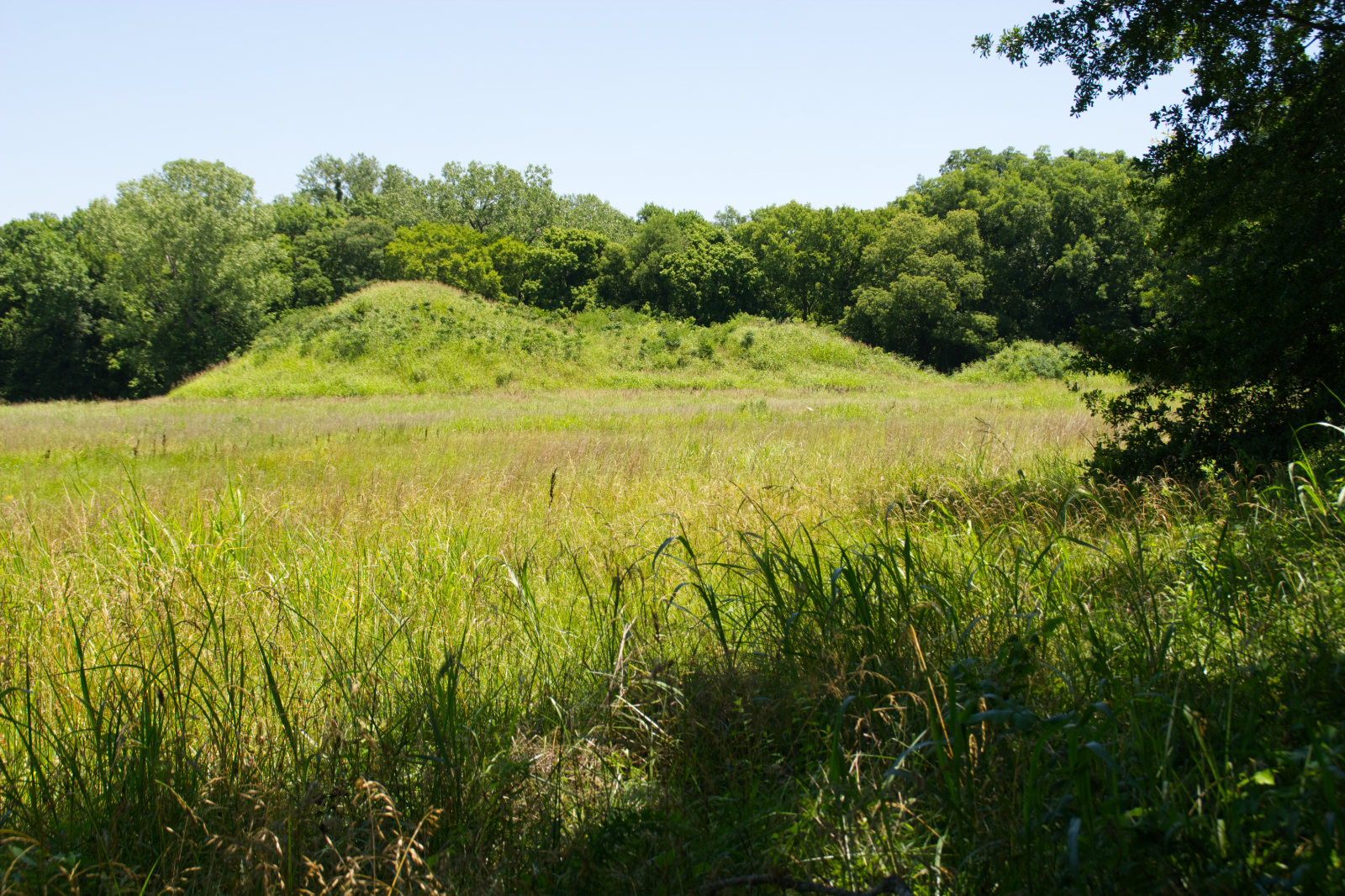
The American Bottom, the wide and fertile floodplain shaped and layered over millennia by the merging of three turbulent and sediment-rich big rivers, the Missouri, Mississippi, and Illinois, spreads over 175 square miles along the Illinois bank of the Mississippi River, from the Riverside Bluffs at Alton to the Bluffs at Chester. It was an ideal spot to build North America’s first great city, a place whose rise was so stunning, so profound that its culture, what archeologists have labeled Mississippian culture, would spread across North America and shape how people lived long after the originators were gone.
Dean Klinkenberg 08:16
Cahokia emerged in an area with a long history of human habitation, perhaps 12,000 years worth, but the city did not develop from a slow, progressive evolution. Rather, the core parts of the city were built quickly, as part of what archeologist Timothy Pauketat describes as Cahokia’s “Big Bang.”
Dean Klinkenberg 08:37
The city’s rise was helped along by a few key factors: a warmer, wetter climate began around 800 C.E. what’s known as the Medieval Warm Period, that improved conditions for agriculture, corn especially. It also helped that the area had relatively easy access to virtually all the resources that Cahokians would need to build and maintain a large city.
Dean Klinkenberg 09:01
The Ozark Mountains to the southwest provided chert for arrowheads, hoes, and other tools. From the prairies to the north and west, people harvested grasses for the buildings and big game. Forests to the east provided a bounty of nuts, berries, and game, plus hardwood trees for tools, fuel, and building materials. From the bottomlands, people collected salt, edible plants such as cattails, and tall trees for dugout canoes. The river itself yielded a bounty of fish and waterfowl. What the Mississippians lacked nearby, they traded for. They got copper from the upper Great Lakes, seashells from the Gulf Coast and mica from Appalachia. The Mississippi River and its tributaries connected Cahokians to many of these places.
Dean Klinkenberg 09:51
By 1000 C.E. the the area around Cahokia supported a community of maybe 1000 people. Within 50 years, that old community would be razed, and a monumental new city would rise in its place. Cahokia’s explosive growth was carefully planned, and many of the major features, including the central plaza and some mounds, were built during a single construction boom around 1050 C.E.
Dean Klinkenberg 10:17
At its peak, this new Cahokia will be home to 10 to 20,000 people in the central city, with maybe another 30,000 or so living in nearby communities such as today’s East St. Louis and St. Louis. Immigrants streamed into Cahokia from central Arkansas, the Red River Valley, southern Indiana, and the Illinois River Valley. It’s likely that those immigrants were drawn by a religious fervor that the new city had ignited. Elaborate rituals and grand feasts brought people together in worship, but those festivals also solidified elite families atop the social hierarchy. Thousands of Cahokians gathered to feast on food such as pumpkin soup, corn bread, deer filets, paw paw fruit, and walnuts. Around the same time, though we don’t know if it was at exactly the same time, hundreds of people, mostly women from upland communities, were sacrificed in elaborate rituals that honored the sun god and other deities.
Dean Klinkenberg 11:18
The core city was laid out in a diamond shape, spread over five square miles of wetlands and creeks, a rich source of food and drinking water for the dense population. Monk’s Mound towered over the city from the center. The water around Cahokia was central to the city’s identity and represented much more than a source of sustenance. Rivers and lakes offered access to the below world and its spirits and deities that helped ensure a prosperous life, or who could create chaos if not properly satisfied. The water that surrounded Cahokia fed body and soul.
Dean Klinkenberg 11:55
The entire city, it seems, was carefully built as a monument to Mississippian religious beliefs, mounds and the passageways that connected them were constructed precisely to coincide with important solar, lunar, and celestial events. Many of the structures are laid out, for example, in rectangular grids that align with specific lunar and solar events. The end of one axis aligns with the sunrise on the summer solstice, while the opposite end of that axis marks where the sun sets on the winter solstice. Another axis aligns with the place on the horizon where the moon rises at its southern lunar maximum, which is opposite the spot where the moon sets at its northern lunar maximum. Solar solstices happen every year, but a complete lunar cycle takes much longer, almost 19 years for a complete progression from its northerly maximum and back again.
Dean Klinkenberg 12:50
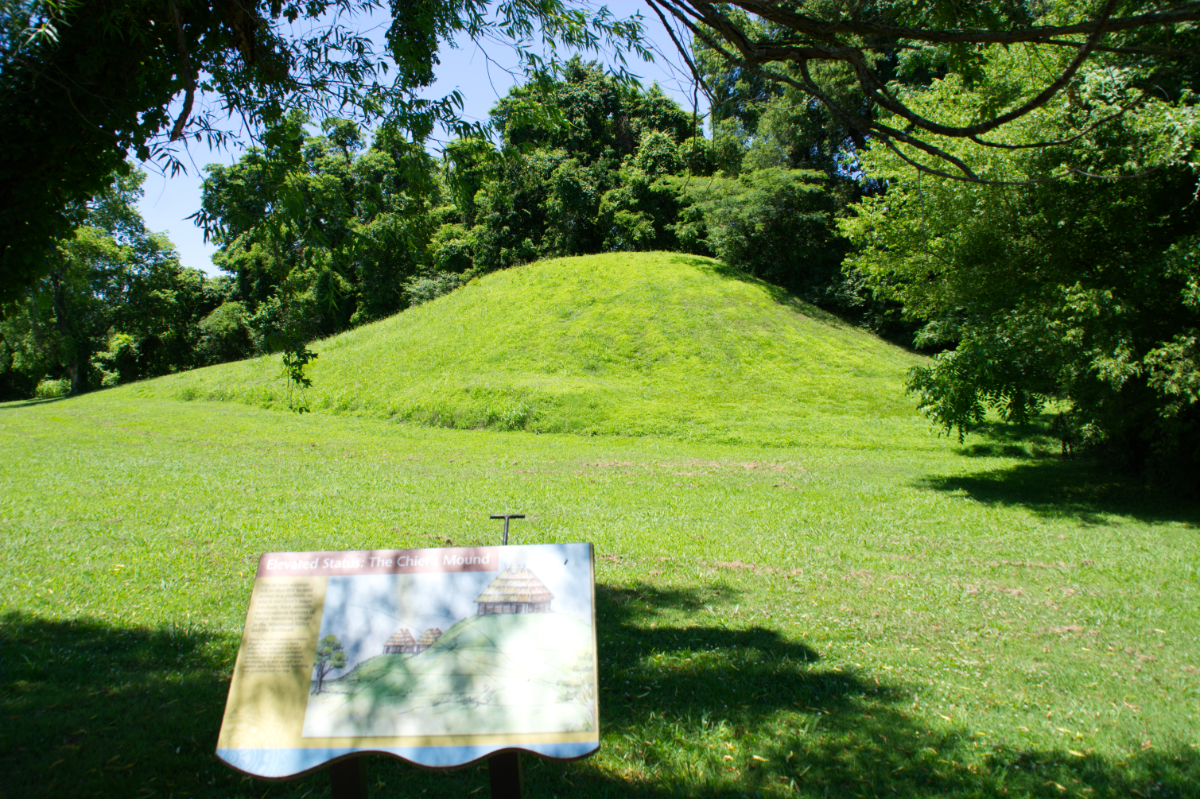
The grandest structure of Cahokia, Monk’s Mound, rose 100 feet high and dominated the central part of the city, rising high enough to appear as if it touched the sky. The mound connected the below-world spirits of the city’s watery surroundings with the deities and spirits of the above-world. The city’s leader, who was probably also the chief spiritual leader, lived on top of the mound. Also atop the mound was a large pole that reached up to 40 additional feet toward the sky. Poles were deeply symbolic in the Mississippian world. Each neighborhood in Cahokia was built around a small plaza in which a tall pole marked the center. The pole may have represented the cedar tree that was believed to serve as a central axis connecting the Below World, This World, and the Above World.
Dean Klinkenberg 13:40
The pole on top of Monk’s Mound may have served a similar role, but it was also much more than that. A few years ago, a team of archeologists erected a 36 foot pole on top of Monk’s Mound. Three days later, lightning struck it. The pole and the lightning it attracted were probably one way Cahokia’s leaders showed off their connections to the spirits of the upper world.
Dean Klinkenberg 14:05
Just west of Monk’s Mound, Cahokians built a circular structure now called Woodhenge, a group of poles arranged in a circular pattern similar to Stonehenge in England. Two of the posts align with the solstice sunrise over Monk’s Mound, while a third marks the equinox sunrise over the mound. Cahokia’s complex layout would not have been possible without the generations of ancestors who observed celestial events and developed the engineering prowess to build structures on Earth to mark them.
Dean Klinkenberg 14:38
Cahokia’s most important monuments and neighborhoods were concentrated in the city center, which was also where Cahokians built a large plaza for markets, festivals, and chunkey games. Other neighborhoods radiated out from the center, each one anchored by a smaller plaza of its own. Houses no more than 100 square feet in size for most people were built by excavating a rectangular trench for the outer walls, a uniquely Mississippian style. Walkways connected neighborhoods.
Dean Klinkenberg 15:11
Major satellite villages were built at today’s East St. Louis, which had 50 mounds, and St. Louis, which had 26 mounds. These three sites make up three of the five largest known Mississippian sites in North America, but virtually all the mounds of the two satellite cities are long gone. Besides these major population centers, a network of rural villages surrounded the main city, many serving specialized roles like growing certain crops and weaving cloth.
Dean Klinkenberg 15:41
One of those outlying sites may have helped spark the city’s rapid growth, a site known as the Emerald Acropolis. There is no indication that people lived there permanently; rather, it seems to have been a place that attracted the reverent, apparently drawing people from far away to seek the good blessings of the lunar and water spirits. The earliest constructions of the site date to about 1000 C.E. Shrine houses for certain water and female-centric rituals. The entire Acropolis was completely rebuilt about 50 years later though, coincident with Cahokia’s Big Bang. A dozen mounds were built in a row that aligned with a major lunar standstill, an event that only happens once every 18 years, in which the moon reaches its most northerly position along the horizon. The rebuilt Acropolis included sweat lodges, council houses, temporary housing for pilgrims, and new shrines.
Dean Klinkenberg 16:40
The Acropolis may have held special significance for the people who were involved in feeding Cahokia, the 1000s of people living in the American Bottom outside of the city of Cahokia who were farmers. Keeping so many people fed was a huge job. Corn was an important food crop, but far from the only domesticated plant. Cahokia’s farmers, most of whom were women, continued to cultivate native seeds such as sunflower, marsh elder, chenapod, erect knotweed, and maygrass, as had their ancestors. Mississippians developed tools that greatly improved the efficiency of planting and the yield of crops. They were so successful that they produced enough surplus corn to trade. Paying their respect to the Earth Mother by enacting rituals at places like the Emerald Acropolis would probably have been an important part of their world, a way to ensure that their crops would be bountiful.
Dean Klinkenberg 16:41
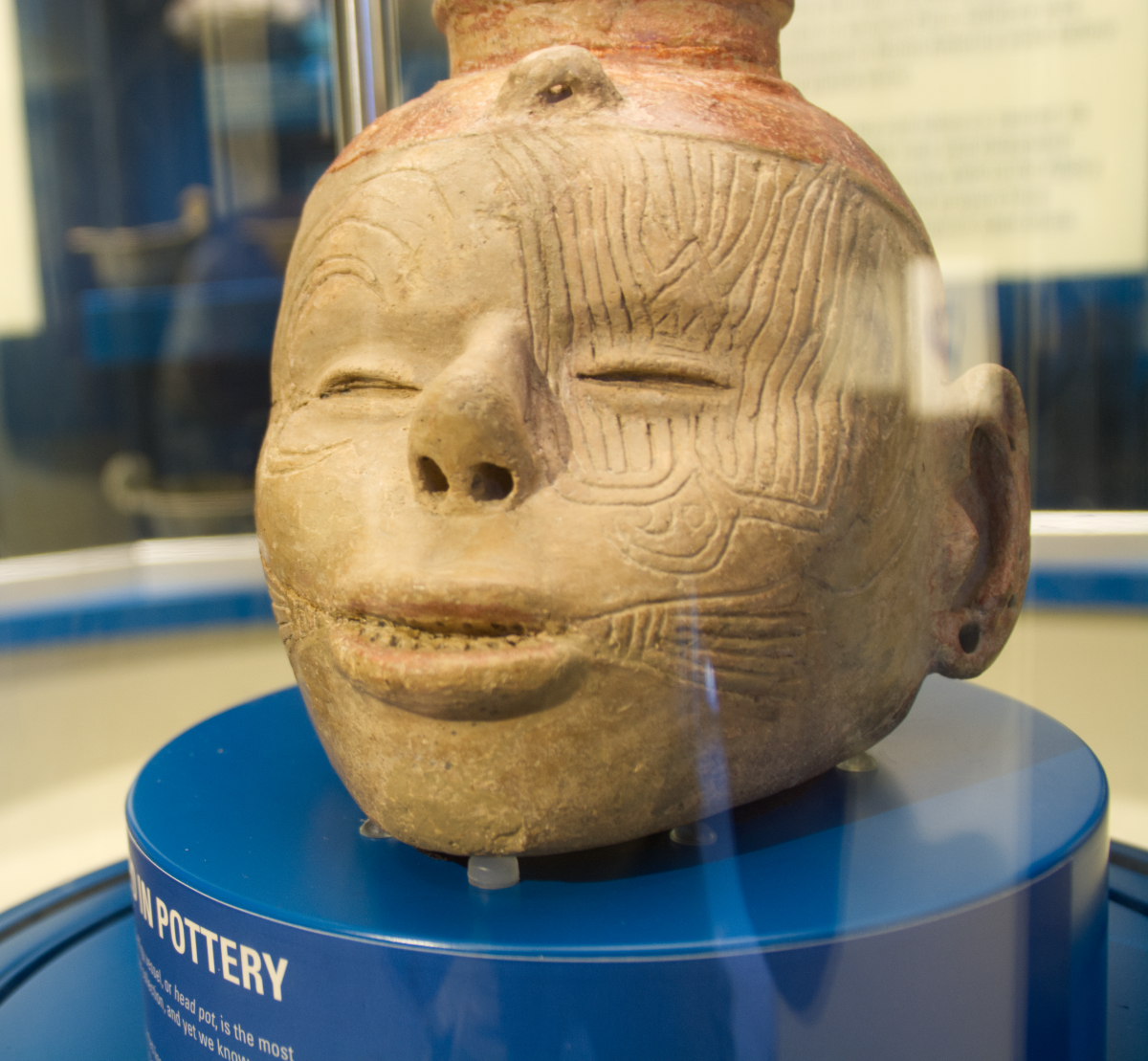
Cahokians didn’t spend all their time working, though; they also enjoyed a rich cultural life. They played music and danced. They made extensive use of pottery, creating different types of vessels for different purposes and adding muscle shells as a tempering agent to strengthen them. Tattooing was common for men and women, and many people wore jewelry.
Dean Klinkenberg 17:58
They played and gambled on sports like chunkey, a game in which a round stone rolled down a plaza, and competing team members threw a javelin-shaped pole at the spot where they believed the stone would stop. The game drew big crowds and bets. Possessions and sometimes lives were wagered. Cahokians produced their own unique style of chunkey stones that were adopted by people across North America.
Dean Klinkenberg 18:23
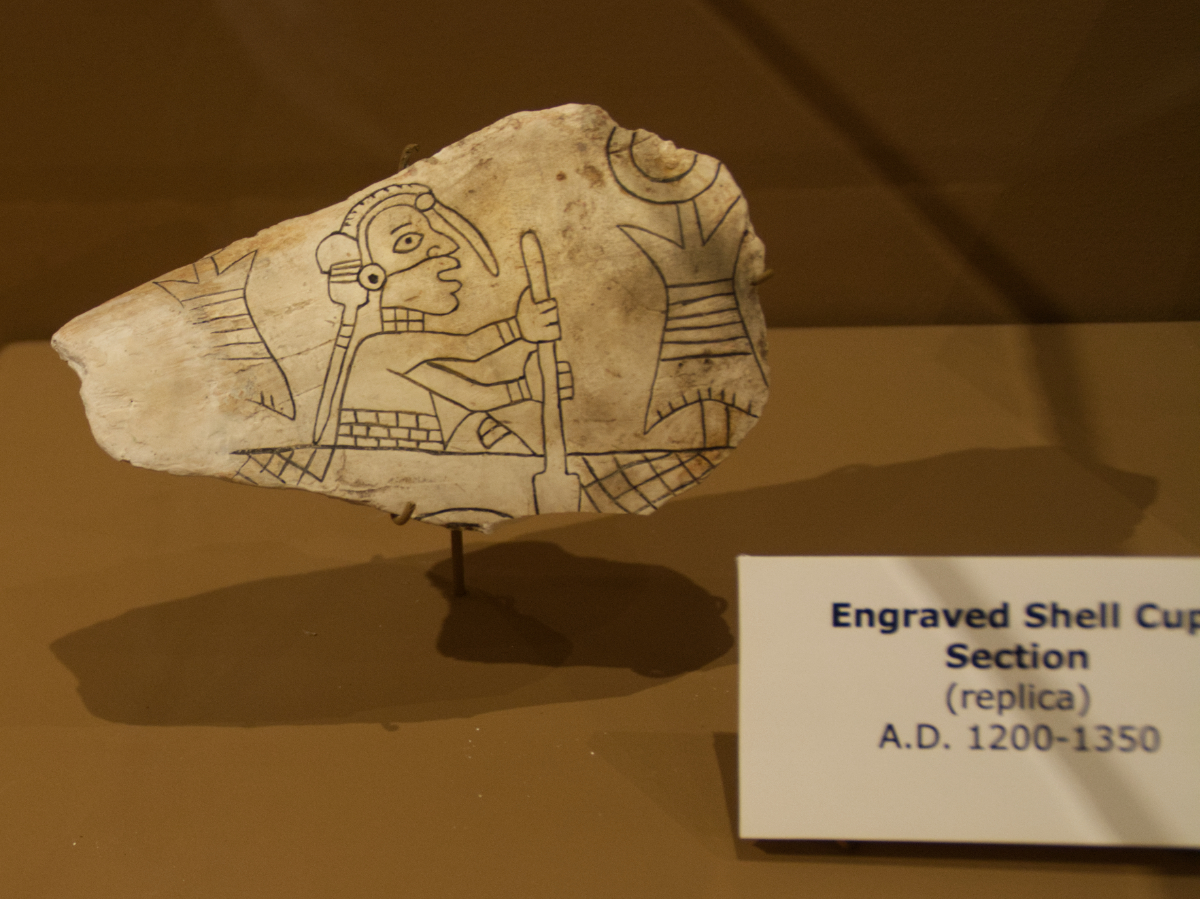
Rivers were central to the lives of Cahokians. Apart from the food they provided, the rivers offered a reliable means of getting around. Cahokia Creek, which is barely noticeable today, once provided a water connection to the Mississippi River. Mississippians navigated the rivers and dug out canoes that were built in a variety of sizes and for different purposes. They were usually carved from a single tree, most commonly bald cypress, poplar, or cottonwood.
Dean Klinkenberg 18:53
Among Cahokia’s many feats, one of the most remarkable was their ability to call upon and organize thousands of people for construction projects. Most notably for those earthen mounds or pyramids, they’re basically the same kind of structure, but also for large plazas and roads or walkways. For each project, Cahokians excavated soil with hand tools and carried it in baskets to the construction sites.
Dean Klinkenberg 19:20
Cahokians were also cognizant of their location in the Mississippi River’s floodplain and the surrounding wetlands and creeks. Plazas and walkways were built so that the surfaces sloped to force water to run off into canals and holding ponds. These engineering measures kept the main city protected from most floods.
Dean Klinkenberg 19:41
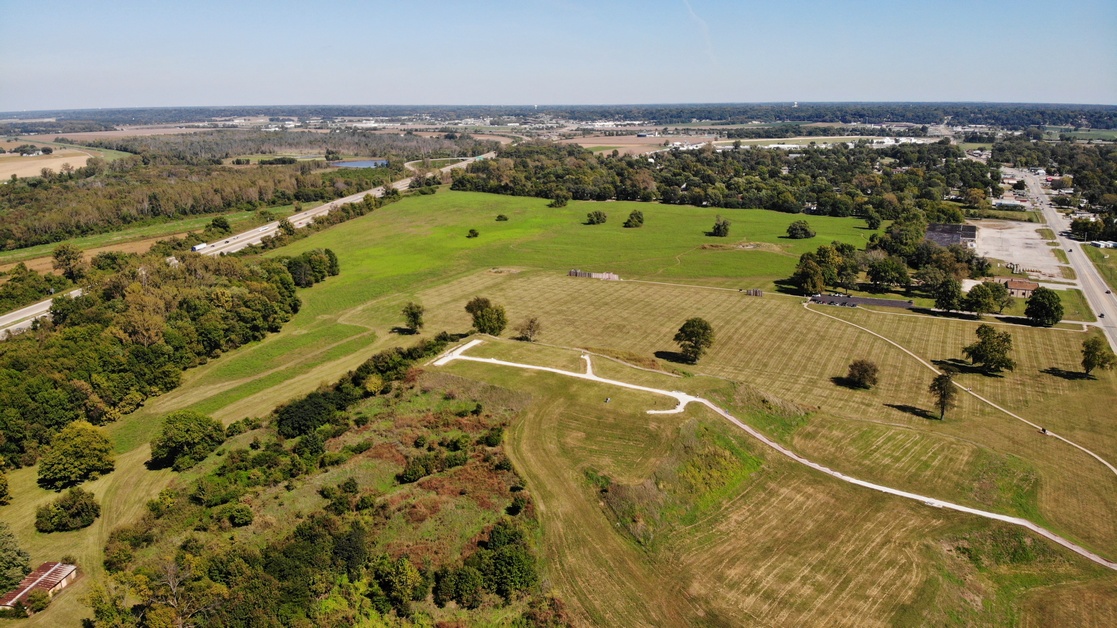
The grandest structures, though, were those mounds. Cahokia once had as many as 120 mounds, which is a heck of a lot of dirt to move. 68 mounds survive at the historic site today. Many of those mounds were built and rebuilt multiple times.
Dean Klinkenberg 20:01
Monk’s Mound, for example, was initially completed around 1050 C.E. but it was expanded several times over three centuries. It’s remarkable not only for its scale, 100 feet tall with a base that would cover 14 football fields, but also for the engineering required to pull it off. It’s not just a bunch of dirt piled high and compacted. Mississippians use different types of soil in different places to maximize drainage and stability.
Dean Klinkenberg 20:31
Monk’s Mound was one of the platform mounds built at Cahokia, and a defining feature of Mississippian culture. Platform mounds had flat tops used for important structures, a shrine, residence for a leader, or maybe a building where the dead were prepared for burial. What’s known as a charnel house.
Dean Klinkenberg 20:51
Cahokians also built ridge top mounds, most of which covered burial chambers. One in particular, Mound 72, the ridge line of which aligned with the summer solstice sunset and winter solstice sunrise was full of astonishing remains that included the famous “birdman” burial. Built not long after the new city emerged, Mount 72 contained two wrapped corpses, one under the other, separated by a layer of 1000s of shell beads. Archeologists believe the beads had been sewn into a long garment, maybe a cape, shaped like a falcon or thunderbird. The two men had probably been important rulers, and maybe had even been among the ones who helped create a unified Cahokia. Buried along with these two men were 250 other people, mostly women, many probably sacrificed their lives in public ceremonies so they could accompany the two leaders on their journey to the Realm of the Dead.
Dean Klinkenberg 21:51
Later in the city’s development, the central part of the city was enclosed with a fortified wall, beginning around 1150 C.E. Other Mississippian cities built palisades around the same time, so maybe leaders felt the need to defend themselves from something. There’s no evidence, however, that Cahokia was ever attacked.
Dean Klinkenberg 22:11
By 1250 C.E. Cahokia had lost steam, although there’s no obvious reason for the decline. There’s no evidence of a major precipitating event like an epidemic, invasion, or natural disaster. It’s possible that the city’s population just grew too big and exhausted the resources in the area.
Dean Klinkenberg 22:32
The climate also began to cool around the time of the city’s decline, so it’s possible that might have reduced agricultural productivity as the growing season shortened. If more people were going hungry and the land became less productive, people might have looked upon their leader’s legitimacy with increasing skepticism. Maybe some people also grew tired of being the ones ritually sacrificed.
Dean Klinkenberg 22:57
Ultimately, it looks like people just gradually moved away. By 1400 C.E. the city was a shell of its former self. Mississippians didn’t disappear, though. Even after Cahokia’s decline, some people continued to live in the area, and Mississippian communities thrived in other places, especially in the southeast, where monumental building continued at places like Moundville, Alabama, and Winterville, Mississippi, as well as the Great Plains, where groups like the Osage, Omaha, Crow, and Pawnee practiced some cultural traditions that had their roots in Cahokia.
Dean Klinkenberg 23:32
After the Mississippian culture of Cahokia faded away, other groups moved in, some within a few decades after the city had mostly depopulated. A group of Oneota Indians, for example, built a small village near Cahokia, where they lived until around 1600 C.E. They were probably ancestors of Kansa, Ho Chunk, Missouri, Oto, and Iowa people.
Dean Klinkenberg 23:57
Archeologists came up with the name Oneota to refer to a group of people who emerged in the Upper Mississippi Valley around 1100 C.E. from late woodland traditions after the mound builders. Oneota people overlapped with Mississippians and show some cultural influences, but the Oneota were not Mississippian. They had their own distinctive cultural traits. They built communities without platform mounds, for example, and their societies were more egalitarian and not organized around hereditary leaders.
Dean Klinkenberg 24:30
The Oneota were good farmers. They flourished with the development of a variety of corn that did well in the colder climate of the Upper Mississippi. They concentrated their communities in areas that were good for farming, like the floodplains of bigger rivers. Besides rich soil, the floodplains also offered plenty of other food choices, like fish, deer, duck, potato, and wild rice.
Dean Klinkenberg 24:51
Some of the earliest Oneota settlements along the Mississippi River were built near Red Wing, Minnesota. Later communities settled near the present-day Wisconsin communities of Brice Prairie, Trempealeau, and La Crosse. They spread throughout the Upper Midwest, though, with many distinct settlements from Lake Michigan to the Missouri River. These disparate communities had regular interactions with each other, with rivers probably keeping them connected. When Europeans arrived, many Oneota communities were thriving.
Dean Klinkenberg 25:14
Hey, Dean Klinkenberg here, interrupting myself. Just wanted to remind you that if you’d like to know more about the Mississippi River, check out my books. I write the Mississippi Valley Traveler guidebooks for people who want to get to know the Mississippi better, I also wrote “The Wild Mississippi”, a guide that goes deep into the complex ecosystems supported by the Mississippi, the plant and animal life that depends on them, and where you can go to experience it all. If you like fiction, check out my Frank Dodge Mystery Series. Each book is set in places along the Mississippi River. My newest book is a travel memoir called “Better Safe Than Sorry: Slowboats, Chicken Busses, and the Radical Choice to Trust the World.”The book explores a simple question: What happens when you stop asking “What if something goes wrong? and start asking “What if everything goes right?” Find out more at deanklinkenberg.com/bettersafethansorry
Dean Klinkenberg 26:28
Part Five: First Contact.
Dean Klinkenberg 26:33
Life begins in the east, the direction from which the Sun rises every day. The Sun embodied the Creator or Great Spirit, the leaders of the Mississippian world were blood relatives of the sun. At Cahokia, the leader lived on top of Monk’s Mound, close enough to the sky to reach up and touch the Sun. When the sun rose over the home of the Sun’s kin on Earth, on the morning of the spring and fall equinox, the Sun was signaling it was time to plant crops or to harvest them.
Dean Klinkenberg 27:07
The Sun was central to the identity of many people who carried on Mississippian traditions. Yuchi Indians, natives of the southeast, called themselves children of the sun. The sun organized their society and instructed them on the important rituals. The Choctaw believed the sun had the power of life and death. As long as sun looked down on you, you lived. The Natchez Indians, the last known descendants of the Mississippian line, called their leaders Suns.
Dean Klinkenberg 27:39
Fire was Sun’s representative on Earth. In the Mississippian world, a sacred fire was lit in the temple on top of a platform mound. The fire was kept alive perpetually, fueled by four logs aligned to the cardinal directions, and watched at all times by two people to ensure it never went out. People made offerings to the Sun by dropping items into the fire, often tobacco or grain. The smoke that burned from the offering rose up to the Above world, carrying the message of the people to the Sun and Above World spirits. If a person did anything wrong in the presence of fire, it would immediately be communicated to the Sun. The fire became fouled over time, so once a year, typically around the time of the corn harvest, the community held a big ceremony in which the fire was extinguished and a new one lit to restore its purity.
Dean Klinkenberg 27:39
When Hernando de Soto invaded North America with a large army, he learned of the Sun’s importance to many indigenous communities. Eager to force their submission, De Soto claimed he related to the Sun. In the 16th century, major Oneota settlements along the Upper Mississippi River moved to more defensible positions close to the bluffs, eventually moving away from the main stem of the Mississippi River at the smaller tributaries such as the Upper Iowa River, in Louisiana, people of the Plaquemine tradition who fused older Coles Creek traditions with newer Mississippian traits prospered in communities from the mouth of the Yazoo into eastern Louisiana. Meanwhile, the center of Mississippian life had moved downriver from Cahokia, which was largely abandoned by the mid-1400s, by 1500 the Yazoo Basin had become fully Mississippian, but bluff-top communities near today’s Natchez remained primarily Plaquemines. South of the Ohio River, the floodplain forests were densely populated with thriving communities. The bottomlands of big rivers like the Mississippi were great places to live. Corn thrived in the rich soil, and its sandy texture made it relatively easy to dig into. Regular flooding replenished nutrients, but high ground along natural levees kept the villages dry, except during. Years of exceptionally high water, the waterways were abundant with fish, and the forests overflowed with nuts and fruit. Many villages were connected to each other via a complex network of bayous, streams, rivers, and forest paths.
Dean Klinkenberg 28:39
In the 16th century, major Oneota settlements along the Upper Mississippi River moved to more defensible positions close to the bluffs, eventually moving away from the main stem of the Mississippi River and to smaller tributaries such as the Upper Iowa River,. In Louisiana, people of the Plaquemine tradition who fused older Coles Creek traditions with newer Mississippian traits prospered in communities from the mouth of the Yazoo into eastern Louisiana. Meanwhile, the center of Mississippian life had moved downriver from Cahokia, which was largely abandoned by the mid-1400s. By 1500 the Yazoo Basin had become fully Mississippian, but bluff-top communities near today’s Natchez remained primarily Plaquemines.
Dean Klinkenberg 29:35
South of the Ohio River, the floodplain forests were densely populated with thriving communities. The bottomlands of big rivers like the Mississippi were great places to live. Corn thrived in the rich soil, and its sandy texture made it relatively easy to dig into. Regular flooding replenished nutrients, but high ground along natural levees kept the villages dry, except during. years of exceptionally high water,. The waterways were abundant with fish, and the forests overflowed with nuts and fruit. Many villages were connected to each other via a complex network of bayous, streams, rivers, and forest paths.
Dean Klinkenberg 30:16
The names of some of these places come to us from the journals of a few men in Hernando de Soto’s invading army: Quizquiz,Aquijo, Pacaha, Casqui, Quiguate, Taguanate, Aminoya, Anilco, Guachoya, Quiqualtam.
Dean Klinkenberg 30:42
De Soto was not the first European to lead an invading army into North America. In 1521, Ponce de Leon tried to start a colony on the west coast of Florida. He failed and later died from injuries he suffered while trying to do so. A few other Spanish ships landed on the eastern seaboard before De Soto’s army landed, mostly in search of people to capture and enslave. The raiding parties would entice indigenous people onto a ship with gifts, then kidnap them and take them to Spanish plantations in the Caribbean, where most would be worked to death.
Dean Klinkenberg 31:17
Hernando de Soto had ambitions to succeed where the others had failed. His interest in La Florida, the Spanish name for the continent, wasn’t driven by curiosity or the ambition to discover what lay on the other side of the Atlantic Ocean. He was an ambitious man who wanted to lead an army of Christian warriors to invade North America so they could all get rich.
Dean Klinkenberg 31:41
De Soto was born around 1500 in a region of western Spain called Extremadura. His parents were hidalgos, people who enjoyed the status of a title but had little actual wealth. Extremadura offered few economic opportunities for ambitious young men of the time, so he followed many of his peers to the Americas to make his fortune. He was 14 years old when he sailed to Panama. Once there, he landed a job with the Spanish governor Pedro Arias de Avila, an unfailingly cruel man. In Panama, De Soto built a reputation as a strong leader and dealt in some precious metals to earn a few bucks on the side. He also learned he could make good money by enslaving and selling indigenous people.
Dean Klinkenberg 32:28
At the end of 1531, he moved on to South America, where he fought with Francisco Pizarro against the Incas in Peru. While it was financially lucrative, De Soto ultimately felt slighted by Pizarro. Disappointed, De Soto returned to Spain in 1536, where he married Doña Isabel de Bobadilla, the daughter of Avila, his former boss in Central America. In 1537, King Charles V named De Soto governor of Cuba and granted him permission to conquer La Florida.
Dean Klinkenberg 33:02
De Soto assembled boats and a crew of several 100, including at least six women, several black men, some free and some enslaved, and a few enslaved white men. It was a young crew. The 38 year old De Soto was the oldest member. It also wasn’t a random collection of strangers, as most knew each other through family or friendship networks. De Soto didn’t pay anyone up front. Rather, they all expected to claim a share of the wealth they would plunder.
Dean Klinkenberg 33:32
They sailed from Spain on April 7, 1538, and reached the Canary Islands 15 days later, resupplied, then arrived in Santiago, Cuba, on June 7, 1538. Spain had conquered Cuba, Hispaniola, and a few scattered Caribbean islands early in the 1500s, where they established sugar plantations, mines, and ranches that relied on enslaved indigenous people to do the hard work. After diseases and harsh treatment wiped out much of the indigenous population of those islands, the Spanish overlords looked further west for people to enslave to restock their workforce.
Dean Klinkenberg 34:10
De Soto lived in Cuba for a year, using that time to establish his command and to finish preparations for the invasion of La Florida. He also bought a ranch where his wife would live, and named her acting governor. On may 18, 1539, De Soto sailed from Havana with nine ships and reached the Florida coast a week later. As they gathered near Longboat Key, some 16 miles south of Tampa Bay, they saw plumes of smoke rising on land. An alert passed among the coastal Indians about the invaders. Once De Soto found a suitable place to unload, the Spanish landed about 600 people and over 200 horses. The army presented quite a spectacle. Anthropologist Charles Hudson described it like this. “Their upper garments were doublets of cloth and leather, perhaps with fashionable slashed sleeves and rolls at the shoulders. They wore short breeches, which may have been puffed out with stuffing on their legs and feet. They wore tight-fitting stockings. Some of them wore boots that reached to their thighs, but that were ordinarily worn rolled down to below their knees. They loved color-green, blue, black, and especially red.”
Dean Klinkenberg 35:27
Soldiers wore shiny metal helmets and light armor. Men on horses carried a lance and shield, while foot soldiers carried a shield and were armed with a sword, crossbow, matchlock gun, or a halberd. In contrast, the indigenous people who lived in Florida’s tropical climate at that time would have worn little more than a breech cloth and would have been armed with a bow and arrow or a club.
Dean Klinkenberg 35:50
De Soto’s army brought along dogs and a herd of pigs. One benefit of traveling with those animals was that they served as an early warning system for surprise attacks, the dogs were also used as weapons. De Soto’s army outfitted some dogs with spiked collars and cloth armor and trained them to assault a person’s midsection, to disembowel them, or to rip apart a man’s genitals. Previous Spanish leaders in the Americas had used dogs to torture and kill native people. One technique used by De Soto’s boss in Panama was to release a captured Indian and order him to run away, then sic a dog after him. When the dog caught up, which it almost always did, it would maim, then eat the Native American. De Soto adopted many of his old boss’s techniques for subjugating indigenous people.
Dean Klinkenberg 36:47
De Soto needed intelligence on the area, so he sent two groups to scout and capture potential guides. One of these groups happened across a man who turned out to be Spanish, Juan Ortiz. He’d been captured a decade earlier by Indians during a mission to track remnants of an earlier army led by Narvaez that had disappeared.Ortiz had been living in an Indian community led by Chief Ozita for most of that time, and was lucky to be alive.
Dean Klinkenberg 37:18
De Soto established a base at Ozita’s village after the Indians had abandoned it. Indigenous people in the area had learned from experience to be wary of Spanish invaders. When Narvaez’s army entered the chief’s territory a decade earlier, a decade before De Soto, one of Narvaez’s soldiers threw the chief’s wife to the dogs. She was mauled to death. Narvaez then tried to force the chief to submit by cutting off the tip of his nose. Ozita had been ready to kill his Spanish captive Ortiz, but the chief’s wife and daughters intervened to save the Spaniard as he was roasting on a spit. That was good luck for De Soto, as Ortiz became an important translator for the rest of the invasion. De Soto occupied Ozita’s residence in the village along with two officers. They used a few structures for storage, but razed most of the village, including a prominent temple that was topped that had been topped by a wooden bird with golden eyes.
Dean Klinkenberg 38:08
As De Soto and his army marauded through the southeast, they routinely encountered abandoned villages as word of their approach reached new communities. The indigenous leaders knew they wouldn’t be able to successfully defend a direct attack, so they’d leave their villages and regroup. When the Spanish army reached a new community, they stole food at will, sometimes picking it directly out of the fields, sometimes raiding storehouses. As a result, many Native American people starved.
Dean Klinkenberg 38:49
The Spanish reached the Mississippi River in early May 1541, where they found dozens of densely populated, well-stocked communities. At least 30 of them just in the vicinity of the confluence of the Arkansas and Mississippi rivers. In fact, more people probably lived in that area in 1541 than do today. These were Mississippian people, descendants of Cahokians. Like their ancestors, they lived in villages organized around the main plaza, dominated by a tall, flat-topped mound. The leader’s home was typically on top of the tallest mound. Buildings where sacred rituals were performed sometimes topped other mounds. Many villages were fortified with palisaded walls, probably because conflict erupted regularly between some communities. Waterways also bounded some villages, maybe a bayou or a small river that connected directly to the Mississippi, or maybe a moat that protected access to the village.
Dean Klinkenberg 39:55
The people who lived in these areas farmed extensively, often on land outside the village proper. They produced enough corn to create a surplus that carried them through the leaner winter months. But corn was just one of the domesticated crops that they grew. They lived in an ecologically diverse area, so they also ate plenty of fish, nuts, berries, and deer. Waterways provided connections throughout the region, with dugout canoes the primary mode of transportation. In some places, such as the village the Spanish called Aminoya, houses were built with an upper and lower level. The upper level provided a place to live when the Mississippi was in major flood stage, which an Aminoya woman told the Spanish happened every 14 years.
Dean Klinkenberg 40:32
By the time De Soto’s army reached the Mississippi River, they were short on supplies, had lost most of the clothing they had brought with them, and were demoralized after repeated attacks from indigenous people. De Soto increasingly worried about defections. After filling up with supplies stolen from two Quizquiz villages in the Mississippi’s floodplain, the army encamped near the Mississippi River on May 21 and got to work building boats to cross it.
Dean Klinkenberg 41:11
Not long after setting up camp, a welcoming party of sorts arrived when Native Americans in several crowded dugout canoes arrived. Four men got out and approached De Soto. As they neared him, they stopped and bowed deeply to the east to honor the sun. Then they turned and bowed, but not as deeply to the west toward the moon. Then they turned to face De Soto and bowed toward him, but even less deeply than they had toward the moon. They told De Soto to expect a visit from a great chief, Aquijo. The next day, the chief arrived in spectacular fashion. Here’s how one of De Soto’s scribes described it: “the cacique, the term the Spanish use for chief or leader, came with 200 canoes full of Indians with their bows and arrows, painted with red ochre, and having great plumes of white and many-colored feathers on either side of the canoes, and holding shields in their hands with which they covered the paddlers, while the warriors were standing from prow to stern with their bows and arrows in their hands. The canoe in which the cacique came had an awning spread in the stern, and he, the casique, was seated under the canopy. Also, other canoes came bearing other Indian notables. The chief of each canoe, from his position under the canopy, controlled and gave orders to the other men. All the canoes were together and came to within a stone’s throw of the bluff.”
Dean Klinkenberg 42:42
De Soto tried to entice the chief to shore, but he wouldn’t bite. He and his men were content to stay on the river as they cased out the Spanish. As the fleet gradually pulled back, Spanish crossbowmen fired at them, killing a few men, but the native people didn’t respond. The fleet stayed disciplined and backed away in unison for the next month. The Spanish army cut and assembled wood as they raced to build four boats, each of which would be large enough to carry 70 men and six horses across the Mississippi. And every afternoon, the fleet returned and harassed the Spanish with a quick flurry of arrows before disappearing again.
Dean Klinkenberg 43:25
On june 18, De Soto’s army loaded the finished boats and made their initial crossing in the dead of night. It was a tough go. The river was high, the current rapid, and the boats had to dodge floating debris. Still, they had shuttled every one to the other side of the river by daybreak. They were surprised at the lack of resistance when they landed on the west side of the river, but Pacaha, a Aqiujo’s superior, had apparently ordered his warriors to leave the Spanish alone.
Dean Klinkenberg 43:55
Always looking for ways to divide and conquer, De Soto marched his army inland to Casqui, to Pacaha’s enemy. Going west from the Mississippi, they slogged through the dense wetlands that buffered Casqui and Pacaha. They they reached the first Casqui village on June 22, catching the people by surprise.
Dean Klinkenberg 44:17
The province of Casqui consisted of a collection of palisaded villages near the Saint Francis River in today’s Arkansas. Its primary village was at the site now known as Parkin Archeological State Park. Casqui’s villages were built on high-ish ground, and were surrounded by agricultural fields. The first village the Spanish plundered had an abundance of pecans in storage. The residents of Casqui had managed local forests to improve growing conditions for fruit and nut trees, so they had abundance of pecans.
Dean Klinkenberg 44:49
The Spanish army took captives and purloined supplies, as was their routine. Casqui’s leader agreed to meet De Soto and negotiate with him. A prolonged drought. had caused great suffering in the area. Casqui’s leader asked if De Soto had any help to offer. De Soto responded that the Spanish would pray to their god to intervene and convened an elaborate ceremony to do so, which included erecting a tall Christian cross on top of one of Casqui’s mountains. Rain fell later that night, and the people of Casqui were impressed. They promised an alliance with De Soto and agreed to go with the Spanish army to attack their enemy Pacaha.
Dean Klinkenberg 45:30
Four days after their first contact with Casqui, De Soto’s army left for Pacaha. The Indians built temporary bridges across the worst of the swamp so the army could walk above the muck, while Spanish horsemen swam their horses through the murky water. Most of the residents of Pacaha fled as the Spanish and Casqui army approached, but the invaders still managed to raid a village and take prisoners. They found the main city abandoned too. Today’s Nodena site in northeast Arkansas was probably part of Pacaha’s realm. Men from Casqui ransacked Pacaha’s holy sites, maybe eager to exact revenge against an enemy they had long battled.
Dean Klinkenberg 46:14
Pacaha and several thousand residents of his province had fled to an island in the Mississippi, as men from Casqui led the Spanish to find them, Pacaha escaped from the island. Many of his people panicked, however. Some tried to swim away from the Spanish, but drowned. A raft of goods floated away unattended, which some Casqui men retrieved and kept for themselves. De Soto, perhaps angered by the Casquis’ attempt to claim goods the Spanish believed was rightfully theirs, or maybe just as part of his divide and conquer strategy, pivoted again and reached out to Pacaha to end the hostilities. Pacaha was amenable and even agreed to an alliance with De Soto to go after Casqui. When Casqui’s leader learned of this, he went directly to Pacaha and De Soto to change their minds. “He came with 50 of his Indians in very fine array, and he brought a jester in front of himself for grandeur. Who, saying and doing witty things, gave occasion for much laughter to those who saw him,” reported one a other member of De Soto’s army.
Dean Klinkenberg 46:35
Casqui’s leader offered an elegant plea for forgiveness and peace that moved De Soto to cancel the attack. The leader was successful in averting a tragedy, but De Soto’s strategy had also worked. A united attack from the Casqui and Pacaha could have overwhelmed the Spanish army. Instead, De Soto stressed existing fault lines, which weakened both communities, and he even managed to resupply his army.
Dean Klinkenberg 46:35
While occupying Pacaha, de Soto sent a scouting party north, but they didn’t find any gold or any population centers they could raid. De Soto therefore led his army west along the Arkansas River. They again failed to find any riches, and eventually invaded a large community called Utiangue, where they spent a cold and snowy winter in 1541-42, during which their primary translator Juan Ortiz, died.
Dean Klinkenberg 46:35
The Spanish left Utiangue on March 6, 1542, with fewer than 400 men, counting enslaved Indians, and about 40 horses. They followed the Arkansas River back toward the Mississippi, eventually encountering a prosperous community known as Anilco, that was densely populated and had an impressive surplus of corn, beans, nuts, and dried persimmons to loot. The people resisted and hid some of their food stores, which irritated de Soto. So they traveled on to Guachoya, rivals of the people at Anilco. The village had been abandoned by the time they reached it. Its residents had fled to the other side of the Mississippi, so the Spanish moved in.
Dean Klinkenberg 48:54
While at Guachoya, De Soto learned that there were no major settlements on the west side of the Mississippi south of Guachoya, and that an imposing and powerful society with a leader called Quiguatum controlled territory on the east bank of the river. De Soto grew distraught at that point. He probably realized that his dreams of finding sashes of gold and other riches to steal were increasingly unlikely. He made a token effort to subdue Quigualtum by sending an emissary who told him that De Soto was the son of the Sun, so therefore Quigaltum should come to Guachoya and pay his respects to De Soto. The skeptical chief declined De Soto’s invitation and suggested that De Soto prove his divine lineage by drying up the Mississippi. De Soto was not accustomed to being brushed aside, so the chief’s actions enraged him. He considered the leader of powerful Quigualtum arrogant because the chief refused to leave his own land to pay tribute to the leader of an invading army. De Soto might have ordinarily turned his anger into action by attacking Quigualtum, but De Soto wasn’t well.
Dean Klinkenberg 50:16
He was, in fact, near the end of his life. On may 21, 1542, Hernando de Soto died in the occupied village of Guachoya. Many of his soldiers were happy to be rid of him. He was quietly buried inside the village late at night. Luis de Moscoso, whom De Soto has chosen as his replacement, hoped that the people of Guachoya wouldn’t notice. They did, though. Worried that De Soto’s death would embolden the people of Guachoya, the Spanish disinterred De Soto’s body in the middle of the night, placed his corpse in a canoe, then paddled out into the Mississippi, where they dumped it in deep water.
Dean Klinkenberg 51:01
When a Mississippian leader died, his family and servants would be killed to accompany him, a relative of the sun, on his journey to the Realm of the Dead. When De Soto died, the man who had tried to manipulate indigenous people by claiming to be related to the sun, his body was weighed down with stones and dumped into the Mississippi River, alone.
Dean Klinkenberg 51:24
Moscoso wasn’t about to stick around to see what the people of Guachoya might do next. Realizing that their invasion had run its course, they plotted an overland route back to Spanish-occupied Mexico. As they traveled further west and southwest, the landscape grew increasingly arid, and they encountered fewer populated villages. Corn and other food supplies grew increasingly scarce. They reached east Texas in October, hen, discouraged that they could no longer steal enough food to sustain the army, they returned to the Mississippi River to regroup.
Dean Klinkenberg 52:02
After raiding Anilco a second time and massacring many of its residents with help from the people of Guachoya, an advance team found another community nearby called Aminoya that they invaded and occupied for their winter camp. By the time the rest of the Spanish army arrived in December 1541, they were in rough shape, poorly provisioned for cold weather, and exhausted after slogging through swamps.
Dean Klinkenberg 52:29
Aminoya consisted of two towns near the Mississippi River, both were protected by walls. After the remnant of De Soto’s army set up winter camp in one village, they burned the other one down. The people of Aminoya had stored surplus corn, nuts, and dried fruit, which the Spanish claimed for themselves. Deep into winter, many starving residents of Aminoya beseeched Moscoso to return some of the food they had grown and harvested themselves. After rebuffing them repeatedly, Moscoso eventually, reluctantly, agreed to share a small portion of what remained.
Dean Klinkenberg 53:06
The forests around Aminoya were abundant with trees, perfect for building boats. So the Spanish spent much of the winter constructing seven bergantines, open, flat-bottomed boats that they could row with oars or maybe even power with a sail. They were typically used to ferry people and cargo from an ocean-going ship to shore, but the Spanish army needed them to float down the Mississippi and then on to Spanish-occupied Mexico. High water from the Mississippi spread around Aminoya for two months in late winter, which stalled boat construction. When the water finally receded, they butchered all their pigs and some of their horses, preserved the meat and salt, then loaded the boats for the race to the sea.
Dean Klinkenberg 53:49
On July 2, 1543, the remaining Spanish army of three hundred-ish soldiers rowed into the Mississippi, leaving behind most of the five hundred native people they had enslaved. Floating down the Mississippi with their last twenty-two horses was tricky. Several large dugouts were lashed together, so the horses could rest their front legs in one canoe and their back legs in another. These canoes were then tied to the bergantines.
Dean Klinkenberg 54:19
On July 4th, they were confronted by a fleet of canoes, some holding up to 90 men, 30 paddling on each side and another 30 in the middle. These were the people of Quigualtam. As their fleet of 100 canoes closed in on Moscoso and the remaining Spanish soldiers, they presented an awesome sight. The fleet presented with a dizzying array of colors, but individual canoes were often painted a single color. One of the surviving members of De Soto’s army wrote, “inside and out, even to the oars, not only the canoes, but also the oarsmen and the oars and the soldiers down to the plume and skeins of thread that they wore wound about their foreheads as a headdress, and even the bows and arrows, were all tinted with this one color, without the admixture of any other. As they came in such numbers and with so many different colors, and maintained such good order and arrangement, and as the river was very wide and they could spread out in every direction without disturbing their order. They presented a most beautiful sight to the eye.”
Dean Klinkenberg 55:28
The warriors of Quigualtam sang and paddled in unison. “For rowing evenly and in time, those Indians have made up various songs with different tunes, quick or slow, according to their speed or slowness in rowing, the themes of these songs are the exploits their ancestors or other foreign captains have performed in war, with whose memory and recollection they are incited to battle and to triumph and victory therein.”
Dean Klinkenberg 55:58
Moscoso sent 25 men in small canoes to intercept them. Only four came back alive. After the initial battle, the canoes of Quigualtam moved in on the main fleet, firing arrows from a safe distance and circling the bergantines over and over. The Spanish were under constant attack for hours on end, but the fleet never closed in to finish them off. The next day, the canoes of Quigualtam pulled back, probably because they had reached the southern extent of their territory.
Dean Klinkenberg 56:30
After another attack, this time by a fleet of 50 canoes, Moscoso decided that keeping the horses alive was a burden, so they found a place to put ashore where they killed and butchered most of them, the Spanish then survived another attack by a smaller fleet, and finally reached the mouth of the Mississippi on July 16th, where they stopped to rest and gather themselves. After fending off a few more attacks from land and water, they got underway again and sailed into the Gulf of Mexico on July 18th. They followed the coast for the most part, and finally reached Mexico on September 10.
Dean Klinkenberg 57:07
Of the 600-ish soldiers who landed in Florida with De Soto, 257 are known to have survived. The invasion was, on the whole, a disaster for the Spanish who went with De Soto, and for the indigenous people they encountered,. The Spanish failed to find any riches to loot, and some of the soldiers ended up completely broke. The Spanish later established a colony at St. Augustine, Florida, in 1565, but never succeeded in founding a colony in the interior southeast of North America. The De Soto invasion also decimated many Indian societies in the southeast. The Spanish killed thousands directly; thousands more probably died from starvation after the food supplies were stolen by the Spanish. The invasion destabilized communities and introduced diseases that ravaged indigenous communities for generations.
Dean Klinkenberg 58:05
Life in Native America had changed forever, and by the time Marquette and Juliet sailed through the area in 1673, about 100 years later, when Marquette and Joliet passed through the same area around the confluence of the Arkansas and Mississippi rivers, the area was mostly abandoned.
Dean Klinkenberg 58:25
Thanks for listening. If you enjoyed this episode, subscribe to the series on your favorite podcast app so you don’t miss out on future episodes. I offer the podcast for free, but when you support the show with a few bucks through Patreon to help keep the program going. Just go to Patreon.com/deanklinkenberg. If you want to know more about the Mississippi River, check out my books. I write the Mississippi Valley Traveler guidebooks for people who want to get to know the Mississippi better. I also write the Frank Dodge Mystery Series that’s set in places along the river, find them wherever books are sold. The Mississippi Valley Traveler podcast is written and produced by me, Dean Klinkenberg. Original music by Noah Fence. See you next time.