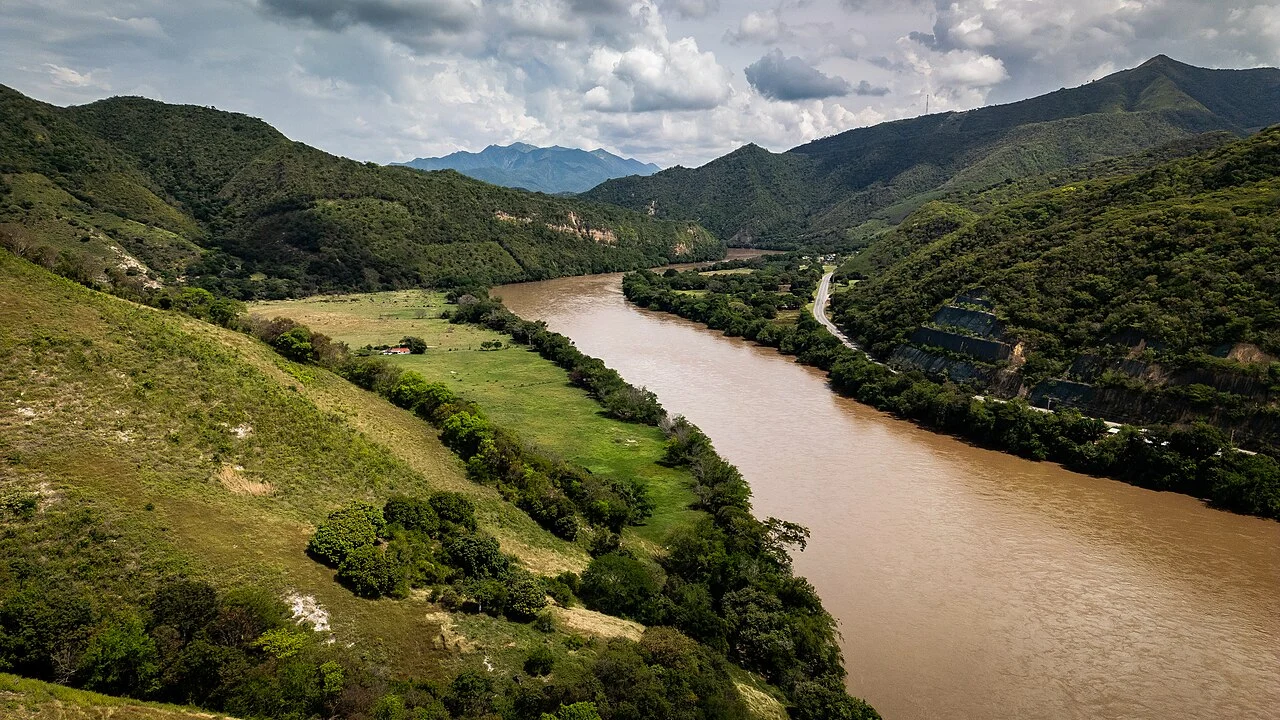
The Magdalena River slices a thousand miles through the heart of Colombia. Jordan Salama spent four weeks one summer following the course of that river to learn more Colombians and the importance of the Magdalena to them, a trip that inspired his book, Every Day the River Changes. In this episode, I talk with Jordan about that trip and the river that inspired it. We talk about how the Magdalena got on his radar and the experience of traveling along it. He shares stories about some of the people he met and the importance of the Magdalena in their lives. He discusses some of the threats facing the river, including an unusually large one – hippos that have become established in part of the Magdalena. We finish with a story about how the trip and reaching the end of the Magdalena impacted him personally.
Show Notes
Join Jordan Salama’s mailing list
Follow Jordan Salama on Instagram
The books mentioned in this episode (available wherever books are sold):
- Every Day the River Changes
- Stranger in the Desert
Support the Show
If you are enjoying the podcast, please consider showing your support by making a one-time contribution or by supporting as a regular contributor through Patreon. Every dollar you contribute makes it possible for me to continue sharing stories about America’s Greatest River.
Don’t want to deal with Patreon? No worries. You can show some love by buying me a coffee (which I drink a lot of!). Just click on the link below.
Transcript
Wed, Oct 14, 2026 5:40PM • 1:01:37
SUMMARY KEYWORDS
Magdalena River, Colombia, Ecosystem, Biodiversity, Storytelling, Waterways, Navigation, Sedimentation, Pollution, Deforestation, Hippopotamuses, Conservation, Activism, Landscapes, Migration
SPEAKERS
Dean Klinkenberg, Jordan Salama
Jordan Salama 00:01
Páramo is an ecosystem in Colombia. Colombia is one of the few countries that hosts this ecosystem, but it’s where almost all of the major rivers of the country are born. It’s kind of this like marine landscape, but above water in tropical countries where it’s like over 2500 or 3000 meters of altitude, I think. And there are these amazing plants that basically capture water and condensation from the air, and then deposit them in underwater aquifers, which is where rivers are born. So the Magdalena kind of like gurgles up from from this place.
Dean Klinkenberg 00:54
Welcome to the Mississippi Valley Traveler Podcast. I’m Dean Klinkenberg, and I’ve been exploring the deep history and rich culture of the people and places along America’s greatest river, the Mississippi, since 2007. Join me as I go deep into the characters and places along the river, and occasionally wander into other stories from the Midwest and other rivers.
Dean Klinkenberg 01:15
Read the episode show notes and get more information on the Mississippi at MississippiValleyTraveler.com. Let’s get going.
Dean Klinkenberg 01:27
Welcome to episode 86 of the Mississippi Valley Traveler Podcast.
Dean Klinkenberg 01:32
Well, for a while I’ve been really interested in bringing some stories to you about rivers other than the Mississippi, and I know in the past I had a two-parter with Steve Schnarr where we talked about the Missouri River, but today we’re going to go in a very different direction. And I guess it’s kind of funny that Steve Schnarr, based in Columbia, Missouri, told us about the Missouri River, and now we’re going to go to the country of Colombia to learn about the Magdalena River from writer and journalist Jordan Salama. It’s a really fantastic conversation.
Dean Klinkenberg 02:04
About 10 years ago, Jordan spent four weeks traveling the length of the Magdalena and wrote a book about it, “Every Day the River Changes.” It’s a fantastic read. You should definitely run out and get yourself a copy of that.
Dean Klinkenberg 02:16
So in this episode, we begin by talking about some of our common interests, including not just rivers but family history and stories about our families, and then we move on to talking about the Magdalena specifically, how he got interested in traveling along and writing about the river. He describes the characteristics of the river from its source all the way to the sea and how it changes and some of the landscapes and ecosystems the river passes through, some of the major communities along the way. He talks about his experiences of traveling along the Magdalena, which at this point in time is mostly by land. There aren’t that many opportunities to actually travel on the water. He tells us a couple of stories about people that he met along the way. Some really good stories, particularly about people and communities that are taking some small steps to make improvements to the Magdalena, even in the face of some enormous obstacles like lack of government funding and industries that are whose activities are actively polluting the river.
Dean Klinkenberg 03:20
Then we move into talking about the famous or infamous hippos that are taking over a part of the Magdalena, the history of how they ended up free and on the loose in that part of the Magdalena, and the struggles to figure out a plan to deal with them because they are having enormous impacts on the ecosystem.
Dean Klinkenberg 03:40
And then Jordan finishes with the story about what the end of the river, the end of the Magdalena, is like, and what the experience was like for him to reach the very end.
Dean Klinkenberg 03:53
Hey, I really had a good time talking with with Jordan, and I think you’ll enjoy listening to the interview as well. I learned a lot about the Magdalena, and it’s always fun to learn about another river and to find out how rivers really have this singular importance, no matter where you are in the world.
Dean Klinkenberg 04:10
Thanks to those of you who continue to show me some love through Patreon. For as little as $1 a month, you can join the Patreon community and get early access to these episodes, plus the satisfaction of knowing you are a big part of the reason this podcast is still going. Go to Patreon.com/deanklinkenberg, and at that address you will find out how to join the Patreon community. Patreon, not really your thing? You can buy me a coffee. Go to MississippiValleyTraveler.com/podcast and there you will find out how to support my caffeine habit, and it is a regular daily habit that I appreciate any help keeping that going as well.
Dean Klinkenberg 04:53
At the same address, MississippiValleyTraveler.com/podcast, you’ll find a list of all previous 85 episodes, along with links to each of those episodes, where you’ll find the show notes, including the show notes for this episode. So you can go and binge listen to those episodes if you wish, or pick and choose the topics that seem most interesting to you.
Dean Klinkenberg 05:16
85 previous episodes. There’s going to be something in there you’re going you’re going to want to listen to.
Dean Klinkenberg 05:23
All right, let’s get on with the interview.
Dean Klinkenberg 05:37
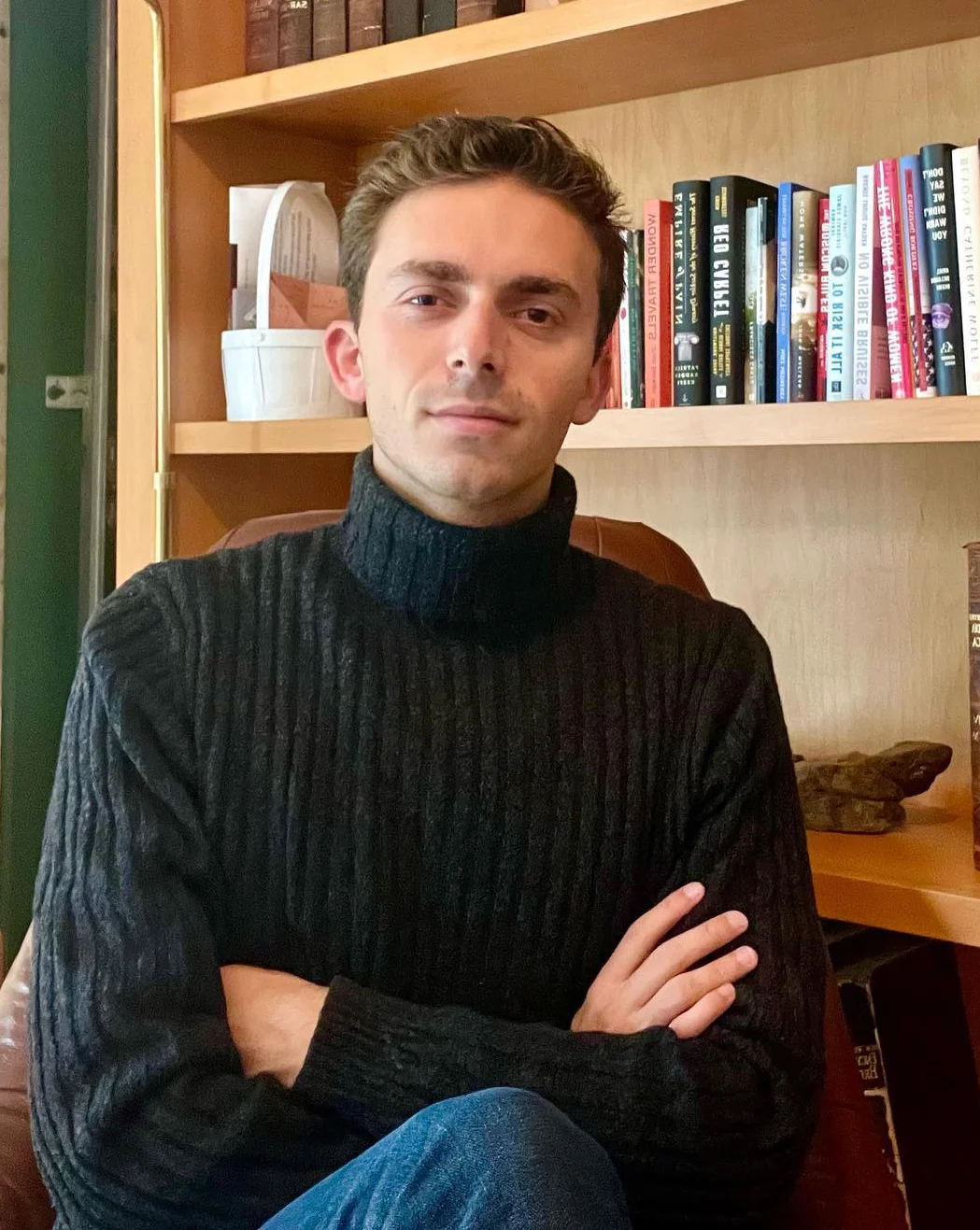
Jordan Salama is an American writer and journalist, a contributing writer at the New Yorker, his essays and stories have appeared in National Geographic, the New York Times, and many other publications. He’s the author of two books: the nonfiction book “Every Day the River Changes: Four Weeks Down the Magdalena,” and most recently the memoir “Stranger in the Desert.” He lives in New York City. Jordan, welcome to the Mississippi Valley Traveler Podcast.
Jordan Salama 06:03
Thank you so much. You know, Dean, I I’m really glad to be here. I love the Mississippi River too, and I have camped on the banks of the Mississippi in my life.
Dean Klinkenberg 06:12
Really, where?
Jordan Salama 06:14
I it was in the fall of 2020. My brother and I took an old car and we put the seats down, and we van camped across the United States from New York to Wyoming, and then Montana and back. And on the third night, no, the second night of that adventure, we camped on the banks of the Mississippi River in Iowa. Now, I should have looked this up before our conversation started to remember exactly where, but it was the state park, and we woke to this very foggy, misty morning of the Upper Mississippi, and it’s something that I’ll never forget.
Dean Klinkenberg 06:50
Awesome! Well, I’m glad you have that that memory, and you have you’ve actually been to the Mississippi too. I notice that you you seem to share some of the same affinity for rivers in general that I do, and we’ll get to that in just a minute. But one thing I wanted to touch on right out of the gate is, I mean, I’m really impressed with your storytelling abilities, and I’m just sort of curious, like, what you attribute that skill to.
Jordan Salama 07:14
Thank you. It’s a good question. I think that it’s one that I think about a lot, and if I had to pinpoint something, it would be the fact that I come from a family of storytellers. Now, not professional storytellers. Nobody in my family, to my knowledge, is a professional writer. But I always grew up around older relatives who told stories in a number of different languages, some of which I understood more than others. And so, I think I always knew I wanted to be a writer. I just didn’t know what kind of writer I wanted to be. And this project, you know, the the river project, the the Magdalena project, really concretized it for me, I think. You know, telling true stories about people and landscapes and territories and waterways, something I really am passionate about.
Dean Klinkenberg 07:55
Oh, great. So it helps coming from a family that has stories. I have read your second book also. I read “Stranger in the Desert”. I think I share your passion for family history and trying to preserve those stories as well. Although I will admit to just a little bit of envy at the binder full of stories that you inherited. Was that your grandfather who had that? Yeah. I mean, we could probably do a whole nother discussion just about that stuff. But I’m interested in the same thing, and I wish I had storytellers like that who are willing to share those stories with me. I’ve had to more piece things together where I can from folks and and learn what I can. But man, I’m what a gift to have stories like that available to you.
Jordan Salama 08:37
Truly, and I mean, I’m not surprised to hear that you’re interested in family stories, and that I’m interested in rivers and family stories, and that we’re both we have these kind of parallel interests. I don’t think that it’s a coincidence. As I’ve now moved through the world, I think through these with these writing projects and talked to a lot of people and presented my work in different contexts. I think that it’s clear that movement is a big theme in both. I’m fascinated by movement. I think that movement is really moving and well, poignant and important to think about as an idea. Whether that’s the movement of a waterway, the change of the people of people’s lives and places along the the banks of those waterways, or the movements of a family and the migrations of people. I think all of those things are linked, and often people move based on certain routes and paths, and those roots and paths are determined by the natural world that surrounds us. So I do think that there are overlaps and and you know parallels here.
Dean Klinkenberg 09:35
And maybe there’s a certain sense of constant movement among Americans as well. It seems like a lot of us don’t stay put in one place all that long. So maybe that’s why the rivers are such a good. Why I feel so attracted to them too. Is my family moved around quite a bit when I was growing up. That that sense of movement maybe just feels more natural to me than staying put.
Jordan Salama 09:57
For sure. And isn’t it more comforting too to know that if you live, you know, in one place, and what you know is in another place. But for there to be a river or a railroad or a path or a trail or something that you know hits one or the other, or even a road. I remember when I was in college this is a kind of very basic thing, but I mean, I went to college in Princeton, New Jersey, which U.S 1, Route One, right, the the the road passes by, and I grew up in a town in New York where the same Route One called Boston Post Road near where I grew up also passed by, and I just had this sense of comfort. I think that I wasn’t that far from home, but it was the furthest from home that I’d ever been. Thinking that, oh, if I just walk on this road, I’ll get back to where to what I know, and that’s a really cool thing.
Dean Klinkenberg 10:49
I guess being near those roads, kind of like being near a river, also offers some sense of possibility, right? You can kind of sit there and wonder where that road might lead you, or where the river might lead you.
Jordan Salama 11:00
if we just kept going, right?
Dean Klinkenberg 11:02
Yeah, yeah. Just keep following it until you can’t anymore, and then there’ll be another road or river you can follow. Well, how did the the Magdalena specifically then get your attention?
Jordan Salama 11:13
Well, I was in Colombia in South America. I was in school. I was still a college student, and I I had this opportunity to do kind of work a job, basically an internship, the summer after my first year of college, and I went to Colombia. And this was a time when people from the United States were not really going to Colombia if they didn’t have a connection to the country, and I didn’t have a connection to the country. I’m not Colombian. My family does have roots in Latin America, but not in Colombia. So it was very much a foreign place for me, and had the connotation of being a very dangerous place because there’s long-running civil conflict there. A peace agreement was maybe in the works, but hadn’t really been signed yet.
Jordan Salama 11:56
When I went there, I found a lot of people who were talk about amazing storytellers. They were just phenomenal storytellers, and I think their way of making sense of the chaos and the violence that had kind of consumed their country and their lives for a long time, their way of finding meaning and purpose in it was through storytelling in different ways. And Colombia is kind of the birthplace of an amazing literary tradition in the world, which is magical realism. So, as we said before, I’m the kind of person who’s very interested in intergenerational storytelling. I’m interested in having experiences in the natural world in all of its forms, right? But everybody was saying to me, you know, if you want to go to a really beautiful river and understand this country through its best stories, you have to understand the Magdalena River. And I was like, “What’s that?” I had never heard of the Magdalena River before.
Jordan Salama 12:53
So a few years later, I had to write a thesis in school, and I remembered what these people had said, and I said, you know what? Maybe I should try this. Maybe. What’s all this hype about? I’m going to go check out the Magdalena River, and I did. And that ended up being the project, traveling it from source to sea, and and writing about it in a in a thesis that then ended up becoming a book years later. Like who knew from the very beginning. And now, 10 years after that first internship, right, the summer of 2016, that I’d still be here talking to you about the about Columbia and my time on the Magdalena River. It’s really crazy.
Dean Klinkenberg 13:27
The story has some legs.
Jordan Salama 13:28
Yes, it does.
Dean Klinkenberg 13:30
I clearly chose the wrong major in college. Yeah, my my thesis was handing out some surveys to other college students and then trying to sort through the results. I think four weeks down a river would have been a much better project to take it.
Jordan Salama 13:45
Yeah. What did you major in?
Dean Klinkenberg 13:47
I was a psychology major. So.
Jordan Salama 13:49
Psychology major. Yeah.
Dean Klinkenberg 13:50
I’ve got a clinical psychology degree that I abandoned a few years ago in favor of the lucrative world of freelance writing. So.
Jordan Salama 13:56
There you go. You’re talking to the right person. Yeah. I mean, I guess I can imagine that one could make a thesis out of a four-week trip down a river in a number of different disciplines. Probably, I mean, certainly as a biologist or an ecologist, maybe as an anthropologist or a sociologist. But I was none of those things. I studied Spanish in college, which is, you know, this thing nobody really understood. People would say, “Did you study the language of Spanish?”, No, I already spoke Spanish, but it was just a way to study the region of the Americas and to live and work in Spanish for a time, being and you know doing most of my stuff in Spanish. And it’s really cool because now that’s what I do for work. I mean, I’m a writer and a journalist, and most of my storytelling occurs, my reporting occurs in Spanish, even though I write in English. So another throughline for you there. That’s really interesting.
Dean Klinkenberg 14:50
So when you were, so I guess you took this trip during a summer, a summer break. What? How did you prepare for four weeks of traveling down down the Magdalena?
Jordan Salama 15:04
Well, I think it’s important to say, and I say this early on in the book, that the Magdalena River, one of its big problems today and then at the time, is that it’s no longer fully navigable. It was never fully navigable, right? There was always a point at which it became navigable going down river, but even from that point to for a large stretch of the thing, it’s just really hard for major vessels to pass through it now because it’s very sedimented due to deforestation on both sides of the river, right. The trees were stripped away, the land just poured into the river, and even small canoes, you’ll get stuck on the mud, and you’ll have to get out, and you’ll have to walk up the riverbed. It’s just a really shallow river in a lot of places.
Jordan Salama 15:46
So I was kind of forced to, unlike more historic chronicles of this river, I was kind of forced to travel by land alongside it, which was interesting because I don’t think it’s a coincidence that the book is really centered in the voices and the stories of the people of the river, as opposed to me traveling on a boat down the river and looking out. So in that sense, there wasn’t that much that I had to prepare in the way of like a pack or a canoe. It was more preparing myself for the history and the context and the culture of the lands and the towns and the communities that I would be traversing.
Jordan Salama 16:18
And the Magdalena really does cut a cross section through a very diverse section of Colombia, so I knew I would be encountering people from indigenous descent, you know, Afro-Colombians, just like we have in the United States a really, you know, vibrant Black community along the banks of the Mississippi River. That’s one of the many similarities, right? But then you also have Arabic-speaking Colombians, you have mestizos, you have deserts, savannahs, forests, mountains, swamps. Like just every kind of diversity, both natural and human, you have in this river. And so I did have to prepare for those elements in terms of like packing different kinds of clothes. The hot parts of the river are really hot, and the cool parts are not that hot. So, so yeah. But mostly, no. It was about reading other people’s chronicles and trying to think: How is this going to be different? What am I going to see in this place that will maybe be different from what my forebears would you say, I guess, what those people before me saw and wrote about.
Dean Klinkenberg 17:25
Right, right. So you’re carrying some of that. You’re carrying all that knowledge with you, but as you go, then you’re sort of open to experiences and hearing people’s stories as you go along. It sounds like there was a lot of serendipity for you on this trip. You didn’t have a whole itinerary planned out from beginning to end, and knew where you were going to stay, and and mapped out every minute of your trip.
Jordan Salama 17:46
That’s right. It was it was definitely there was some serendipity. I would say that that I’m not surprised that there was serendipity because I think any any trip like this will bring unexpected encounters and and people that you wouldn’t have thought that you would meet. I did get very lucky in the sense that people really kind of took a liking to me, and then offered to introduce me to people further down the river, which was a really helpful bit. And people really looked out for me. I mean, I was 21 from a U.S. college student traveling down this forgotten part of a country, you know, in this river that’s really important. But the power centers of Colombia have kind of just neglected it, so there’s a lot of security issues along the way, and all I found were people who wanted to take me in and make sure that I, you know, saw the beauty in their river that they were so proud of, and so I’m really grateful for that.
Dean Klinkenberg 18:36
Awesome. So tell us a little bit about this river. Then I imagine there most of the people who are listening to this podcast are probably like me. I knew nothing about the Magdalena before I read your book, and I have been to Colombia once in 2008. I had to look it up. My husband and and I met my brother and a friend of his in Cartagena for New Year’s Eve, and then we traveled around a little bit to Medellin and Bogota. So I’m not unfamiliar with Colombia, but I don’t remember really any exposure to the Magdalena at that time or hearing much about it. So I was really curious to read this book and and go a lot deeper into learning about Colombia and Colombian history. So so tell us a little bit about this river.
Jordan Salama 19:17
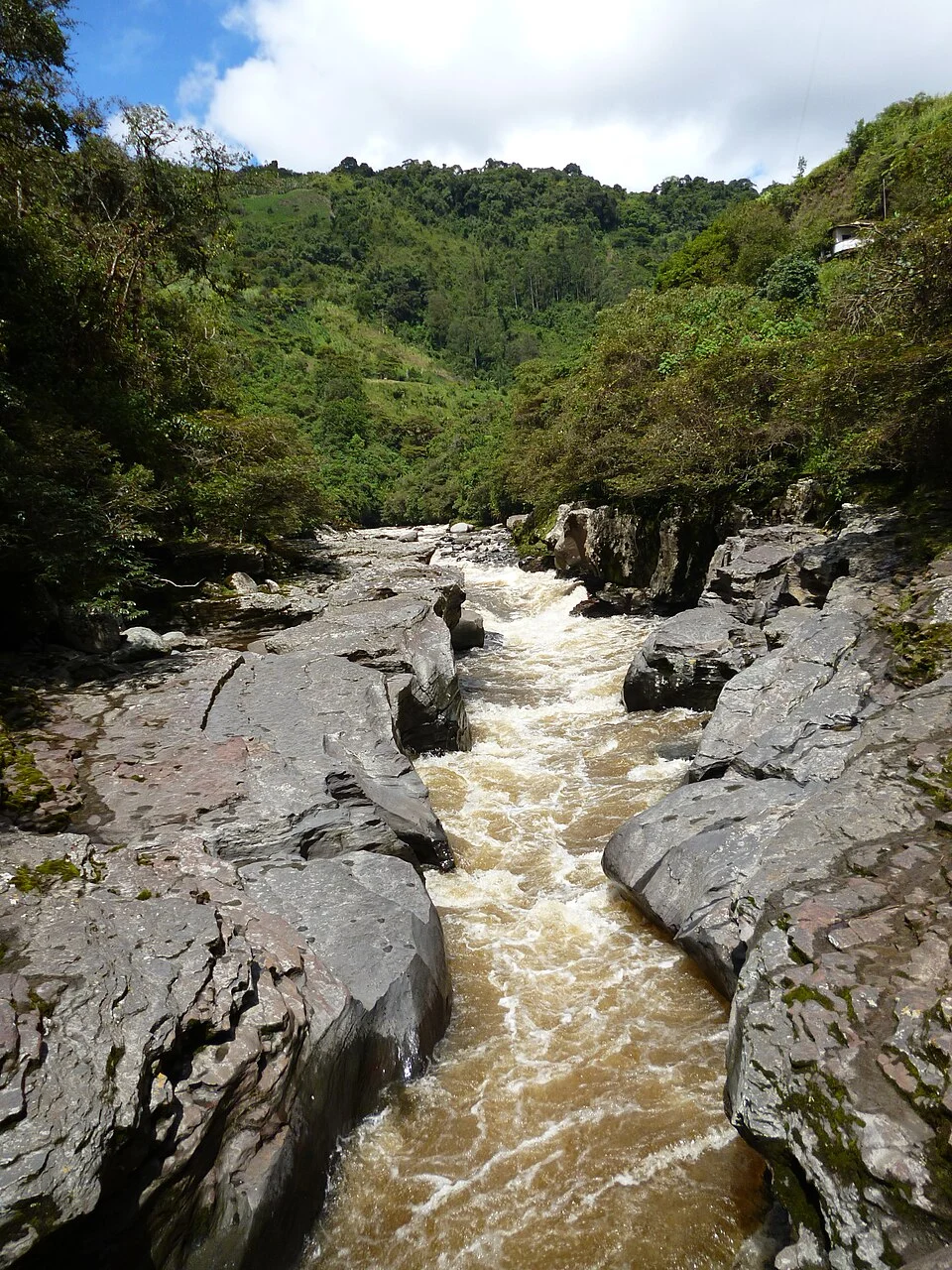
Sure. So it’s super interesting that you went at that time. I would say that’s a time when it wasn’t that common, maybe for you know people to go. I’d be curious to know why, but but yeah, I mean, so this river is really important for a number of reasons. The the major one in terms of the history of of the you know human population of Colombia is that it was a corridor for trade, of course. It was a corridor for movement of peoples, and it connected this kind of knot that’s called the Macizo Colombiano, the Colombian Massif, which is like a low lie, kind of like I think it would be like a temperate forest. I guess not truly the high Sierras, but somewhere in between. Cool, misty, cloud, foresty type of landscape. That’s where it’s where it’s born in a place called Páramo. Páramo is an ecosystem in Colombia. Colombia is one of the few countries that hosts this ecosystem, but it’s where almost all of the major rivers of the country are born. It’s kind of this like marine landscape, but above water in tropical countries where it’s like over 2500 or 3000 meters of altitude, I think. And there are these amazing plants that basically capture water and condensation from the air and then deposit them in underwater aquifers, which is where rivers are born. So the Magdalena kind of like gurgles up from from this place.
Jordan Salama 20:43
But so anyway, I say all this is that it it’s a long river. It’s about 1000 miles, a little bit more from source to sea. But in a previous time, before airplane travel was widespread, the Magdalena would also be the way in which most visitors to Colombia would get to the capital of Bogotá, or even Medellin too. They would enter at its, you know, at its mouth in the Caribbean Sea near the city of Barranquilla, and then they would take a boat up the river and either stop at a port called Berrío, Puerto Berrío, and take a train to Medellin, or they would go further, and they would eventually get to a town called Girardot, and take you know trains, or before that, kind of mule transport to Bogota. So this river was just a really important artery of the country in many for many reasons and in many ways.
Jordan Salama 21:38
And then the other thing that’s important to say about the river is that Colombia is the second most biodiverse country in the world, and the Magdalena hosts a great portion of a lot of this wildlife and and biodiversity. So, I mean, countless species of birds, mammals, of you know, you have manatees and rare river turtles, and it’s a really it’s a really special river because it starts in a place like the Páramo, then flows through the cloud forest, and then ends up going through the hot lowlands before it gets into the swamp and then the Caribbean Sea. You just have this really biodiverse selection of of wildlife, essentially flora and fauna that you see along the way.
Dean Klinkenberg 22:18
And mostly tropical then too, right? They don’t have freezes that reset the cycle of life, at least in the lowlands.
Jordan Salama 22:25
Not even in the highlands, I think at all.
Dean Klinkenberg 22:30
Wow. So, what are some of the major communities along the Magdalena then?
Jordan Salama 22:37
Like the names of cities or towns?
Dean Klinkenberg 22:39
Yeah.
Jordan Salama 22:40
Sure. So, well, you have, It’s born in this mountainous landscape, right? And I said the Páramo, which is very remote. The first settled village, which I visited and talk about in my in my book, it’s called Quinchana, and I think it’s really funny that it’s called Puerto Quinchana, which means the port of Quinchana, because it’s…
Dean Klinkenberg 23:00
Not a lot of boat traffic.
Jordan Salama 23:01
Not a lot of boat traffic, but it is the first settlement along the Magdalena River. Then it hits a town called San Agustín, which is like the municipal kind of center of the region. Still a very small town in the mountains, and home to a really amazing archeological site, UNESCO World Heritage Site and Museum of these megalithic statues that were very prominent in the indigenous pre-Hispanic communities of, you know, of the Magdalena Basin and of the Colombian Massif that I mentioned. Then the river continues, kind of like as a it’s it’s narrowest during this moment.
Jordan Salama 23:32
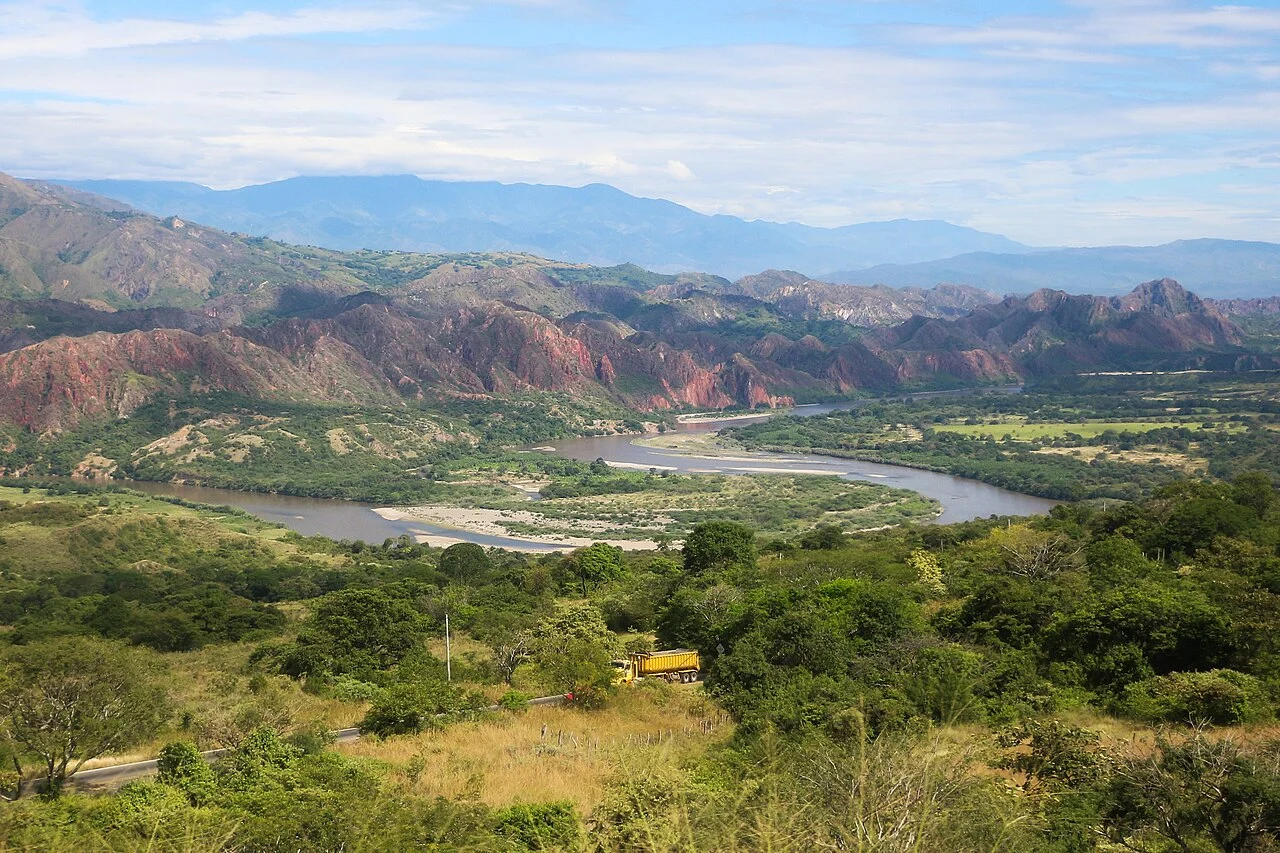
But then, as it descends into the first very hot city, which is called Neiva. In Neiva, it starts to get a little wider and look a little browner, and then you keep going. You pass Girardot, Honda. It gets big, right? Then suddenly it’s the Magdalena of the storybooks, which looks like this wide causeway. It just keeps getting wider as you keep going. So then you pass by Puerto Triunfo, Puerto Boyacá, Puerto Berrio, Barrancabermeja. In Barrancabermeja today, that is the kind of starting point for most organized navigable public transportation on the river. It’s very close to the coasts, essentially. I mean, not not that close, but but definitely not that far. From Barrancabermeja I took a nine-hour public fast ferry in like a narrow ferry-like canoe that you know would drop people off in places like Puerto Wilches and Cantagallo and Gamarra and other towns whose names are in the book, but I’m not remembering now, until it gets to this enormous swamp called the Cienega de Zapatosa, which is just this huge mess of wetlands and and you know savanna and marshes and swamps and in this place. This is where the ferry drops you off at a place called El Banco, which is near a town called Mompox, which is a very legendary town that I write about in the book. Very Spanish colonial, famous Spanish city as like the center of power during the colonial times, and then from Mompox you keep going until you get to Barranquilla, the the port city on the Caribbean, where the Magdalena empties into the sea. So those are some of the names of the places.
Dean Klinkenberg 25:31
Right, right. Thank you for that. That was a it’s a good description. And my I’m still trying to get my head around some of the changes in the landscapes along there too. So the area where the river begins, it’s almost like a hydrological recycling point or something like air is being recycled out of the atmosphere by plants and recycled underground, and it becomes springs and it feeds these rivers. To me, there’s a lot of beauty just in that image in itself, and that that’s the that’s where this legendary river begins. It’s so it’s fairly the elevation’s pretty high at the beginning. You’re you’re up in kind of the mountains, mountainous terrain.
Jordan Salama 26:18
Yeah, I’m going to get you the exact elevation of the Páramo de Las Papas. It’s 3100 meters, which is about 10,000 feet.
Dean Klinkenberg 26:26
All right.
Jordan Salama 26:27
That’s where the Magdalena is born. Slightly lower are the populations, right? Like Puerto Quinchana, , those places I told you about. But yeah.
Dean Klinkenberg 26:38
So there are there’s some pretty steep elevation changes after that, then.
Jordan Salama 26:41
Yes, that’s correct.
Dean Klinkenberg 26:43
And it’s I was thinking about this too when you’re talking about the lack of sort of you know transport on the river today. You you mentioned a little bit in the book about steamboats, you know the history of steamboat traffic on on the Magdalena, and I I guess I shouldn’t be terribly surprised in a way. Is like even on the Mississippi, I mean you can take boats on the Mississippi, but it’s mostly luxury cruises at this point. Like if you just wanted to commute from one town to another, you’re going to have to do it in a car or maybe a train if you’re lucky. But there’s no river transportation to get you from place to place. A few ferries here and there, but it seems like that that mode of transport of going on the on the water itself as a routine way of getting around is kind of a thing of the past here too. But it’s more than that for the Magdalena. Like there were other factors that probably destroyed.
Jordan Salama 27:36
Yeah, I mean, can the Mississippi sustain river traffic if there were people someone wanted there to be river traffic, it could?
Dean Klinkenberg 27:41
Yeah.
Jordan Salama 27:41
The Magdalena can’t in a large portion of it, right? There is a luxury cruise now, for example, that goes from the port in Baranquilla to like these towns, Mompox, El Banco, like around there. But you know, big boats, much further than that, they’ll get stuck in in the in the sediment in the mud.
Dean Klinkenberg 28:01
All right, and the the river, the Magdalena, hasn’t really been engineered then to create shipping channels. Are are there very many dams at all on the Magdalena?
Jordan Salama 28:12
In the Upper Magdalena, there is an important dam in the kind of Macizo area, and there was at the time when I was reporting. I’m not sure what the status of this is now, but at the time that I was there, there was a Chinese plan to make several dams in the Upper Magdalena for hydropower. It doesn’t seem like that’s come to pass yet, but there was definitely one, at least one big one. In the lower parts of the Magdalena, though no, no, it’s not dammed. Maybe in part because I mean I think that there is this kind of hope to harken back to the glory days of the river transport, like that will someday return. That was such a big part of the Colombian national imagination that I think that to dam the river there would be like cutting off the lifeblood of the country in a symbolic way too.
Dean Klinkenberg 29:02
So, about what point in time do you think that the steamboat and the regular river traffic kind of came to an end? Like, how long ago would that have been?
Jordan Salama 29:11
Uh, in the 1960s, the 1970, early ’70s at the latest. Yeah.
Dean Klinkenberg 29:16
All right. But one of the things I’m all is kind of that I’m very interested in is like how people think about their relationship to rivers, and I think maybe there’s always been a thread along the Mississippi where people thought of themselves as you know river rats, you know, which used to be a derogatory term, but now it’s kind of a badge of honor for a lot of folks. But it’s basically people who’ve always sort of had this identity as being, you know, part of this river system or living with the river as part of who they are. I think some of that is kind of gaining steam again, and there’s some communities along the river now that seem to be re-emphasizing their connection to the Mississippi. It’s becoming a at least an important part of how they market their communities. Is there? What was that like along the Magdalena? Did people think of themselves as being a part of the Magdalena? Did they just happen to live next to this river? What was that like?
Jordan Salama 30:11
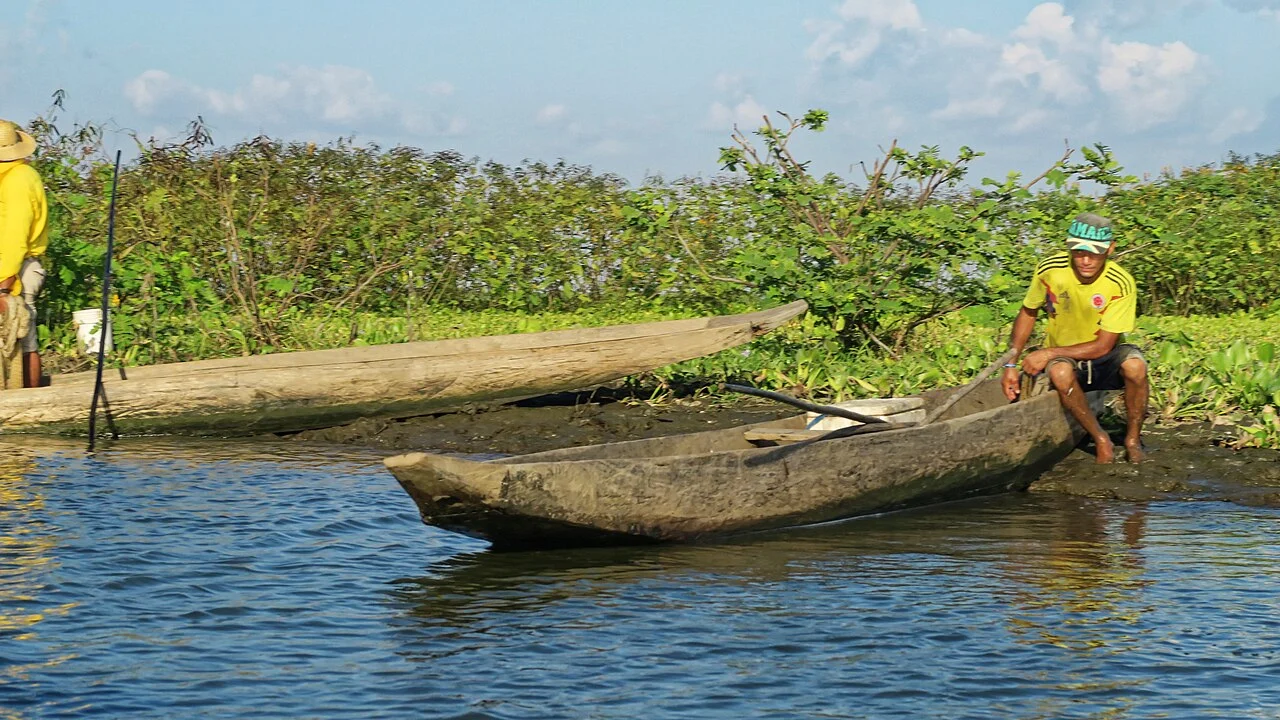
Absolutely. I think that what you’re describing sounds pretty similar to the Magdalena. Just obviously, we’re talking about a different level of economic development and economic opportunities, right, in the U.S. versus in a country like Colombia,. People along the the Magdalena really rely on the Magdalena for a lot of things, right? Like a lot of people just make their lives as fishermen or farmers or you know, or canoe like like canoeers or canoe builders or lancha drivers, like little water taxis, you know, here and there, and it is a life that is I mean, it’s very rural, q lot of these areas, right? So, so people think a lot more about the water and depend more on the fresh water that’s flowing, and if the river floods or if it’s dry, like all of that matters a lot to just the lifeblood and the the livelihood of a lot of people.
Jordan Salama 31:02
Now there is the sense that the river is forgotten in a number of ways, right? Quote unquote forgotten by who? You have the local populations. You have issues like overfishing and contamination and pollution and this deforestation and sedimentation. People will do that out of need, desperation, hunger, right? But also, people will do that because they don’t know that it’s the wrong thing to do until it’s too late.
Jordan Salama 31:31
And then, on a national level, you have this idea that the state has kind of abandoned the communities of the Magdalena River, and that’s where they’re starting to become kind of more, as you say, like marketing attention to the to these communities,. Communities are realizing that it could become kind of popular or marketable to to pay attention to the Magdalena and have you know arts scenes in some specific places or try to build more river tourism. There’s a luxury cruise now that takes you you know like I said in the lower part of the Magdalena. So there is there are these movements towards like a reimagination of what the Magdalena could be, but in the way that the river truly sustained the country before, I mean, it’s still very contaminated, very overfished. There’s invasive hippopotamuses that are wreaking havoc on the ecology of the, you know, of the river itself. There’s plans for dams. There’s plans for other mega projects. Like you know, a lot can happen in a country like Colombia that can change the destiny of this river.
Dean Klinkenberg 32:28
Right. What’s the primary like source of the pollution? Like, what what kind of pollution? What where’s it coming from?
Jordan Salama 32:36
I mean, like a I think I think that the biggest kind of pollution that you get is runoff from farms.
Dean Klinkenberg 32:44
The fertilizers.
Jordan Salama 32:45
Yeah.
Dean Klinkenberg 32:45
Nitrogen, phosphorus, kind of?
Jordan Salama 32:47
Yeah, that sort of thing. At the same time, there’s a lot of plastic pollution and like you know, just garbage dumping in the river, which is really bad. But I don’t know if you should quote me on the nitrogen, phosphorus runoff. My sense is that when I was there, that was what people were talking about: algae blooms and things like that in the river. But also, like sewage mismanagement, right? Like we’re we’re talking on on a more basic level of of dumping is is a big problem as well.
Dean Klinkenberg 33:14
Well, right in a lower income country, they haven’t necessarily had big budgets to separate sewage and rain runoff and building, you know, expensive systems to treat everything. So, all right.
Jordan Salama 33:28
And you have gold. I mean, like then you have like all the tributaries of the Magdalena, right? You have like in some of the mountainous regions, you have uncontrolled gold mining, and that gold mining has, of course huge issues in the smaller rivers that then feed into the Magdalena. So yeah, I would say like wastewater, domestic problems, gold mining, agricultural runoff, sedimentation in general. Yeah,
Dean Klinkenberg 33:59
As you were traveling around and talking with folks, did people seemed to feel some distress, or how did they feel about the state of the river?
Jordan Salama 34:09
People lamented it for sure that the river was dirty, that the river was not what it once was. This used to be a great river. People would say that over and over again, but there was nobody who was, you know, who could see a big scale solution to fix those problems. One of you know one of the kinds of people that I met kind of over and over again, and you probably remember this from the book, are these social and environmental leaders, right? On community small scale levels, one woman that comes to mind, Chava, was her nickname, and her whole thing was you know getting people to become more conscious of the fact that the Magdalena is home to an endemic endangered river turtle called the Magdalena River turtle, and it’s a delicacy in communities along the Magdalena River. But they should not be eating it anymore because the population decline is severe. And she’s really led a movement in her region of the Magdalena of like getting people to stop hunting them and eating them, and instead she incubates eggs and she leads releases of baby turtles and back into the river. And like, there are debates on whether or not that’s the best way to actually conserve the river turtle. But like, at the end of the day, the conscientiousness that she’s generating in people is really important, and other people advocating for other elements of the river’s, you know, like taking care of the river is really important. And the sum of the parts is big, but it’s not big enough to defeat big industry and government neglect and conflict and all of the enormous macro-level problems that cause a river to become in such a state of disrepair as the Magdalena is.
Dean Klinkenberg 35:45
Hey, Dean Klinkenberg here interrupting myself. Just wanted to remind you that if you’d like to know more about the Mississippi River, check out my books. I write the Mississippi Valley Traveler guidebooks for people who want to get to know the Mississippi better. I also wrote *The Wild Mississippi* a guide that goes deep into the complex ecosystems supported by the Mississippi, the plant and animal life that depends on them, and where you can go to experience it all. If you like fiction, check out my Frank Dodge Mystery Series. Each book is set in places along the Mississippi River. My newest book is a travel memoir called “Better Safe Than Sorry: Slow Boats, Chicken Busses, and the Radical Choice to Trust the World.” The book explores a simple question: What happens when you stop asking ‘What if something goes wrong?’ and start asking ‘What if everything goes right?’ Find out more at deanklinkenberg.com/bettersafethansorry.
Dean Klinkenberg 36:47
That’s one of the I think one of the bigger struggles that we face. You know, maybe more acutely now it feels like than in other ways when we have governments that fail or that for whatever one reason or another don’t act or can’t act to conserve or protect places like this. I still kind of find inspiration from people like her who find a grassroots way to just go ahead and act and do something to help fix a problem. How in whatever small way they can come up with. So she acted when nobody else was doing anything, right? She’s not getting huge amounts of money from the government to do this.
Jordan Salama 37:24
No,.
Dean Klinkenberg 37:24
She saw a problem and she went in and she acted. Can you remember, like, even like one or two other examples like that, maybe where somebody took a small step like that to to do something to make life a little bit better along the river?
Jordan Salama 37:36
For sure. I mean, I think of Luis Manuel Salamanca, who was an anthropologist and archeologist who made a name for himself, kind of discovering the archeological treasures of the Upper Magdalena, this Massif Basin, right where I said there’s these great pre-Hispanic statues and history and you know ancient grave sites, and he was someone who both advocated for that kind of like cultural and historical preservation, but also to preserve the upper basin of the narrow Magdalena against these dam projects, and he was murdered a year after I met him because he was standing up and speaking for you know water rights and the rights of people along waterways and and cultural preservation, and that’s why many people believe that he was assassinated, and nobody ever found out who did it.
Jordan Salama 38:20
That’s a huge problem in Colombia, right? Is like these people who do stand up in a small scale way against these bigger interests and these bigger these bigger problems are risk literally risking their lives because there’s so much money to be made from the pollution of of this river. You know, well, there’s so much money made by things that cause the pollution of this river that they’re standing in the way of. So Luis Manuel Salamanca, Chava with the turtles I mentioned. I guess I mean I also think about somebody like well bigger than just like then you have like the middle level like the Wildlife Conservation Society, the Nature Conservancy, the World Wildlife Fund. They all operate in the Magdalena River Basin, which is really important work and incredible, like these international NGOs that are doing stuff. Again, like it’s they’re they’re making these incremental steps, which is really important. And the internship that I did the summer after my freshman year was with the Wildlife Conservation Society in Colombia. So that’s where I first started to think about these things, right, and to understand how these problems are either solved or not solved, or stay stagnant or worsen.
Dean Klinkenberg 39:27
So you think like even today, like there’s a risk to your physical health, to your well-being and health if you take a stand against some of the forces that are polluting. It was 10 years ago. So, like, but the things haven’t changed all that much in terms of?
Jordan Salama 39:43
No, no. Two or three years ago, I published a piece in National Geographic specifically about this: how Colombia is regularly the most dangerous country in the world for environmental activists and advocates. A crazy high number of people. I mean, like we’re talking about in the low 1000s. Killed every year.
Dean Klinkenberg 40:01
Wow.
Jordan Salama 40:02
Yeah.
Dean Klinkenberg 40:03
All right, goodness, and there’s I don’t really know that I hear much about that in the news, or.
Jordan Salama 40:12
Yeah, the world is a big place, and there’s a lot of things going on, and there’s a lot of problems, and so these are stories that go under the the radar, right? And I’m gonna get the number. Let’s see how many social leaders were killed in Colombia last year. Let’s see if it’s still as high as it was when I wrote that article. Okay, so actually, recently it was more than 170. So that is a lot less. In 2022 it was a couple 100. I’m sorry, it was not a low 1000, but still, that’s a lot more people than should be killed for for defending the environment. Maybe the low 1000 number was targeted instead of killed, but it still doesn’t like it’s not you know if your life is at risk in any way for doing this work, something is wrong.
Dean Klinkenberg 40:58
Right, it’s pretty that would discourage a lot of people from from taking the action, and I can’t think of anybody in this country recently, at least, who’s been murdered for you know conservation activism.
Jordan Salama 41:10
Exactly.
Dean Klinkenberg 41:11
So, so wow. Let’s kind of go on a little happier note. Then let’s shift a little bit. Like I think it was one of the things that I enjoyed about the book is that you just had these really moving, authentic experience. I hate the word authentic, but these these moving experiences with people as you were traveling around. Tell us a little bit about what you learned about the communities and the people in that part of Colombia as you traveled.
Jordan Salama 41:39
Well, I think that like it sounds maybe a little bit naive and idealistic to say, but the world is filled with good people. I mean, you’re traveling through this territory, this region, right? That is so known for its convulsions of violence and all these problems that we’re talking about, and yet you have these traditions of music, of food, of history, of people who live life with purpose and meaning. Whether they’re creating little bits of filigree jewelry day in and day out, like I mentioned, a 90-year-old man who that was his life for 75 or something of his 90 years is just making little filigree silver and gold fishes and and and little hats and like tiny little earrings and rings and things in a small town where people kind of forgot about him, and he worked in silence on the stoop of his house and made these little moments of beauty every single day.
Jordan Salama 42:30
Or a school teacher who realized that most of his students lived on farmsteads so far from, you know, the town that they did not have good enough access to books at the library, and so he would bring books to them on the backs of donkeys, and he called the Biblioburro, and I rode with him, you know, and or a canoe builder. Yeah, like there’s just so many people there who I met who were living, who knew how they wanted to spend their time, who knew how they wanted to spend every single day doing what they loved, and I think that’s a message that’s lost also in today’s and like in the in fast-paced life of the modern world is like we lose that master craftsmanship and that artisanry and that engineering ability and those that that passion for just get spending your life getting good at a one thing is something very magical and very special I think and and and I met a lot of people like that, and had these very emotional and moving interactions with them.
Dean Klinkenberg 43:26
And I bet not many of them expressed envy at the Western ability or the developed country’s ability to spend hour after hour looking at Facebook.
Jordan Salama 43:36
Yeah, I mean they do that too now. You know, like that’s the irony of it. But there’s like something there where it’s you know there is a slowness to life in in the basin of the Magdalena, especially in the warm weather, the siesta culture. Like there’s there’s a sense of it that’s that’s there now. Things may have changed a lot. I’m talking to you about you know almost 10 years ago when I when I traveled along this river, and I’ve gone back a few times since, but but a lot continues to change. I mean, the title of my book was “Every Day the River Changes,” and that’s obviously giving this the you know a nod to the idea that the river changes, but also so do the people who live along it and the country that surrounds it. So, but yes, I think that there’s a lot more dialog with the United States and and you know the quote unquote developed world than one might think. Life is not that dissimilar, but you know there are these very special characters that the Magdalena seems to create.
Dean Klinkenberg 44:36
I’m going to go out on a limb. I’m going to say that’s kind of a universal characteristic of rivers.
Jordan Salama 44:41
Oh yeah.
Dean Klinkenberg 44:41
Every river I’ve been to, it seems like there there seems to be these really unique characters who are attached to the river, and maybe maybe it works both ways. They’re at the river because they’re kind of either have an eccentric life, or or maybe the river helps amplify that a little bit. But.
Jordan Salama 44:59
Interesting. Tell me about that, and then the Mississippi. Like who who comes to mind?
Dean Klinkenberg 45:04
Well, there are lots of people who who fish, you know, obviously. But there are a handful. There’s a guy who is retired now, who spent a lot of his life foraging for most of his living. He would do some hunting and trapping, he collected berries and plants from the woods and the floodplains of the river, and that was his how he sustained himself. He was a total forager, and he liked the isolation. You know, he liked being on his own and doing all these things. He did it all year round, even when it got to be 20 or 30 below in the winter time. And later he became, you know, an accomplished storyteller because he had so much material to work with. But but yeah, I don’t think he’s the only person like that exactly. There used to be a lot of them, but there aren’t nearly as many people who are foragers today.
Dean Klinkenberg 45:57
And then there are some people who live year round on what are essentially houseboats in small communities, especially around Winona, Minnesota. There’s a really well-known community. They’re called boat houses, but and they’re an interesting collection of people, kind of a some collection of environmentalists and people who want to be left alone and people who just like being near the water-it’s just this interesting little community. It’s hard to imagine a collection of people like that in the same place in a sub a subdivision somewhere.
Jordan Salama 46:31
Yeah, yeah. So it sounds like that it’s a river thing. Maybe it’s not even. I don’t know. It just sounds like it is a river thing. And what do you think it is about the river, like the river being a vehicle for storytelling? Like we were talking about at the beginning. What what do you think it is about that? Because the Mississippi surely is a vehicle for storytelling. I mean, we know that.
Dean Klinkenberg 46:47
Right.
Jordan Salama 46:48
As Americans.
Dean Klinkenberg 46:49
Right? It probably always has been going back to indigenous people as well. I’m sure there were lots of stories about the river. I know there was a lot of symbolism attached to to rivers in general. You know, rivers have always been like source of so many metaphors, and some of them kind of contradictory, haven’t they? Like, yeah. And on the one hand, like rivers are kind of this symbol of change because you know the water you you the old saying the water you see today and the river isn’t the it’s not the same river you see today is the river you see tomorrow because the water is always changing, but at the same time, there’s sort of this almost like eternal sense to these rivers that you know they they feel like they’ve been there forever. I’ve done a little bit of research on this, and like the Mississippi’s probably been flowing as the Mississippi for about 70 million years, which is not that old in geologic terms. You know, for a four or 5 billion year old planet, but it’s pretty old for a waterway, and so you kind of have these contradictory images of of change and permanence going on at the same time. And I also think there’s sort of that attraction that we talked about before-that sense of movement that you know I can just hop in this water, and a in a few hours I can be someplace entirely new.
Jordan Salama 48:02
Yeah, it’s a very special thing.
Dean Klinkenberg 48:05
Yeah. So, I don’t know. What do you What do you think?
Jordan Salama 48:10
I agree with you? No, I definitely think that it’s you know rivers have the are connectors of people and and they encourage exchange. They encourage movement, and movement encourages exchange. And from any exchanges, you will get stories.
Dean Klinkenberg 48:25
Yeah.
Jordan Salama 48:25
And also from the natural world, humans have always pulled myths and folk tales and legends and things. And I think that also gets the the gears turning for storytellers.
Dean Klinkenberg 48:36
Absolutely. You know, it’s kind of fun. I know historically, river towns were very connected. Like that was, you know, for a lot of times, for a lot of throughout a lot of history, that was the only way to get around was by water. So you know, the people upriver or down river might be the people you knew best. Maybe you knew them better than people who lived in a town 20 miles inland because it was harder to get there.
Jordan Salama 48:56
Right.
Dean Klinkenberg 48:56
What surprises me is that today there’s still kind of that sense of connectivity among these river towns that seems to be stronger than the connection they may feel to places further inland. Like, did you notice that in Colombia at all?
Jordan Salama 49:10
Definitely, actually, you could see it on the map if you look at like the roads that connect. Like, sometimes it’ll be that like two river towns are relatively close to each other, but there’s no road that leads from one to the other, and the only way to get there is through one of these like fast. That’s why this fast ferry still does exist, because there are some, or for example, like there’s not that many bridges over the Magdalena at all, especially compared to the United States in U.S. rivers, right? Like that’s not a thing. So people are crossing. Like there’s lancha, like I said, these like small canoe taxis, like crossing people. There’s also things called planchonas, which are these like very flat, almost like barges that carry like cars and trucks, because there’s no, there’s not that many bridges.
Dean Klinkenberg 49:53
All right. Well, yeah. I want to come back to this. Now you mentioned the hippos. I feel like we have to talk about the hippos.
Jordan Salama 50:03
Sure.
Dean Klinkenberg 50:04
So, so tell us why there are hippos along the the Magdalena. As far as I know, they are not indigenous to.
Jordan Salama 50:10
They are not. They are not. So, Pablo Escobar, he who shall not be named in stories of Colombia, as one of his many things, he had a private zoo of exotic animals from other parts of the world, and among them he had hippos. Now, when he was killed by the Colombian government in the early ’90s, they were able to relocate most of his exotic animals, but hippos are very big, and he was not. They were not able to be relocated very easily. They escaped into a tributary of the Magdalena River, and they turns out loved the climate. They repopulated and repopulated, you know, reproduced, reproduced, reproduced, and now there’s thought to be hundreds of of hippopotamuses in the basin of the Magdalena. It’s a huge ecological disaster, enormous. It’s changing the chemical makeup of the river. It’s harming local wildlife. They are also endangering people who are in canoes or walking through their farmlands on the floodplains, and then suddenly are faced with a hippo. And I interviewed people in those cases. There’s a huge debate about what to do about them. You know, people understand that they need to be removed. Sterilization doesn’t seem to be working. They continue to reproduce. There are people who are opposed to just killing them, and then there are people who are, you know, even wildlife activists and environmental activists say the only way is to kill them. It must happen because otherwise everything else will be endangered. And I had seen something in the news a couple of months ago where I think Colombia decided that they will be culled, but then I saw something that maybe suggested that would be reversed. So I don’t really know what the current state of the hippos are, but it is a big problem, and yeah, it really is a dangerous situation.
Dean Klinkenberg 51:54
And so there are hundreds of them now, right?
Jordan Salama 51:56
Yeah, the estimates the the estimates that I’ve seen range from the hundreds to the like high hundreds.
Dean Klinkenberg 52:05
So from and you got a chance to go out and and try to find them, try to spot some hippos. So what were the most observable impacts on the ecosystems that that you could see from having the hippos around, other than scaring the hell out?
Jordan Salama 52:17
From the ecosystem. Like I I was not doing tests on the water or anything like that. Like with the, I went out with a with a team of community members and one biologist who works on the hippo problem. I saw hippos like with their heads poked out of the water and a couple of them like on a bank of the river, like kind of sunbathing. And I talked to farmers and fishermen who got bumped by them when they were in their canoes, or you know, ran into one on his land, and those are the notable impacts that I saw, right. I didn’t do a test on the the changing algal makeup of the of the water because of the hippo’s poop, which is like something that I understand to be a big problem.
Dean Klinkenberg 53:00
All right.
Jordan Salama 53:00
That their poop changes the chemical makeup of the riverbed and the river water for one reason or another because they’re so big, and also they’re just very aggressive.
Dean Klinkenberg 53:14
Yeah.
Jordan Salama 53:14
There’s manatees in the river, you know, and manatees and hippos probably don’t get along very well.
Dean Klinkenberg 53:19
Yeah, well, you know what? Hippos are the responsible for the most human deaths in Africa. I think.
Jordan Salama 53:25
Yeah, yeah. I think in the world.
Dean Klinkenberg 53:28
Yeah, not counting mosquitoes. We’re not making.
Jordan Salama 53:31
Oh not counting mosquitoes. That’s true. That’s true. Yes, yes, yes. Yeah.
Dean Klinkenberg 53:34
I I would imagine the hippos must be threatening a lot of native species too. There must be outcompeting certain other kind. I don’t know, like small mammals. I don’t know what exactly. Maybe birds that they’re eating some. They’re mostly vegetarian, right?
Jordan Salama 53:50
Yes. Well, in Africa they’re not, but I don’t know what they’re eating entirely in Colombia either. But yes, I think that there is species displacement for sure.
Dean Klinkenberg 54:04
Yeah, you know, interestingly enough, there was a plan in the early 1900s to establish a population of hippos in the Mississippi Delta down in Louisiana.
Jordan Salama 54:18
Why?
Dean Klinkenberg 54:19
Exactly. This was a time when I think people had a lot of misguided ideas about management of the natural world, and it was for a couple of reasons. There were already at that time I think it was the hyacinths were not native and taking over a lot of wetlands, and they were thinking maybe if they brought in hippos, they might be able to get the hyacinths under control. But there was also a meat shortage in the U.S. at the time when they thought they could just you know kill the hippos and increase the supply of meat in the for the consumer market. Teddy Roosevelt apparently supported this idea.
Jordan Salama 54:50
Wow.
Dean Klinkenberg 54:50
But luckily, you know, no concrete.
Jordan Salama 54:52
Thank goodness they didn’t do that.
Dean Klinkenberg 54:53
Yeah, yeah. I don’t remember what exactly happened to kill the idea once and for all, but it seemed like it had some momentum at one time.
Jordan Salama 55:01
Well, you know, I thinking about it, I just don’t think that hippos would do very well in winter. So it probably wouldn’t have the same effect that it had in the Magdalena, where it’s hot all the time.
Dean Klinkenberg 55:10
Right.
Jordan Salama 55:10
They could probably be confined to a certain area of the Mississippi, but north of a certain point, they probably wouldn’t go.
Dean Klinkenberg 55:17
This is true, and even you know, down in New Orleans, they occasionally get a freeze, so yeah. Interesting stuff. I guess the other thing that I wanted to just kind of like have you tell a little bit more about too is like that fascinating experience crawling along the jetty to get to the the end of the engineered mouth of the of the Magdalena. Can tell a little bit about how the Magdalena ends and what these jetties were like in your experience walking across that to get to the very end.
Jordan Salama 55:47
Yeah, I mean, of course, the Magdalena, like most major rivers, has a delta, right, or like a natural delta. But in order to channelize it so that boats could get up it, instead of having to rely on a nearby port that connected, like in a canal that connected it to the river, they built a jetty like I think 100 years ago, a jetty that you know stretched out. I don’t remember how long, but it felt it was a very long. It was long, it is long, and it it gets all the way out to where the river finally meets the ocean. And I you know there’s a little train that you could take at the time that would take you to a certain point, and then you could walk a little while longer. And there are these like informal settlements along this rock jetty, and then nothing. You would have to go. You had to scramble. And the people I was with were like, “You go. We’re gonna stay.” So I was finally alone myself for the first time along the whole river, scrambling up to the end. And I get to the end, and I see this one solitary fisherman, and he’s fishing with a kite, the kite over the water, the hooks dangling down from the kite into the water, and it was just one guy faced with all that at the very end of the river. And I sat with him for a while, and and then I turned around and I went home.
Dean Klinkenberg 56:59
So you could clearly tell the difference between the river water and the ocean water at that point too, right? The the there was the area where they were mixing was fairly volatile, not volatile, but there was a lot going on there.
Jordan Salama 57:14
Well, yeah, I mean, like because of the channelization, you could see like on one side of the jetty it was like Caribbean blue, and on the other side it was Magdalena Brown, and then at the end, the two waters like collided, and it was this like stormy, majestic meeting of waters.
Dean Klinkenberg 57:32
What was going through your mind when you were sitting there at the very end after that four weeks of travel?
Jordan Salama 57:36
How on earth did I make it?
Jordan Salama 57:39
Why did my life bring me to the Magdalena River, and how am I here sitting with this stranger who’s kite fishing? And what does it all mean? What am I going to do when I turn around and go home? This trip is over. My life has changed. I now think I know what I want to do with my life. So, kind of, it was like turning around from that end point and walking into a transformed future for myself. The river changed me too, and that’s something that I never forget. Because yeah, it’s it’s something that that’s been really meaningful to me in my life ever since.
Dean Klinkenberg 58:18
Well, fantastic. I mean that seems like kind of the natural place for the storyteller to end the tale there, but I do want a couple other quick things. Like, so what what’s next for you? Like, what are you working on these days?
Jordan Salama 58:30
These days, I write for the New Yorker, which is a really great place to work. I just came out with a story this week that you might be interested in about how people in rural parts of South America, especially in Argentina, use the radio to send letters and messages to each other because they don’t have cell phone or internet service pretty reliably. So there’s like programs on the radio, like before the news at certain times of the day, where it’s individual messages from one person to another. So I dove into that world and I got to travel to Patagonia, which is a is a really incredible part of of our you know American North and South America continent, a very a place that really evokes a lot of stories and legends too. And I got to spend time with gauchos who use the radio to keep in touch with the family members they left behind. So you can check that out on the New Yorker, and well, another time we’ll talk about my other book, “Stranger in the Desert,” which is also still a big part of my of my life and my work. Family storytelling. I do a lot of workshops and classes about that, how to use unconventional journalistic tools to look into your family history past the more traditional genealogical tools that people may tend to rely on.
Dean Klinkenberg 59:40
It sounds like a class I need to sign up for. So.
Jordan Salama 59:43
Sounds good. Anytime.
Dean Klinkenberg 59:45
All right. Where can people follow your work? Where where would you steer people to?
Jordan Salama 59:49
I have an Instagram account, JordanSalama19, but I also have an email newsletter, and that’s really where you’ll get the best updates about what I’m working on. It’s not very often that I’ll send a letter, you know, an email. Maybe once a month or once every two months. But if people want to, they can somehow sign up for that. I guess by going on my website jordansalama.com. You can put in your email there, and you’ll get an email from me.
Dean Klinkenberg 1:00:13
All right, I’ll post links to those in the show notes, and we will see if we can send some traffic to there and pick up a few new subscribers. And then on how do I find your your classes?
Jordan Salama 1:00:24
That’s on my email newsletter. If I’m doing one, you’ll you’ll find out about it.
Dean Klinkenberg 1:00:28
Very good, Jordan. Thank you so much for the conversation today. This was fantastic. I really enjoyed talking with you.
Jordan Salama 1:00:33
Thank you, Dean. This was a real pleasure.
Dean Klinkenberg 1:00:38
Thanks for listening. If you enjoyed this episode, subscribe to the series on your favorite podcast app so you don’t miss out on future episodes. I offer the podcast for free, but when you support the show with a few bucks through Patreon to help keep the program going, just go to Patreon.com/DeanKlinkenberg. If you want to know more about the Mississippi River, check out my books. I write the Mississippi Valley Traveler guidebooks for people who want to get to know the Mississippi better. I also write the Frank Dodge mystery series that’s set in places along the river. Find them wherever books are sold. The Mississippi Valley Traveler Podcast is written and produced by me, Dean Klinkenberg. Original music by Noah Fence. See you next time.