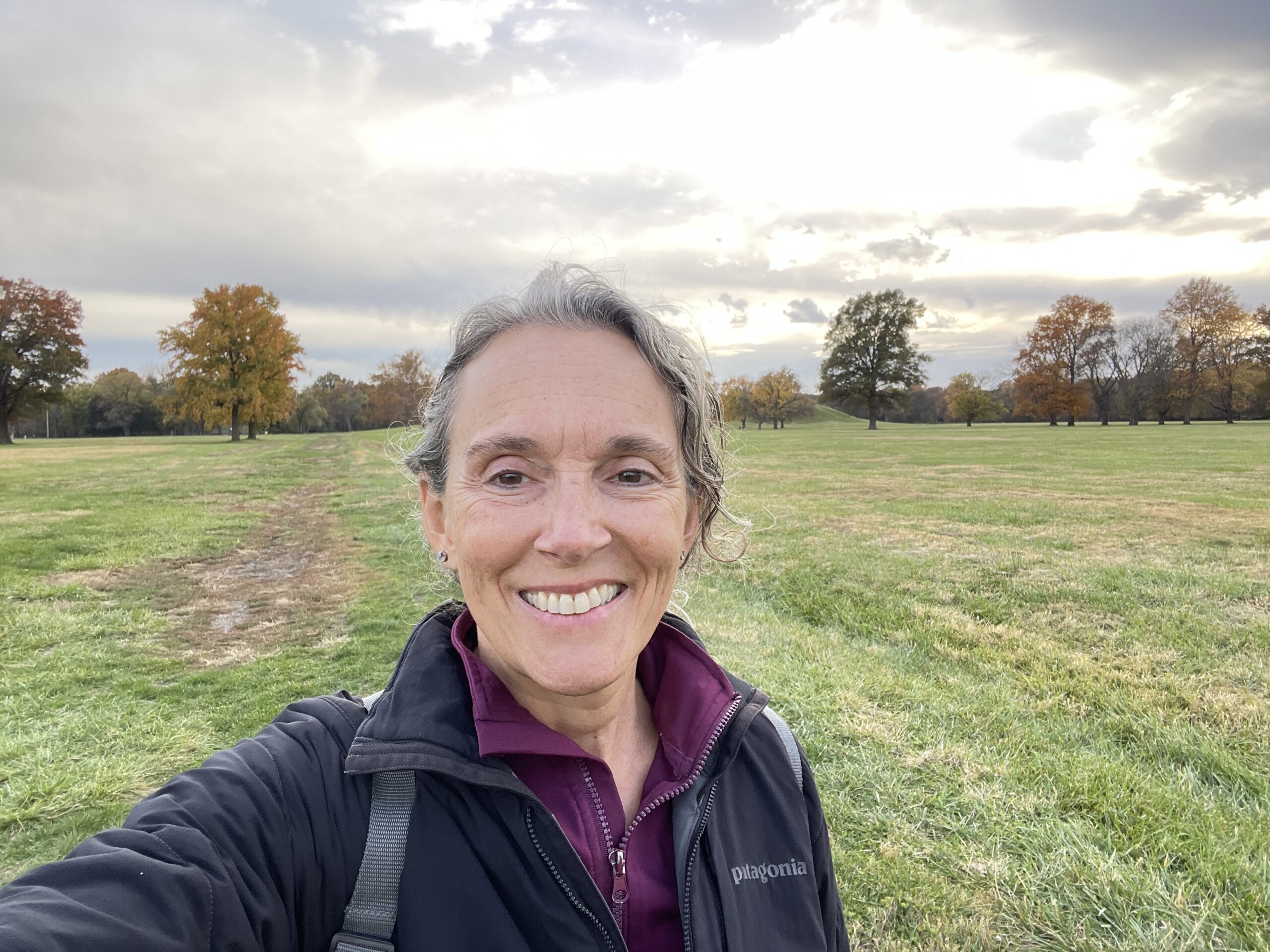
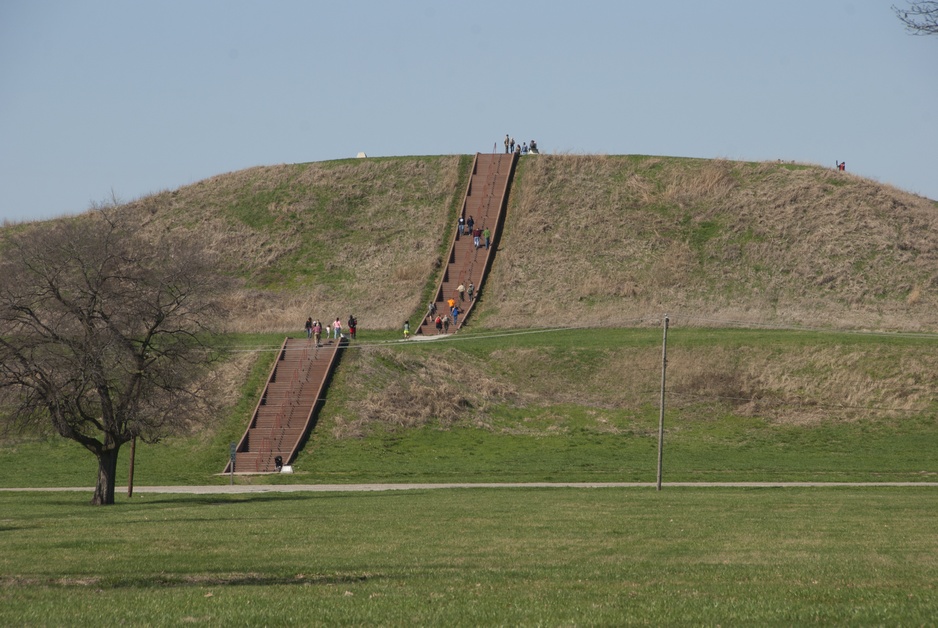
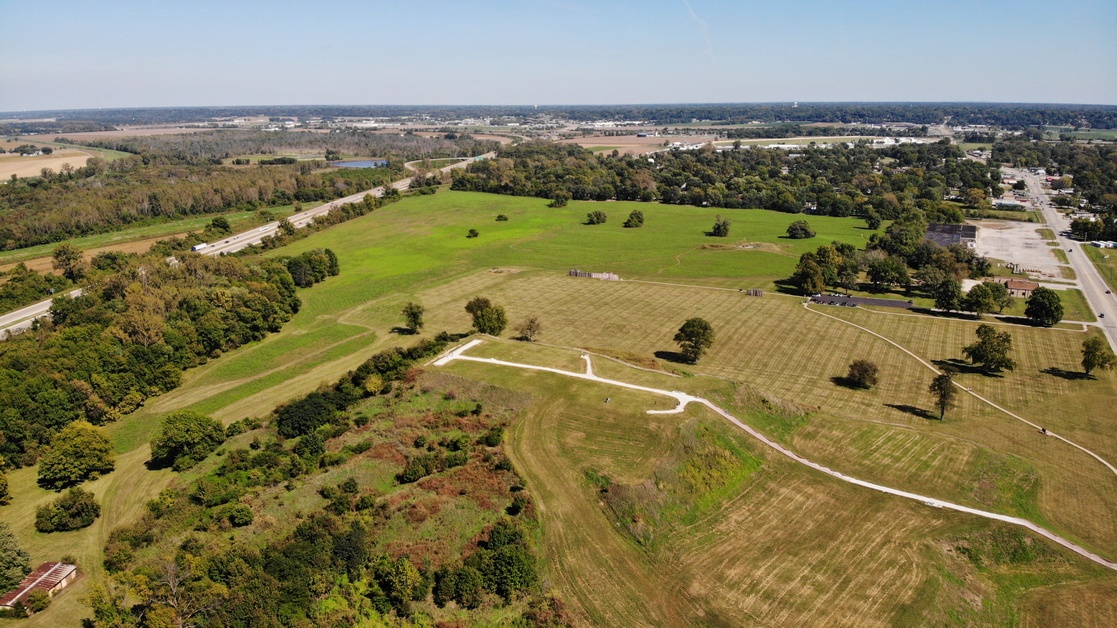
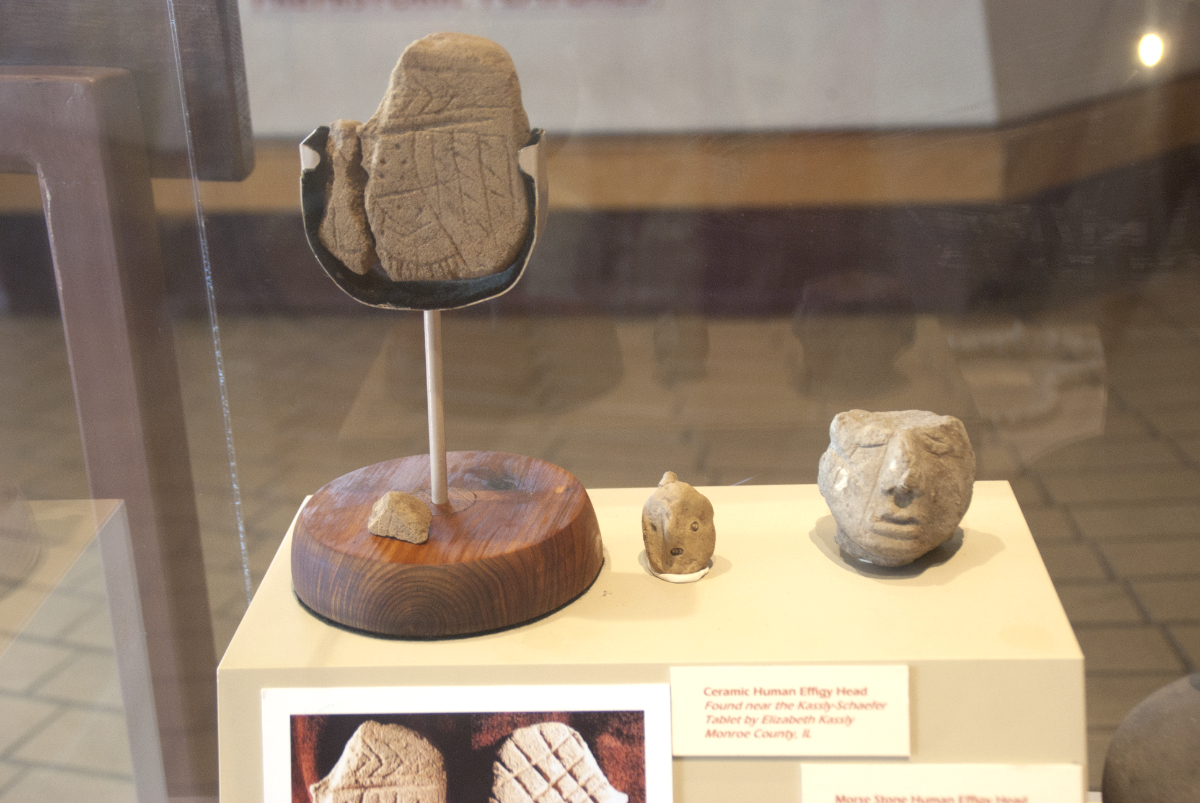
Of all the great archaeological sites around the world, I suspect the one near my hometown, Cahokia Mounds State Historic Site, is among the least appreciated. While the rich floodplain along the Mississippi River south of Alton, Illinois (known as the American Bottom) has a long history of human settlements, around the year 1050 a new community sprung up that would grow into the largest pre-Colombian settlement in North America, what we now call Cahokia Mounds. In this episode, I talk with Dr. Julie Zimmerman about how Cahokia grew into such a large and important city. We talk about the immigrants who migrated into Cahokia and what their daily lives might have been like, as well as how the community was connected to other indigenous people in North America. Julie theorizes that storytelling was the primary factor that attracted so many people into Cahokia, and she describes what we know about a couple of the stories that were likely the centerpiece of Mississippian beliefs. Julie offers her insights into the factors that may have led to the eventual decline and depopulation of the city, although Mississippian people and culture didn’t go away, they just spread out. We finish with a discussion of the role of contemporary Native American communities in the interpretation and preservation of the site. In the introduction, I offer a couple of tips for making a visit to Cahokia richer and more meaningful.
Show Notes
Cahokia Mounds State Historic Site
Podcast about New Madrid Earthquakes mentioned in this episode
Recommended Books:
- Cahokia, City of the Sun: Prehistoric Urban Center in the American Bottom, by Claudia Gellman Mink
- Cahokia: Ancient America’s Great City on the Mississippi, by Timothy Pauketat
- Cahokia Jazz: A Novel (fiction), by Francis Spufford
Support the Show
If you are enjoying the podcast, please consider showing your support by making a one-time contribution or by supporting as a regular contributor through Patreon. Every dollar you contribute makes it possible for me to continue sharing stories about America’s Greatest River.
Don’t want to deal with Patreon? No worries. You can show some love by buying me a coffee (which I drink a lot of!). Just click on the link below.
Transcript
Sun, Mar 15, 2026 11:10AM • 1:18:16
SUMMARY KEYWORDS
Cahokia Mounds, storytelling, Native American, ritual state, Mississippi River, archaeology, anthropology, immigrants, decline, New Madrid earthquakes, cultural heritage, Native American communities, artifacts, environmental changes, heroic epic., Cahokia, native consultation, museum displays, remote sensing, non-invasive methods, excavation, grinding tool, Mississippian house, human story, archaeological finds, community, Mississippi River, podcast, Patreon, travel guidebooks.
SPEAKERS
Dr. Julie Zimmerman, Dean Klinkenberg
Dr. Julie Zimmerman 00:00
Maybe as far back as 100,000 years ago, were the first storytellers based upon multiple lines of evidence. But this is consistent with the Native American point of view as well, that storytelling is what makes us human. And so I think it’s a very simple idea, stories are behind everything. My my earlier idea about Cahokia is a ritual, a theater state there are stories that give all those rituals meaning, right? You know, storytelling is itself a ritual, but storytelling also gives meaning to all the rituals that we do.
Dean Klinkenberg 00:58
Welcome to the Mississippi Valley Traveler Podcast. I’m Dean Klinkenberg, and I’ve been exploring the deep history and rich culture of the people and places along America’s greatest river, the Mississippi, since 2007 join me as I go deep into the characters and places along the river, and occasionally wander into other stories from the Midwest and other rivers. Read the episode show notes and get more information on the Mississippi at mississippivalleytraveler.com. Let’s get going.
Dean Klinkenberg 01:31
Welcome to Episode 72 of the Mississippi Valley Traveler podcast. I’ve been lucky to travel around the world and visit some really amazing places, some sites where 1000s of people once thrived in diverse, complicated, complex communities, places like Tikal, Angkor Wat, Machu Picchu. I’m sure, places that you have all heard of maybe many of you have visited as well. These are places that offer us a window into the past, that leave us wondering what happened to the people who lived in those places, who built those structures. Leave us wondering what happened to those communities. I live in St Louis. I am just across the river from another one of those places, Cahokia Mounds, State Historic Site, also a World Heritage Site now I believe. I firmly believe if the Mississippian communities who thrived at what we now call Cahokia had built out of stone instead of dirt, Cahokia would be as world famous as those other places I just mentioned. And I was surprised to find out, when I was looking over previous podcast episodes that I had never done an episode on Cahokia. So we’re going to fix that in today’s episode. I had a chance to talk with Dr. Julie Zimmerman, who has considerable expertise on the history of the site we call Cahokia, and has a particular emphasis on how Cahokia thrived as a place of storytelling, that it was stories that attracted people there to begin with, and that’s what explains its incredible growth. So in this interview, we cover some of the basics. We talk about how Cahokia went from a fairly quiet Late Woodland era community to this thriving metropolis with 1000s of people that virtually appeared overnight. We talk about some of the people who moved in, the immigrants who formed the backbone of the communities in Cahokia. We talked about their connections to other people across North America, their relationships, from what we can tell of those with people across the continent. And then we get into talking about those stories, and how storytelling might explain the way people were drawn into this community, and 1000s and 1000s, 1000s and 1000s of people eventually moved in. We talk about Cahokia’s eventual decline, and Julie speculates on what she thinks some of the factors were that might explain how this massive city eventually, gradually depopulated. And we finish by talking about the role of contemporary Native American communities in interpreting the site and helping to manage and protect this incredible, this incredible place.
Dean Klinkenberg 04:25
If you’ve never visited Cahokia Mounds, I highly recommend going. I find it can be a little challenging to fully appreciate what went on there just by walking around the grounds. You know, my first time, I thought, well, it’s it’s a bunch of hills and some grass. It was really hard for me to to imagine the complexity and the scope of what, what, what previously occurred on that site. I found it helpful to do an audio tour. The Visitor Center has been closed for a while for complete overhaul. That is supposed to be reopening again this spring. If they offer audio tours again, I highly recommend doing that. There are some terrific books about the Cahokia as well, and in the show notes, I’ll put the names of a couple of those, but you could just Google ‘Cahokia Mounds’ and your favorite bookstore, and I’m sure you’ll come up with lots of good options that would really helped to get a framework to understand just how amazing this place was. So I hope you enjoy. I think it’s a good discussion. I really enjoyed talking with Julie, and I really got lost imagining the possibilities of a community built by storytelling.
Dean Klinkenberg 05:36
Thanks to those of you who continue to show me some love through Patreon. You keep this podcast alive. I’m deeply grateful for your support. So if you want to join this community, you can join the Patreon community for as little as $1 a month. Go to patreon.com/deanklinkenberg, Patreon is not your thing. You can buy me a coffee. I drink plenty of coffee. I always appreciate those of you who are willing to help feed my caffeine habit. Go to MississippiValleyTraveler.com/podcast and there you’ll find instructions on how to buy me a coffee or a few coffees if you’re feeling particularly generous. At that same place, MississippiValleyTraveler.com/podcast, you’ll find links to all previous 71 episodes as well as how to access the show notes for each of those episodes. Click on one of those episodes, you’ll find the show notes. And I often post photos to accompany each of those posts for the podcast as well. So you can enjoy that. And now on to the interview.
Dean Klinkenberg 06:52
Dr. Julie Zimmerman is professor of anthropology at Southern Illinois University Edwardsville. She’s an archeologist by training with a deep interest in the Native American history of Western Illinois, particularly area we call the American Bottom, that wide, flat expanse of Mississippi River floodplain in Illinois that runs from Alton to Chester. While she specializes in the archeology of animal remains, she is also very interested in understanding how Cahokia grew into such a large and consequential city.
Dean Klinkenberg 07:22
Welcome to the podcast, Julie.
Dr. Julie Zimmerman 07:25
Thanks for having me Dean,
Dean Klinkenberg 07:26
Anything else you’d like to tell us about your background? Like, how did you get interested in archeology and anthropology?
Dr. Julie Zimmerman 07:33
You know, I grew up in Barnhart, Missouri, south of St Louis, and I actually had a Mississippi River view from my bedroom window as a child. I could see Illinois, and we never crossed the river, and I honestly, you know, my mom liked to take us to cemeteries and we collected fossils. We lived next to a limestone quarry, so I had an interest in the past, but I never heard of Cahokia till I went to college. So.
Dean Klinkenberg 07:57
Wow. What was your path school wise then to get your training?
Dr. Julie Zimmerman 08:04
I won a scholarship to Washington University full ride, and back in the day, they printed off paper catalogs telling you what all the classes were. And I didn’t get very far, because a anthropology was the first thing in the catalog. And I said, Wow, that is everything I’ve ever wanted to do, all right, here one place, cultural anthropology, biological archeology. So it all came together there. And yeah, so I went in knowing that that’s what I wanted to do, because it’s all fun stuff all the time.
Dean Klinkenberg 08:36
What was the first research project you got to work on?
Dr. Julie Zimmerman 08:40
Probably, I’m going to say, a ceramic analysis. I did a little field school over in Bridgeton, and I afterwards, I worked on the ceramics from the site. About that same time, I also took my first course in human osteology, and then I took my first course in zooarchaeology, the archeology of animal bones. And I’m going to tell you, you know, humans are just one of many animals. So, so archeology, really? Yeah, lots of different animals to look at, but I and in my excavation since I’ve been teaching at SIUE. for, gulp, 25 plus years now, all the excavations I’ve directed, the bone preservation is terrible. So we don’t have any animal bones to look at, so I have all this other stuff I have to look at instead.
Dean Klinkenberg 09:28
Well, I imagine we could have a very long conversation just kind of going over some of the methods and how what the work is like. And maybe some other time we’ll do that. But I’m really curious to know, like, how you went from this interest in animal bones and setting animal bones to having your imagination captured by Cahokia?
Dr. Julie Zimmerman 09:48
Well, um, I mean, we are 20 minutes or in Edwardsville from the largest archeological site north of Mexico, and there’s nothing else like Cahokia north of Mexico. It’s just by any measure possible it there’s nothing else like it. So it’s hard not to be interested in Cahokia when you live so close to it. And I think, you know, I hadn’t done, you know, when I first started teaching SIUE, they asked me if I wanted to direct my archeology field school Cahokia, and I was like, no, no, I want to work on endangered sites and I think Cahokia should be protected. We shouldn’t be digging at Cahokia, certainly not with students who are having their first excavation experience. But, you know, teaching about Cahokia and thinking about, you know, what it is to be a human in general, really, you know, as you know, I wrote an article about a Cahokia as a theater state about 15 years ago. And, you know, I was in, I came up with the idea while teaching and talking about cultural anthropology, there’s a cultural anthropologist Clifford Geertz, who put out the theater state model, which basically says that states grow not by armies, by force, coercion, but by attracting people to them through their theatrical rituals and their pageantry. And so I thought that was a good way to explain Cahokia, because, you know, some archeologists were acting like it was just another chiefdom, but I mean, the next largest, so called, what we call Mississippian Time period, which is about it starts earliest at Cahokia. Earliest is the biggest and the earliest of the what we call Mississippian centers. And so Cahokia has its so called Big Bang, about AD 1050, becomes a big city about that point. And and so the the next largest site is down in Moundville, Alabama, and the entire site of Moundville would fit in the grand plaza of Cahokia. So again, when I say there’s nothing else like it, I mean, it’s just on a scale. It’s just, you know. So there are other archeologists saying it’s just another chiefdom, and just a couple archeologists had been brave enough to say it was a state, but I think they were going back to the old idea of a state. Yes, there’s a, you know, there’s a bureaucracy there, but I don’t think that. And there were warriors in Cahokia, but I don’t think they were spreading by force and by, you know, use of an army. So that’s what led me.
Dean Klinkenberg 12:29
Before we get too deep into the theater state, part of it, let’s kind of cover some of the basics too. I don’t know how familiar some of my listeners are with even the general history of Cahokia itself. One of the things that always that amazed me when I really started getting into this and I went to the visitor center across the river for the first time, was how much we actually know about it, like there, we know quite a bit about this settlement, and there’s a lot we don’t know, obviously too. But tell us a little bit about how Cahokia got started and what it evolved into in a fairly short period of time.
Dr. Julie Zimmerman 13:03
Okay, I’m going to first say the part of the reason we know so much about Cahokia is, of course, our attention is attracted to it because it is such a big and important site, but also all the highway work that has happened with the construction of 255 and 55/70 went right past Monks Mound in the 1960s but the law was just passed at that time requiring archeology to be done. And then when 255 was built, starting in the 1970s the law was firmly in place then. And there were so many, there were, you know, dozens of excavations on sites up and down 255 and is there. And then, since then, all the feeder highways and other projects going on. So as a result of all that, what we call cultural resource management work, we know more about Cahokia and more about the American Bottom than just about anywhere else in the world, seriously. The area is first occupied by Native Americans. We know there could be Native Americans here earlier, but the first we’re absolutely sure about are showing up at the end the last ice age. So for your listeners who’ve been to Mastodon State Historic Site, that’s a site that’s in use at the end of the last ice age where people are hunting mastodons there. That’s pretty unusual to hunt mastodons. Actually, there’s very little evidence for that. But the all those those sites from what we call Paleoindian period, it’s in the last ice age, are all up on the bluffs. Because you can imagine the floodplain at that point is a big icy torrent. You know, glaciers coming through, you know, flood waters coming through, and it’s cold, so there isn’t a whole lot of crossing that river at this point, there’s very like this. The stone that they’re using, we call chert, that they’re using on the Illinois side of the river at that time is different than the chert on the Missouri side of the river. So they’re not crossing the river. It’s probably not a very safe thing to do. Cahokia itself, the first occupation that we know about goes back to about four. 4000 years ago, what we call Late Archaic period. And by this point, it’s a modern climate, and these backwater lakes have formed in the American Bottom. Like Horseshoe Lake is the last one left today. The rest were drained in the 1800s. So these backwater lakes have formed in the American Bottom and in the Lower Illinois Valley, and there are small settlements of people living longer term around them. And there’s, very importantly, they are saving their the seed. There are, you know, a number of different native plants that they start saving the seed from and planting it in the spring. And as a result of that, they are domesticating plants going back to 4000 years ago, and the earliest domesticates are squash. So if you like a acorn squash or zucchini, they’re descending from squashes that were domesticated right here 4000 years ago. Sunflower, if you have ever tried quinoa, quinoa comes from the Andes, but we have a local species here of the same genus, Chenopodium, burlandiary, also called goosefoot. So they’ve domesticated those in another plant called marsh elder, or sumpweed. So 4000 years ago, they’ve domesticated at least four different native plants, and by around AD 800 which is the next occupation we see at Cahokia, what we call Late Woodland period. They have about 12 different native plants that they’re growing in their gardens, okay. So around AD 800 at Cahokia, we see a small I’m going to I feel comfortable calling it a farming village, but there are dozens of villages like this in the American Bottom there’s nothing special at this time about the one at Cahokia, and they’ve just got the bow and arrow. So I always tell my students, if I could live in any time period of the of Illinois in the past, it would have been Late Woodland period, because they got plenty of venison to eat. They have these snug little houses. They would dig a big hole in the ground. The houses are pretty small. It might be a little bit bigger than a king size bed, because all they’re doing in there sleeping, but you would step down into this snug little house, and they had domestic dogs, and they had their gardens, and it looks like a pretty nice time to live, ok.
Dean Klinkenberg 17:18
Plus there’s plenty of fish to eat too from the river and the lakes.
Dr. Julie Zimmerman 17:22
Again, they’re, they’re living around those backwater lakes. But they’re also, you know, sites that are closer to the river we see they’re, they’re fishing big river fish as well. So yes, I always joke that the paleoethnobotany, looking at the plant remains, is actually a lot more interesting than looking at the animal bones, because it’s kind of like with animal bones it’s deer and fish, fish and deer, fish and deer, fish and deer, fish and yeah, so they’re eating a lot of fish.
Dean Klinkenberg 17:50
I guess part of the point of that is that they didn’t have to go far to find food. Like, they lived in an area where food was plentiful and didn’t require a huge amount of work for them to find then.
Dr. Julie Zimmerman 18:01
Absolutely, very rich place to live as it, you know, as it is today. It’s a very, you know, great fertile natural resources. So around AD 900 corn comes in, maize, we should more properly call it, and corn is coming from Mexico. And there’s no evidence of Mexicans arriving at that time, but we have this plant that’s probably being passed from sister to sister. I should mention that women did the farm work among the Native Americans. The Europeans were horrified by this to see women out working in the fields. But, you know, they were the gatherers of plants, and then they became the tenders of the farm fields, and the men, when they got maize, when they got corn, it was quite common in Native American societies for the men to help prepare the cornfield, but then women did most of the rest of the the work in the farm fields. And I’m sure when when corn comes in and gets passed from sister to sister, from village to village and and the technology to the know how to grow it and to process it, and to to what, how you should best eat it. And I’m sure stories were coming with that too, and not just, you know, stories about how to grow it, but but myths about, or in I when I use the word myth, I don’t mean that to mean untrue stories. I mean to the Bible’s myth, according to anthropological terminology. So these are stories about how corn and the cosmology, how they came to be. So corn arrives here about AD 900 and this is a warm, wet period. And anyone who has noticed all the corn and soybeans growing around here knows that corn loves heat and humidity, so this is a great period for growing corn, and Cahokia happens to be at just about the widest spot in the American Bottom floodplain. It’s about 12 or 15 miles wide there, and it’s really good dirt for growing corn. in that area. Archeologists have looked at the different soil types and the soil type that it was growing there was really good for growing corn. And I’m and so by AD, so again, it’s about AD 900 that maize comes to the area. And by AD 1000 there. The village that there is there at Cahokia is noticeably bigger now than other villages that you see in the American Bottom, and it already appears to be some kind of a central place, you know, not these the capital or something like that, but it’s a it’s a noticeably bigger village. And looking at the different pottery styles from this time period, it looks like there are already immigrants showing up into the American Bottom. And one theory comes from my colleagues John Kelly and Jim Brown, is that feasting is very important, and that really lends to why Cahokia is so important, that they can really throw on the big feast, because they have such good, you know, fertile soils that they can they can have an agricultural surplus to feed people, but for whatever reason, and I’m going to argue that there are other reasons, but people, immigrants, start coming in to Cahokia, probably by, like I said, by AD 1000 and by AD 1050 the so called Big Bang at Cahokia and Cahokia seems to be the big city, immigrants keep coming. And even as Cahokia is losing popular population after AD 1200 immigrants keep coming. And it looks and we know that from the pottery styles, and we also know it from the skeletal analysis, analysis of human bones that has been done, looking at the isotopes in those bones, we know they’re coming from elsewhere, and it looks like up to 33% of the people are immigrants. So immigrants are absolutely critical to building Cahokia. And imagine, you know, they’re bringing all their different ideas and beliefs, and it’s a very exciting place to live. And it also looks interestingly like they’re coming as children based upon, you know, knowing, like looking at the growth of the bone and the teeth the bone relative to the isotopes, it looks like that they’re coming as children, which is really interesting. So, yeah.
Dean Klinkenberg 22:16
Tell me a little bit then about what. So you use the word state a couple of times. I tend to fall back on city. I don’t really know what word to use to describe Cahokia, because there also are, like, different settlements, and there are different communities within this area we call Cahokia. Can you kind of just give me, like, an overview of the different neighborhoods or parts of the of Cahokia, and when they developed, and did they have different flavors?
Dr. Julie Zimmerman 22:44
Yeah, there are something like 120 mounds. Let’s just look at mounds for a second. There’s something like 120 mounds at Cahokia. There are, like, there were, like, 45 and maybe half of those are left now, right? They’ve been most of them. A lot of them have been destroyed. And there were something like 45 mounds in East St Louis and across the river, there were something like another 25 mounds. So really, archeologists are seeing those now as basically one big site, okay, stretching from the bluff just east of Cahokia all the way west to the river and across to the St Louis site. And we don’t know a lot and something, so that’s something like 200 mounds between the those three sites, what is often called greater Cahokia. There’s something like 500 mounds from this time period in the St Louis area. So again, there’s, just, generally speaking, this is, you know, there’s nothing else like this north of Mexico, okay, so, um, think about, you know, you know, once upon a time they thought East St Louis site was, we don’t want to know much about St Louis, because so much of it was destroyed in the 1800s but once upon a time, they thought East St Louis may have been like a competing chiefdom, and there are other, there’s a mound a site down called the Pulcher Site, and it’s not too far from Dupo, Illinois, not too far from the Jefferson Barracks Bridge. And they’re like, over 20 mountains at the Pulcher Site. Up it in Granite City, Illinois, there’s the Mitchell site, which also had, I don’t remember off the top my head, how many mounds at the Mitchell site. So those were, those were also multi mound sites, and at one point, the model was that these were all competing chiefdoms. And, you know, people compete with each other, like we could look at the administration of of any, you know, let’s say the United States or or, and see competition between politicians, right? So, yes, I’m sure there was, there was some competition, but it wasn’t like they were equal on equal footing. The big, you know, the leaders are definitely living in Cahokia, and in my mind, and I think the recent excavations at East St Louis kind of support this. I see pretty. Cahokia itself is kind of like the religious and ritual center, and in East St Louis, kind of like the economic hub. It because it’s right on the river and across the site this river. Since we don’t know much about St Louis, I could just speculate that it’s, you know, I mean, it’s just important to have that anchor across the river. So, and bear in mind that economics are not separated from politics and are not separated from rituals. This is all you know. These are, these are, you know, we, we talk about separation of church and state, but it isn’t really, we aren’t it isn’t really separate, is it? And certainly in a more traditional site, there’s no effort to try to divide those things up. So they would the leaders would have been leaders in all those different areas.
Dean Klinkenberg 25:52
So I’m just thinking like, you know, in a modern city now, you know, we have division of labor, so you can go, you know, to a cobbler to get your shoe fixed. You can go to the baker to get bread. Was there that? Do we think there, was there that kind of division of labor in Cahokia too do you think?
Dr. Julie Zimmerman 26:10
Yeah, I’m gonna say number one. I mean, we know, not that long ago in our own history, right, that 90% of people were farmers. Okay, so probably the most important thing is to grow food, to feed these people feed, you know? And so there are lots of little sites that have, well, there are lots of villages that have a single mound, and there are lots of small sites that have no mounds. And then there are what we call farmsteads. It could be like a single house that looks like it’s out in the middle of nowhere, for example, in the SIUE campus, where we’ve been excavating for since 2009. I was originally interested in the the site there that goes back to 2000 years ago, but there’s all this Cahokian stuff on top of it from 1000 years ago. And so it’s it. We’ve, we’ve found several Mississippian period houses there, but I don’t my in my model, they’re not necessarily all occupied at the same time. It’s one. It could be one big farm family living there growing food, and they’re right on Cahokia Creek. They can fill their canoes up with corn and send it on down the creek to Cahokia. So they’re all, they’re all these feeder sites, literally, feeder sites, people who I’m sure considered themselves Cahokians, because they have the same material culture that you know they’re not, they’re not elites, but they do have access to some elite goods, and so, you know they are, I’m sure they consider themselves Cahokians, and they’re filling up their canoes, sending the food on down to Cahokia. So, yeah, other specialties would include, I know you had asked me previously about weaving, and so, you know, textiles are not going to be preserved. Very rarely, the Janey B. Goode Site is a site on the periphery of East St Louis, which is really more what we call Terminal late Woodland and emerging Mississippian, and they had incredible preservation there, but just little, tiny snippets of textiles, preserves. So usually textiles don’t preserve. And so how we know that they did have textiles is that you see the fabric impressions on pottery, sometimes depending upon the pottery style, but also what we call spindle whorls are for for making the twinage, making the cordage. And so like taking a one ply string and turning it into two, three ply string. And so what a spindle whorl looks like, it’s a little circular disc with a hole through the middle of it, so you can bind the twine through there and spin it. And sometimes they’re made that way, or sometimes it’s just a broken piece of pottery that has a hole drilled in it. So yeah, there are particular concentrations of those at certain parts of Cahokia and also at other villages up, you know, in the American Bottom, in the in the uplands above that suggest, Susan Alt has suggested that there are specialized weavers in those areas. You know, I’m sure any woman needed to know how to make clothes, right? But if you have a specialized weaver who’s making like, the finest textiles that the elites wear, I can see like, not I can sew a button on, but I cannot make a quilt. Okay? So, you know, you all, we all have our different levels of skills. So one thing Tim Pauketat has talked about is was it looks like these different ethnic groups come in, they’re coming out through different pottery styles, and it looks like some specialized then in different pottery styles. So there are probably, again, any woman needs to know how to make her own pot and repair her own pot, but there are probably particular types of pottery that are being made by specialists. Certainly some of the fancy, you know, ritual wears. So another example would be stone tool manufacturer. I can make an arrowhead, honestly, it’s not that hard, but I could not make a beautiful Cahokia point. So any man or woman needs to know how to make their own basic toolkit. But there are probably specialists who are making the really fancy, beautiful points. And the clearest example of specialists, I mean, for example, we know the clearest example is looking at what we’re going to call artwork that Native Americans would not have called artwork. They would have seen them as living beings. But you’ve like non human entities that, like these works of art they’re making, are alive and they have their own spirit. And so, for example, one of the thing, one of the artworks we know being made at Cahokia are made out of a stone we call red flint clay. It’s a soft red stone that’s it’s easy, I should say easy to carve. It’s not easy for me to carve. But there are, there’s such incredible artistry looking at that work that it’s pretty clear that there are a handful of artists who are making those red flint clay figures, and some of them are small statues that are up to about nine or inches, or max, maybe a foot in height. Some of them, like, I think the tallest is about the size of your or, sorry, the shortest is about the size of your thumb. But some of them have been made into pipes. Some of them were made to be pipes. But the work, the artwork of the present there, it clearly indicates that there it’s not everybody is it’s probably a sacred material that not everybody even has access to. So there’s clearly a handful of artists, you know, maybe somebody running a workshop that, you know, teaches the art and their style. So that’s a very clear example of specialization. And I’m sure the same is true with whether they’re making copper work out of artwork out of copper or jewelry out of shell. I’m sure there’s specialists there too. For example, you know there’s marine shell conchs. It’s actually the, I think the lightning whelk coming from, like, probably around Florida. And they’re making necklaces that we call gorgets. They’re like a big disc that you would wear, like on your chest. But they’re also making beads and looking at where the artifacts are, not a whole lot of those, the gorgets are found at Cahokia, but the beads are and we find the there are particular little stone drill bits that are needed to make those beads, and there are accumulations of them in particular neighborhoods at Cahokia. So it looks like there are specialists in making the shell beads. There’s also supposed to be a copper workshop near Monks Mound, Mound 34 and there’s evidence of copper working in East St Louis and the red flint clay workshops in East St Louis. So they’re definitely artisans. And I’m sure there were specialists of in in ritual knowledge. You know, not everybody think about our priests today. Not everybody knows the whole Bible and not and all those supporting documents that go with it. So there would have been specialists in that priestly knowledge. And we know that is true of later Native American societies. I’m sure there were, what if we want to think about them as scholars, people who understood the skies and nature and etc, and I’m going to argue very strongly, I’m sure there were specialized storytellers, even though we don’t have direct evidence of that.
Dean Klinkenberg 34:00
Right. So you mentioned copper and seashells, and I know there are non native stones. I mean, all of that speaks to how wide their connections were across the continent really, right? I don’t know that it’s necessarily unique to Cahokia, but to me, at times, it was kind of mind blowing to realize how extensive trading was across the continent, I’m assuming, probably by rivers, more likely, most likely?
Dr. Julie Zimmerman 34:28
Probably rivers. But there also would have been, had to been in some overland trails too. So the copper is coming mostly from the Great Lakes. And like I said, the marine shells coming from Florida. And we associate we and we know the flint clay, red flint clay is coming from this area, because this is the source for it’s actually west of Cahokia, some distance, like an you know, 50 miles, or something like that I don’t know what it is. And so we so. We can, we can’t always tell by the, you know, if they’re getting their materials from elsewhere, and then they’re making stuff and it leaves here. How do we know that it’s made at Cahokia? We also look at the art style, and there’s some debate over that. For sure. We can’t prove 100% but we assume that. And I believe that the what we call the Braden style. And I don’t remember why they call it the Braden style, but there’s a particular art style. It’s very realistic in a much I’m no artist, but I want to say, when you look at some of the art coming from other sites, it’s it’s not to the caliber of realism that you see coming out of Cahokia. So yeah, we see the Cahokia and artwork traveling as well. Early on, we see evidence of colonies going to the north, places like Wisconsin and we see we see Mississippi and stuff all the way as far north as Cahokia and stuff, as far north as Red Wing, Minnesota. Later, we see colonies to the south, down the Mississippi, all the way down to the to the coast. Sorry, the Gulf that was Gulf and coast together makes ghosts. The probably biggest partner to Cahokia. Very special relationship is Spiro, Oklahoma, which is some 500 miles to the west. And then again, there’s, they call this the Braden corridor. Later it looks like people leaving Cahokia, going down into the southeast. So yeah, there are connections for hundreds of miles.
Dean Klinkenberg 36:39
Hey, Dean Klinkenberg, interrupting myself, just wanted to remind you that if you’d like to know more about the Mississippi River, check out my books. I write the Mississippi Valley Traveler guide books for people who want to get to know the Mississippi better. I also write the Frank Dodge mystery series that is set in places along the Mississippi. My newest book, The Wild Mississippi, goes deep into the world of Old Man River. Learn about the varied and complex ecosystems supported by the Mississippi, the plant and animal life that depends on them. And where you can go to experience it all. Find any of these wherever books are sold.
Dean Klinkenberg 37:19
So you mentioned immigrants. Where were people coming from? And what do we know about, you know, the traditions or what they brought with them?
Dr. Julie Zimmerman 37:30
I you know, my storytelling hypothesis is that it’s storytelling that makes us human, and if you think about it like, you know, the way you see your world is all the story that you’ve been taught from your parents and the people around you, and storytelling is so absolutely critical that is the number one thing that separates us from hey, look, you know, as an anthropologist, I would tell you the great apes can learn sign language and they can they can tell you what they need, and they can tell you their hopes for the future. They lie, they make up new words. They’re very creative. But what they can’t do is get the grammar right, and they cannot get which means you can’t really tell full fledged stories if you don’t have grammar and and they also obviously cannot articulate words. So it looks like humans going back you know, maybe as far back as 100,000 years ago, were the first storytellers based upon multiple lines of evidence. But this is consistent with the Native American point of view as well, that the that storytelling is what makes us human. And so I think it’s a very simple idea. It’s stories are behind every when I went my, my earlier idea about Cahokia as a ritual, a theater state. There are stories that give all those rituals meaning, right? You know, storytelling is itself a ritual, but storytelling also gives meaning to all the rituals that we, we, do. So it might sound, I don’t know, simplistic to say that there’s one really good storyteller. I think it’s more complicated than that. Like I said, I think there’s a lot going on with all the stuff that Cahokia has to to, you know, to just go for it. But ultimately, if people weren’t telling a good story, those immigrants wouldn’t have been coming here. And as Cahokians leave and they go out, they go out. Sometimes they’re, you know, they’re going out proselytizing, as you know, like the Trempealeau, Wisconsin looks like it’s a kind of a shrine site that Cahokians set up even before the so called Big Bang of Cahokia. It looks like they they’re doing this before AD 1050 and they’re taking these stories with them, and they’re convincing the local people up here that this is a great this is a this is a good idea. And as later, they set up other kinds of. Colonies are taking those stories with them. So wherever you see those Cahokian artifacts, those are representing Cahokian stories that gave meaning to those artifacts.
Dean Klinkenberg 40:09
So what do you think the basic story was that attracted people? And feel free to speculate?
Dr. Julie Zimmerman 40:16
Well, I don’t. I mean, I doubt there was one basic story, but what we can clearly see is that there are male stories and there are female stories. Okay. And let’s start with the female stories, because the Cahokian artifacts that show female imagery tend to stay closer to Cahokia. They’re in the American Bottom, they’re in the Illinois River Valley. They’re down to the Bootheel of Missouri. You know, down that there’s the farthest South is one found down in Arkansas, but they tend to be generally closer to home. So those, we call those goddess stories, and there are analogies made with later known Native American goddesses who were the stories were told to anthropologists. You know, 100 years ago, about, for example, the Hidatsa had their heroin goddess was named we, we remember as “Old Woman Who Never Dies”. And it’s a pretty awesome thing where every morning, she could go to this creek and bathe in it and become young again.
Dean Klinkenberg 41:21
Wow.
Dr. Julie Zimmerman 41:21
So I know, right.
Dean Klinkenberg 41:22
Where’s that creek?
Dr. Julie Zimmerman 41:23
I know there. I joke people, they’re trying to sell this on my Facebook feed all the time. Thank you for laughing. So she’s associated with plants, right. She’s she, she’s associated as she’s a gardener. She is associated with bringing spring. She’s also associated with snakes, and the it does look like, for example, the one Cahokia artifact, the goddess is has a hoe, her hoe going into the back of this snake. Like it’s not just a snake, it’s clearly and a creature with with different attributes to it. It has like serpent teeth and has round eyes and the tail goes up her her back and turns into a gourd vine. So it’s not just a regular old snake, but she is the Cahokian female figures often show these women with plants. They often show them with snakes. In the Hidatsa story, the woman is actually the goddess is actually married to a snake. And I like to say again, who isn’t? Who wasn’t? But she does protect him from other creatures who are trying to come after him. It’s a good relationship and and I if you think about, well, what does snakes have to do with these other themes? What does a snake do every spring and it emerges from its hiding place, it sheds its skin and life begins again, right? It’s renewal. Okay, so there are clear there are clear female themes that are about renewal,
Dean Klinkenberg 43:02
Kind of the life cycle.
Dr. Julie Zimmerman 43:03
Exactly, the life cycle. There are not from a Cahokian style, but from their local styles down in Cumberland Valley of Tennessee. Robert Sharp archeologist has written about there are very clear depictions of “Old Woman Who Never Dies” down there. He talks about how sometimes you see her with the hunchback like the little old lady, and other times not. But you tend to find those, those goddess figurine. They were clay pots down there, and they tend to find them in graves of children. So imagine if you’re a woman who’s lost her baby, and you know, you you believe in this goddess who, who tells you that your baby’s going to have life again in a different place. So that would be really important. And giving women, you know, of someone to look up to, and someone to have faith in, have a character like that. Um, so, and I would add there that, you know, I talked about the different artisans. I would add there that my colleague Gayle Fritz and and Natalie Mueller from Washington University, both paleoethnobotanist, have written about this quite a bit, and they think women were making those Cahokia were women were making those goddess figurines there. So I’m sure there were women storytellers telling her story to other women, all right. So then we also have the male figurines. The male figurines are found over a much bigger area. So for example, the there are more of the male figurines found at the Spiro site in Oklahoma, again, some 500 miles away than anywhere else. Okay. And so the male figures have clear themes. They are warriors. You can clearly see their warriors. You can clearly see their athletes. They’re playing a game that we call chunky. So, and we know it’s called chunky, because Native Americans called it chunky. They were still playing it in the southeast and up to the upper Midwest. I don’t know what the full extent, but they were still playing chunky when Europeans showed up. So you roll this stone disc. There are different versions, but one common version was you roll a stone disc and you throw a spear where it’s going to land. So we know Cahokians were playing chunky. We find the chunky stones, but we also see depictions of the chunky players in the red flint clay figures. We see him in the gorgets. They’re clearly playing chunky. Okay, so the men to the ideal man, the heroic man, is, is, so is a warrior, he’s an athlete. And then, yes, I will take it back to the character known as Red Horn, who was also a healer. Okay, so 100 years ago, the story was told by Winnebago, more probably known as Ho-Chunk Indians, to to an anthropologist. And in the story, there are these 10 brothers, and the youngest of the 10 brothers is named “He-Who-Gets-Hit-With-Deer-Lungs”, which sounds like a really terrible name, but let’s come back to that thought. You want me to tell the story real quick?
Dean Klinkenberg 46:18
Yeah, yeah. Go for it.
Dr. Julie Zimmerman 46:19
Pretty engaging story. Okay, so story these youngest of the 10 brothers, “He-Who-Gets-Hit-With-Deer-Lungs”. And we don’t know where the parents are, but the older brothers are always going out hunting, and they’re like, sorry, little brother, you got to stay home. And so as the story opens, there’s this race, and the winner of the race is going to get to marry the chief’s daughter. And once again, the brothers say to their little brother, hey, little brother, sorry, you’re too young. You gotta stay home. And so as soon as the older brothers leave, little brother sneaks out of the house, and he enters the race, and he turns into an arrow and he shoots around the world, and that’s how he’s able to win the race, through magic. Okay, so now he has the right to marry the chief’s daughter, but he’s like, Oh, no, I’m too young. We don’t know how young he is. He’s could be seven. My guess is he’s probably more like 17 or something, but we don’t know how young he is. He says, I’m too young, I can’t marry her. And he gives the right to brother number nine. He’s like, Oh, I can’t marry I’m too young. And he gives the right to brother number eight. And it goes on up the line till they get to the oldest brother, who is the only other brother that has name. His name is Kunu, so it’s a respectful thing to honor the older brother, right? So he marries the chief’s daughter, and he brings her home, and now she’s living with these guys, which I’m sorry, I don’t mean to be disrespectful. It sounds like a nightmare to me, but now she’s living with these 10 brothers, and once again, the older brothers are going out hunting, and they’re they say, Hey little brother, sorry, you’re you’re too young. You gotta stay home. You’re like, what he won the race. Like, how? Why are they still treating it like this? So they go out and they kill a deer. They bring it home, the chief’s daughter. She’s the chief’s daughter, but she still has to work. She’s butchering that deer. She takes out those deer lungs, and she throws them at little brother, and they hit him. And all the other brothers stand up and they say, What did you do that for? And she says, Will you do it? And they say, No, we don’t. We just call him that. So he gets hit with deer lungs. Got hit with the deer lungs. So it seems like it’s very insulting kind of name when she literally throws the deer lungs at him at the same time, you know, deer are very fast runners, and so this guy is an athlete. He did win the race. He used magic, but surely he’s been hit with deer lungs. He’s a fast runner, right? But at this point in the story, little brother stands up and he says, From now on you will no longer call me that. From now on, you will call me the name given to me by the heavens above. And suddenly he says, My name is Red Horn. And he’s got this big shock of red hair that comes out of his forehead. And he says, the other name given, given to me by the heavens above is “He who Wears Human Heads as Earrings”. And he’s got these little, suddenly, he’s got these little human head earrings that are alive. They wiggle their eyebrows, stick out their their tongues, and so, um, we, you know, so he’s got these, he becomes, this is just the first chapter in an epic tale, and it goes on something like Radin wrote down something like the art anthropologist, sorry, wrote down something like 12 chapters. But we know he ends. It was saying there’s more, but it’s like, you know, Superman, there’s always a new issue that can come out. There’s always a new movie that can be made, right? You can always tell another story and add on to it. So he goes on, he’s already a great athlete. He goes on to become a great warrior. He goes on to become a healer. He’s like Superman and Jesus all rolled up into one. He’s like, you know, he’s a hero and and so we can clearly see, obviously, over 1000 years from the time Cahokians were telling their stories to the time the story was recorded by an anthropologist, told by the Ho-Chunk, the story would have changed. For example, the Ho-Chunk telling the story their athlete. He become we shows himself to be a ball player. Well, the Cahokians weren’t playing balls. They were ball. They were playing you chunky. All right, so the story would have changed through the centuries, but, but clearly they’re telling some version of that story at Cahokia, because you clearly see the characters with the human head earrings. You see them wearing these hair pieces that look like deer lungs. They call it the bilobate arrow, where it looks like an arrow coming out of the guy’s hairpiece with two lungs on either side of it. You see the one of the figures had the character the heroes commonly have, like these front little four locks. But the one is very clear. The one red flint clay figure was very clearly has the big red braid coming out of his forehead, wearing the human head earrings. So they’re they’re telling a story of a great hero who wore human head earrings, who was clearly from the depictions an athlete and a warrior. And there’s also at least one depiction that makes him look like he’s a healer as well. So, so, yeah, I think that is the central story of a hero, that is. And think about how women are having, you know, goddesses are so important to giving them, you know, hope for life eternal. The same thing with this character, Red Horn in the in the Ho-Chunk version of the story, he dies at the end, then he comes back to life. So his sons are like hero twins who bring him back to life.
Dean Klinkenberg 51:31
So they have their own resurrection story.
Dr. Julie Zimmerman 51:35
Yeah, it gives you the hope, right? If you you see your loved one dies, loved ones die. Whether you know baby dies at birth, or your son dies off in a in a battle, or your daughter dies giving birth, you always have the hope that they’re going to come back around again.
Dean Klinkenberg 51:54
Wow, so you think, yeah, that’s the essence that. That’s the essence of the stories that would really draw people in, is it provided those messages about renewal and hope and basically, you know, eternal life in a sense that would the, do you suppose the prime, I don’t know what term to use, like the primary civic or religious leader would, would that person have tried to claim some connection to Red Horn?
Dr. Julie Zimmerman 52:24
I strongly suspect, obviously, I cannot know this or prove it, but I strongly suspect that there was an actual hero named Red Horn, or, you know, whatever, in their native tongue. And just like you know, people can debate whether or not Jesus was really the Son of God. Historians accept that there actually was a real Jesus. There was a historical Jesus. And so I think there was an historical Red Horn, and I think his legend grew, his stories grew. And there are, you know, you know, this is what a hero does as you add episodes, you just add to the legend of Red Horn. We just keep adding stories. But I suspect there was a real hero at the beginning, and in the theory the literature theories about storytelling around the world, they suggest, Old World scholars have suggested that the heroic epic as a form of storytelling originates in early states, where they’re trying to inspire warriors to go out and fight for their for their for their city, for their state and and I think that’s probably what is happening a Cahokia as well. I think they’ve, you know, they’re, they’ve independently invented the heroic epic here, as they’re, as they’re telling these stories about this great hero. So that’s how they’re, that’s a very important means for how they’re spreading this theater state.
Dean Klinkenberg 53:53
Well, that was one of the things that I was wondering about is, like, how much of this story is something that seemed to have emerged from Cahokia, versus how much of it was rooted in, you know, cosmology or beliefs that might have been around, circulating around North America for a while before anyway. And I’m sure this is speculation again, but that’s okay.
Dr. Julie Zimmerman 54:14
Yeah, so if you look at the Middle Woodland, Hopewell art is an earlier, earlier bound building culture, 1000 years earlier, fabulous works of art. The the works of art are not showing goddesses and heroes. They’re showing cosmological creatures. So, for example, a common Native American origin story about how the world is created is the beginning of the world is a water world. And this woman, Sky Woman, in the Seneca version, the story comes falling from the sky, and she needs a place to live, and so the little creatures go down, animals go down, one by one, trying to find Earth for her. And it’s typically the fourth animal that’s successful, because four is a good number. And so in a common version of the story, it’s little muskrat comes up and, you know, not necessarily the biggest, strongest animal, but you know, little muskrat comes up and he’s got this little fist full of earth and slaps it on the back of the turtle and falls back into the water, dead. And that is why, to this day, the turtle has those marks on its back. And also that is why this is Turtle Island. So now Sky Woman has a place to live. She’s living on Turtle Island. Okay, so when you look at the artwork from 2000 years ago, 1000 years from Cahokia, it’s all these, what we call earth divers, all the different kinds of animals that would have played a role in this, or birds, which are associated in Native American cosmology, with the upper world, or some of these creepy creatures that are associated with the lower world. So that it’s all about animal art 2000 years ago, it’s all about the storytelling, about the creation story. Think of it like the Old Testament, where I’ll tell in the book of Genesis. Okay? And then it’s a very huge shift in the art styles. It coming out of Cahokia, the emphasis, they still, they still have art that shows animals. I didn’t get into that because, because, you know, it’s kind of old school, but, yeah, there are still some of these earth divers, you know, shown in some of the artwork. Birds are common, but all of a sudden, a whole new genre of of the goddesses and the heroes. So the stories may have been around earlier, but they’ve taken on a new purpose, and they’re being used, I think again, to attract people and motivate people in a way that they weren’t before.
Dean Klinkenberg 56:44
So give us a sense of what this I know this is almost total speculation, but I want you to just kind of run with the way you’ve kind of mentioned it in your head, how these stories might actually be told in person that you know, Monks Mound is one of the it was the tallest pre Columbian structure in North America, there are lots of other mounds. Some of them are just platform mounds built to hold the structure or maybe a show. Others have bodies in them. What would this theater state actually look like if you were a person there?
Dr. Julie Zimmerman 57:16
Well, I’m sure they were telling, I’m sure on those flat top platform mounds, like Monks Mound. I’m sure there are people standing up there telling stories. And in fact, it you may have noticed near the Interpretive Center, there’s this little greenhouse there near the Twin Mounds at Cahokia that that’s been the home for decades of one of the park employees. But I know the guy who lived there for decades, and he said when he stand in his yard, he can hear people talking on Monk’s Mound clear as a bell, and so. So the plaza, the Grand Plaza, is all artificially level. Later, after AD 1200 there would have been walls around it that would have obstructed your view beyond the plaza. But I’m sure it was designed. It was built with acoustics in mind. So who, who’s ever up there talking, he can be he or she can be heard. And other platform mounds also would have been places where people could stand up and tell stories. So the you mentioned mounds with bodies, those are the conical mounds typically that have were used for burial mounds. The Flat Top Mounds were typically mounds for, could have an elite house or a temple on it, or again, storytelling could be happening up there, but those are common Mississippian mound types throughout the southeastern United States. But at Cahokia, there’s another type of mound, we call the ridge top mound that would have looked kind of like a long loaf, like with a with a roof, gabled roof on or something like that, maybe. But um, Tim Pauketat has suggested we don’t know a lot about them, except for mound 72 at Cahokia, which was excavated circa 1970 for several years. They would never allow this today. Archeologists, I want to be clear, do not dig mounds anymore, okay, but back in the ’70s, it was legal, and we didn’t have this, the the ethical sensibilities that we have now about disturbing other people’s graves. So there were excavations done at Mound 72 in Cahokia in the 1970s. The other ridge top mounds that were excavated, they seem to be like marker mounds for Cahokia, coming like, you know, marking the kind of the perimeters of the site, but the main, the most sacred part of the site. But they were torn down mostly in the late 1800s and the salvage work that was done early 1900s the salvage work that was done Tim Pauketat has written about it looks like they were built in stages, and they were stages. So it looks like they would have some kind of dramatic, theatrical ritual taking place on a stage. At the end of it, people would die, and they would, some of us might call that human sacrifice. But at the end of it, people would die, and they would be buried on that that stage and covered over. And sometime, you know, in the future, I know, I don’t know how far down the road, you know, next year, a couple years, or whatever, they come back and they do it again. So. There would be some kind of theatrical rituals taking place on that stage. And at the end of it, people would get buried on the stage and covered over again, and this would take place through through time. And so I’m sure that they were up there telling stories that they’re, you know, Tim Pauketat talks about, you know, theatrical pageantry. But what is a play. A play is a story acted out, all right, but also there would have been storytelling. For example, there’s a site a few miles from Cahokia that was found when they were dig, when they were building 255, that’s thought to be on some kind of like a lunar, lunar observation kind of ritual shrine site, and they found two female figures there. In it’s like what they are calling, like a small temple. And in situations like that, you know, it wasn’t for a big, open audience, it was kind of a private ritual where, where, in this case, women’s rituals, there are women probably specifically, again, the thought is maybe they’re making these artifacts themselves. There was a woman artist making some of the female figurines. But also, when they’re selling that story, they’re doing it in a more private and secluded place. But those are special kind of storytelling events. The most common storytelling that would have been done at a family level, would just be in a family’s house, on a typically on a winter evening. In Native American storytelling, there’s often time taboo about telling stories out of season, depends about the type of story. But most of the stories would have been told in the winter, which makes sense, because you know, in the summer you got work to do. Long days you’re going to be outside working, but in the winter that gets dark so early and we’re trying to stay inside and stay warm, what else are we going to do? But the taboos in the summer might be that if you told a story out of season, the snakes are going to get you, or little people are going to get you. Okay, so the vast majority of stories that would have been told would have been told, I think, in a family setting like that, grandpa or grandma telling the stories in winter night, sitting around fire to to the grandkids and that epic tale, for example, you know you wouldn’t tell the whole story one night. It might take you a month to tell that story, because every night you tell a different episode. Okay? And likewise with your stories about old woman who never dies, grandmother, every night you tell a different story about her.
Dean Klinkenberg 1:02:39
Well, it sounds like a continuation of a long human tradition. Yeah, those families sitting around, swapping stories, sharing their history. It’s easy to imagine that happening anywhere in the world at any given point in time, really, yep. So I think we could probably go on and on about this for a long time, but I kind of want to move us toward wrapping up. Cahokia eventually depopulated. There’s no obvious reason for it. There’s no sign of, you know, armed attacks or anything that wiped out the village from my reading of it. And maybe this is the way you would think of it too. It just, it seems like people just kind of gradually started moving away, more than there was any one single event that triggered depopulation. So in your mind, like, from what you know, like, what do you think explains that the end of this, this great settlement?
Dr. Julie Zimmerman 1:03:41
All right, imagine it all unraveling. Okay. And we began with AD 900 warm, wet period for growing great for growing corn. AD 1200 is a cold, dry period, not so great for growing corn. And they’ve been growing corn now for several centuries without beans. Beans come later from Mexico. Okay, so there’s the little problem with the sustainability of their agricultural system. Possibly they’ve possibly cut down lots of trees to plant their corn fields, alright, so, and also eating corn without beans is not as healthy as eating them together. So there are environmental problems, not of human making, like we call this that cool, dry period. We call the Little Ice Age. It also affects, for example, Vikings moved to Greenland around AD 900 during that warm period, and then they have to move out again in AD 1200 because it’s too cold. So there are some larger global environmental changes, climate changes that are not caused by humans. But then there are localized environmental changes that Cahokians were unwittingly responsible for growing corn without beans or cutting trees down. Imagine if you had 20,000 people living in the same spot, and they went all went deer hunting some weekend. So you there are enough fish. You can’t. You cannot. You know you could not eat all the fish anymore. You know the lakes and the creeks and the river, but you could, I think, you know over hunt the deer. Okay, and you need deer, not just for meat, but you need it for the hide. You need the bones for tools. You need the marrow. You need the antlers for tools. So everything in that deer, you need the city for binding your arrows, everything in that deer is important for something. So there’s all that stuff going on and and then, oh, and by the way, I should mention, after AD 1000 we see lots. It’s pretty common to see villages like in it, like the Iroquois, for example, up in the northeast, all their all their settlements after, typically, after AD1000 have palisades. They do have walls around them, protecting themselves from each other. So I think that the population in general, in northeast, in the northern, sorry, in the eastern United States, has grown by this point that there is competition for resources. Um, at Cahokia, the only palisade that you, well, there was one at East St Louis. And, by the way, there is evidence of burning in East St Louis, around around the around AD 1200 or something like that. So one thought is that maybe people, maybe there was ritual burning, but maybe it was burned by an enemy, okay? Cahokia itself, the wall goes up to protect the most sacred part of the site, the Grand Plaza, after AD 1200 Okay, so there could be some conflict in competition from other other areas at that time. Okay, so you’re correct, the population starts to decline. People had come to Cahokia, and now they’re leaving. And so some might be leaving because the food base isn’t there. You know, you can’t feed people the way that you did. Also, the artifacts found look like earlier Cahokia’s history. You know, even Joe Schmo farmer got some of the exotic ritual materials coming out of Cahokia, the marine shell beads and the red flint clay pipes and things like that. But after AD 1200 looks like those materials are restricted to the elites, so there’s a change in how they’re treating the non elites, it would appear, okay. And then, you know, we know that we’re not, we’re within the realm of the New Madrid Fault. Okay, so have you done a podcast yet on the New Madrid earthquakes?
Dean Klinkenberg 1:07:41
I have.
Dr. Julie Zimmerman 1:07:42
I knew you would have okay. So as you know, in 1811, 1812 it wasn’t just one earthquake. It was a whole earthquake, series of earthquakes. And if you look at the USGS website, you can see the earthquakes happening down there all the time. They’re just usually not big enough to talk about. But you know that the earthquakes of 1811, 1812 were felt for hundreds of miles. They were incredibly destructive. They didn’t kill, you know, the river going the wrong way, 1000s of acres of floodplain forest flattening, lakes, disappearing, lakes appearing where none had been before. So just incredible. That would have destroyed the agricultural system. Right to have an earthquake like that. Not that many people were killed in 1811 ,1812 because there weren’t that many people down in New Madrid, right? But So imagine you’re living in Cahokia, and things have been going wrong, all right, and we know from the archeological record that these earthquakes are happening. It’s something like every 500 years, plus or minus 200 because as the earthquakes happen, these sand blows down the boot heel. These sand blows sand was shooting up in the air, and then boosh, they land back, the sand lands in the ground, and it’ll cover an archeological site. And you can tell by this age of that village underneath the sand layer when that earthquake went off. So we know that there are earthquakes happening around this time. And it’s not just event. Ultimately, it’s not just Cahokia that’s abandoned. It’s a big area that archeologist called the vacant quarter. And if you look at the area that’s abandoned about this time, it suspiciously overlays with the area that felt the 1811, 1812 earthquakes. Okay, so Cahokia would have been on the periphery of it, but it would have felt it, and it could have destroyed, like I said, destroyed their agricultural systems, like, you know, in the Bootheel right now, or the Illinois side with the flooding that’s been happening. You know, as you know, we go from drought to flood. Drought to flood. Because, oh, maybe we’ve messed up this. This the environment again, but it’s destroying the farm fields down there. When sand comes in and covers your good dirt, it’s not good dirt anymore, right? So, and we know they’re we know they have to go distances to get trees fom the kind of charcoal there’s, they’ve cut all the trees down anyway. So all this, imagine all things could be going wrong. And here, if, if I believe in a world that’s alive, and then this earthquake happens, I’m going to take that as my final sign, and I’m going to move on, alright. And ultimately, if I bring it back to storytelling. The stories aren’t working anymore. And the you know, the story your grandma and grandpa tells you, you cling to that, but the story that elites telling you, I’m done with that, I’m just gonna move on. So you know, the Osage believe that they are the descendants of Cahokians and the architects of Cahokia. They just move across the river, right? And they’re in there in Missouri, but their Cahokia is a multi-ethnic well, you talked about immigrants coming from far and away. And so I’m sure those they may have identified as Cahokians, you know, after generations, but they still have family in those other areas. So I’m sure as they leave, they go back to where they still have kin in other areas. So, um, so today, you know, there are lots of Native Americans who look to Cahokia as an ancestral site, not just the Osage. And so they didn’t just, you know, we commonly act like, Oh, everybody disappeared, like they just all died, or aliens came and sucked them up into a spaceship and took a boy or something like that. No, there are the Native Americans who are still alive today. Different tribes, nations.
Dean Klinkenberg 1:11:30
A common misconception we have about places like this is just because the that site is is abandoned, that the people must be gone as well. There are descendants of the Mayan civilization still living in Mexico and Central America today, very much so, and it seems like the people who lived in Cahokia spread out their traces of Mississippian culture, throughout the Great Plains. There were big communities in the southeast, especially along the Mississippi River, on the Arkansas River, that were clearly Mississippi and influenced and then what the Natchez as late as the 1720s when the French were there, looked like they were probably direct descendants of Mississippian people as well. So they didn’t disappear, they just spread out and they moved on, and they evolved and changed some over time, but some of those Mississippian cultural traits were still there.
Dr. Julie Zimmerman 1:12:17
Absolutely the native tribes of the southeast were still living what we consider a Mississippian lifestyle when Europeans showed up, and the Natchez are a good example. You know, when I was in grad school, I was taught by a professor that they had all died out. Well, guess what? They didn’t. There are people in the Chickasaw tribe today, Chickasaw Nation who identify, I think they pronounce it “natchi”, because I don’t know they’re from the south east, but so there are still people who identify as Natchez in the Chickasaw tribe today. So they’re not gone.
Dean Klinkenberg 1:12:50
Right. So one of the things I know that’s very different now in the field, it used to be, you kind of hinted at this before that. You know, in archeology and anthropology, Native American sites were basically treated as, you know, fair game for anybody to come in and dig and do whatever they want, and there’s been tremendous pushback. So So today, like, what’s the relationship between a site like Cahokia and contemporary Native American communities?
Dr. Julie Zimmerman 1:13:17
Well, I’m going to say there’s nothing that’s going to be done in Cahokia without consulting with with Native nations. Okay, again, starting with the Osage, but there are a number of like the Peoria. There are a number of Native nations who would be consulted anytime anything is done at Cahokia. And by the way, I’m sure if your listeners are listening to this, anytime soon, they’re going to be asking, when is that Interpretive Center going to open up again? So it is, today is March 12, 2026, and the word on the street is, it’s supposed to open in April. I heard April 1, but they may have pushed it back again, but it should be open very soon. So go see it. All the new displays that were done in there were done consulting with native peoples, okay? And so in terms of the displays in the museum, consultation and collaboration are essential. But also in terms of will there be field work? I don’t think there’s going to be any digging anytime soon at Cahokia, but even even something like remote sensing, where we’re not digging, you just use equipment to see to get an idea of what’s below ground. Even something like that is what we call non invasive. Even something like that’s not going to happen without consultation and collaboration with native peoples to make sure that they approve. And if they don’t, then it doesn’t happen. It’s not approved.
Dean Klinkenberg 1:14:43
Is there, is there any particular story that you have yourself about Cahokia, something that you learned about Cahokia that really struck a chord or resonated particularly strong with you?
Dr. Julie Zimmerman 1:14:56
I don’t know. I guess I’m as I’m talking to you, you can see I’m sitting with. Looks like I’m sitting in the dirt, and it’s a picture of an excavation on our SIUE campus. So I guess I would just end by saying to me, the coolest thing, let me say this. When people say, what’s the coolest thing you’ve ever found? I will say two things. One, in a field school that we did 20 years ago, we found this grinding tool a little like little mano for that, presumably some woman used it was in the plow zone. So we don’t know if it was 1000 years old or 6000 years old, but it fit my hand perfectly. It was all smooth and polished. My thumb fit perfectly. My my fingertips fit pit. Pit fit, fit perfectly. Sorry. And I could just imagine some woman holding that in her hand and grinding corn 1000 years ago, or hickory nuts 5000 years ago, and and, you know, taking care of her kids. So that, to me, the human story, and the other, my other favorite thing in the world to find. What you see sitting in this picture behind me is a Mississippian house that we have we’re excavating. And to me, finding a house, it’s, you know, to the non archeologists, they’re like, It’s dirt, and they’re like, it’s not even, it’s not like, you know, you see beautiful stone walls because they were living in thatch houses, but we see dark colored dirt where the house pit was, we were, the walls were. And so to me, that is the coolest thing to sit there and think somebody slept here 1000 years ago. You know, parents, children, a dog snuggled up to keep warm. So that, to me, is the coolest thing that brings it to life. You know, the Cahokians and the people before them were humans like we are, and they love their kids and they fed that was their priority, was to raise those kids, feed them, and bring them up in their community in a good way. And in that sense, we we hopefully have that in common with them.
Dean Klinkenberg 1:17:04
Thank you so much taking the time to talk with me today and to share your expertise and to speculate a little bit as well. Deeply appreciative. That was great. Thank you.
Dr. Julie Zimmerman 1:17:13
Thanks for having me.
Dean Klinkenberg 1:17:16
Thanks for listening. If you enjoyed this episode, subscribe to the series on your favorite podcast app, so you don’t miss out on future episodes. I offer the podcast for free, but when you support the show with a few bucks through Patreon to help keep the program going, just go to patreon.com/dean.klinkenberg. If you want to know more about the Mississippi River, check out my books. I write the Mississippi Valley Traveler guidebooks for people who want to get to know the Mississippi better. I also write the Frank Dodge mystery series that’s set in places along the river. Find them wherever books are sold. The Mississippi Valley Traveler podcast is written and produced by me Dean Klinkenberg. Original Music by Noah Fence. See you next time.