Our summer road trip down the Great River Road continues in this episode. We start just after Lake Pepin and make our way to the Mississippi’s confluence with the Ohio River at Cairo, Illinois. Along the way, I’ll comment on the following places: the Upper Mississippi River National Fish & Wildlife Refuge; Winona, Minnesota; in Wisconsin: Alma, Fountain City, La Crosse, and Prairie du Chien; Dubuque, Iowa, and Galena, Illinois; the Quad Cities of Illinois and Iowa; in southeast Iowa: Muscatine, Burlington, Fort Madison, and Keokuk; in Illinois: Nauvoo, Quincy, Grafton, Alton, Chester, Shawnee National Forest, and Cairo; in Missouri: Hannibal, St. Louis, Sainte Genevieve, and Cape Girardeau, plus a few places in between these. I obviously won’t be going into great depth about any particular place but instead want to give you a sense of the variety of attractions and experiences you can expect along the Mississippi River, with some picks about my favorite spots (and where to get good food and drinks). .
Show Notes
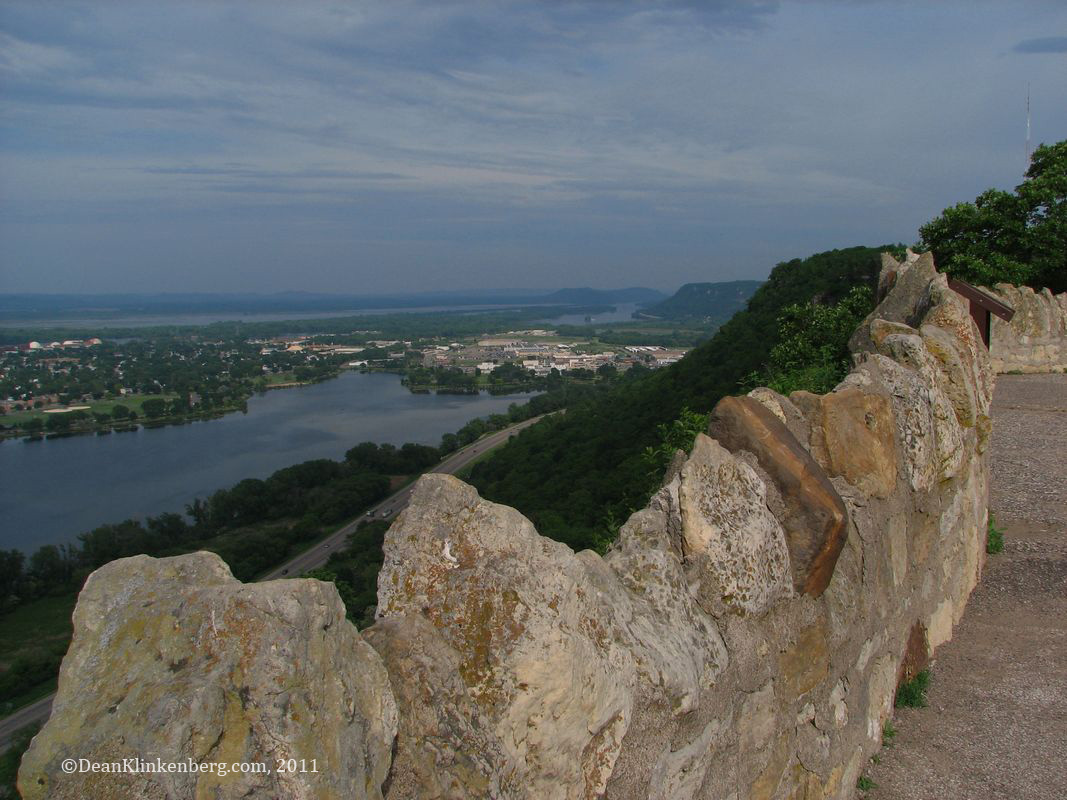
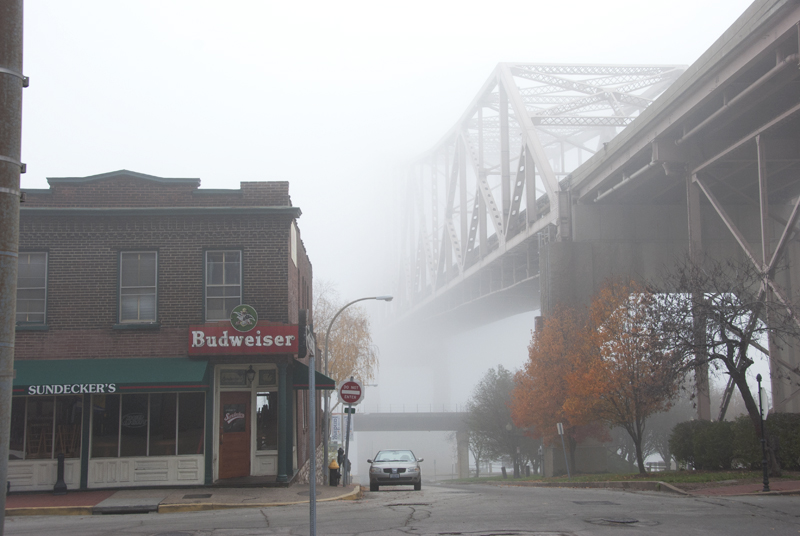
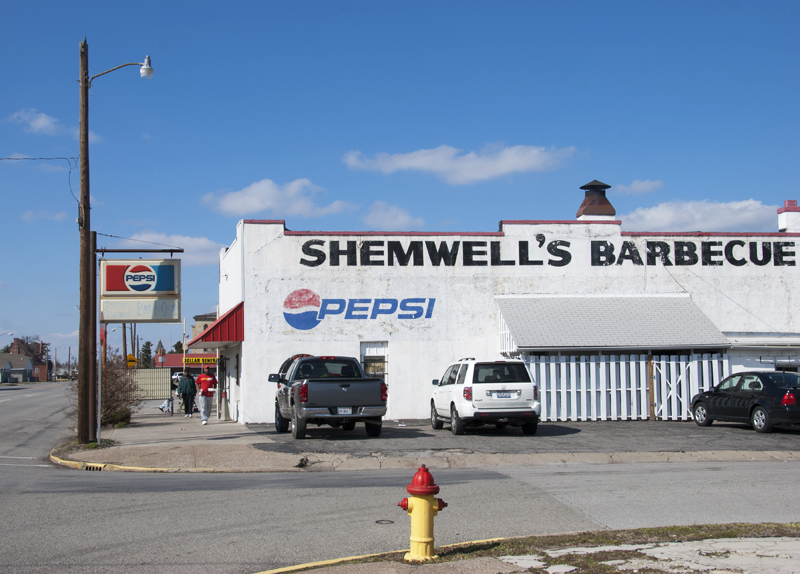
Below are photos of some of the places mentioned in this episode.

Support the Show
If you are enjoying the podcast, please consider showing your support by making a one-time contribution or by supporting as a regular contributor through Patreon. Every dollar you contribute makes it possible for me to continue sharing stories about America’s Greatest River.
Don’t want to deal with Patreon? No worries. You can show some love by buying me a coffee (which I drink a lot of!). Just click on the link below.
Transcript
65. Driving the Great River Road Part 2
Fri, Jun 27, 2025 4:56PM • 1:04:28
SUMMARY KEYWORDS
Mississippi River, Great River Road, John Deere Pavilion, Mississippi Valley, historic sites, cultural attractions, food and beer, wildlife refuge, scenic views, riverfront trails, steamboat history, local museums, outdoor recreation, architecture, local festivals., Great River Road, St Louis, Cahokia Mounds, French colonial, Big Muddy Blues Festival, Popeye statues, Fort de Chartres, Cape Girardeau, Shawnee National Forest, Giant City State Park, Cairo Illinois, Magnolia Manor, Fort Defiance, Mississippi River, travel guide.
SPEAKERS
Dean Klinkenberg
Dean Klinkenberg 00:00
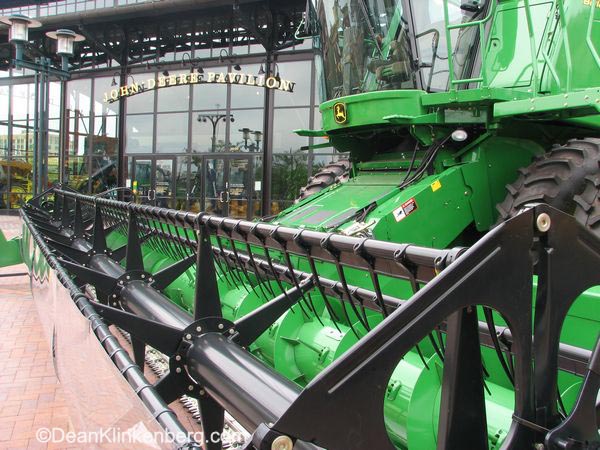
And speaking of John Deere, the in downtown Moline, the John Deere Pavilion. It’s the company store, in a sense, it’s a place you can go to hop on a giant combine, put yourself in the seat of different farm implements, and get a sense for what it might be like to drive one of those big beasts around the field. Of course, they won’t let you take it out of the building, but you get to sit in the seat
Dean Klinkenberg 00:43
Welcome to the Mississippi Valley Traveler podcast. I’m Dean Klinkenberg, and I’ve been exploring the deep history and rich culture of the people and places along America’s greatest river, the Mississippi, since 2007. Join me as I go deep into the characters and places along the river, and occasionally wander into other stories from the Midwest and other rivers. Read the episode show notes and get more information on the Mississippi at MississippiValleyTraveler.com.
Dean Klinkenberg 01:11
Let’s get going. Welcome to Episode 65 of the Mississippi Valley Traveler podcast. Well, in this episode today, we’re continuing our trip down the Great River Road. We left off part one in the last episode at Lake Pepin with the small communities around there. And in this episode we are going to make our way all the way down to Cairo, Illinois, to the spot where the Upper Mississippi ends at the Ohio River. So just as a quick reminder, I’m just doing this to briefly highlight some places and experiences along the Great River Road between Itasca State Park and the Gulf of Mexico that I think would be interesting to visit. This is certainly not a comprehensive discussion of all of the things you should visit. I recommend going much deeper. You can buy one of my guidebooks. You can look at my website, MississippiValleyTraveler.com. There are other books out there that may be useful as well, just not as useful as mine. But I want to make sure, to give you a sense of the variety of things that there are to do along the river. The river is, of course, the main draw, but the Mississippi Valley is rich with historic and cultural sites too. So I’m highlighting a few of those along the way, and also making sure to steer you to places where you can actually get to the river. Now, of course, I’ve got to also mention food, and there may be a few times I mentioned beer, which you probably heard in part one. That will happen again in part two. As always, keep in mind that, you know, places come and go, and at the time I’m releasing this, this is up to date and current, but you know, I don’t have the power to keep places from closing or interesting places from opening up. So if you’ve got your heart set on visiting someplace, I suggest you check in advance and make sure they’re open and check their hours as well. Some of them have variable hours, especially during off season periods. All right, so with that, let’s get rolling along again.
Dean Klinkenberg 03:24
Well, welcome back to our road trip down the Great River Road from Itasca State Park in Minnesota to the Gulf of Mexico. Just a quick reminder what we are doing in these couple or three podcasts, however many they turn out to be, I am highlighting places and experiences along the Great River Road that I think are especially outstanding. These are this is certainly not a comprehensive listing of places to visit. You can buy my guidebooks or look on my website for ideas to further expand your list of things to do when you’re in a specific area. This is just my way of following the entire Great River Road and offering a few of my thoughts on some of the more interesting must see kinds of places along the way. The river, of course, is the main draw for all this. So much of this will steer you toward experiences that get you closer to the river. But the Mississippi Valley is rich with historic and cultural sites too. So I’ve got to highlight some of those as well. And of course, we’ve got to say a little bit about food and maybe a little bit about beer. In fact, maybe more about beer than food. I’ll let you see how that plays out. Just a quick reminder that places come and go. So at the time of this recording and the previous one, the information was accurate. But if there are places that I mentioned that you have your heart set on visiting, I strongly suggest you check in advance to make sure they’re open and to verify their hours.
Dean Klinkenberg 04:54
Well, we left off after touring around Lake Pepin, so let’s continue on. By checking out some of the sites from Wabasha at the southern end of Lake Pepin down toward La Crosse. And the first thing I want to mention is that much of this area is part of a national wildlife refuge that was established in 1924 the Upper Mississippi River National Wildlife and Fish Refuge runs 261 miles from Wabasha to the Quad Cities. Much of the land adjacent to the river and the islands are part of the refuge. You’ll find signed canoe trails, hiking trails, visitor centers, and lots of quiet, undeveloped places to enjoy. So when you leave Wabasha, and I did offer some tips on what to see there in the last episode. So check that out. The couple places I really hope you’ll swing by and visit. The Kellogg-Weaver Dunes just south of Wabasha is a unique ecosystem of sand prairie with endangered Blanding turtles among the animals you’re likely to see there. I think it’s really fun to walk around and look at some of the plants that you’re unlikely to see in other places. Just a bit north of there in the town of Kellogg, the Town and Country Cafe is one of my favorite spots to stop when I need a good piece of pie, and they usually have far more selections than I can take advantage of. On the Minnesota side, John Latsch State Park, just south of Minneiska, offers fantastic views of the Mississippi Valley. It takes a bit of a hike to get up there. There are steps that lead from the parking lot up to the top of the bluff. The views are definitely worth the walk up, though.
Dean Klinkenberg 06:41
In Winona proper, there are quite a few things to see, and it’s hard for me to even narrow this down that I feel like I’m neglecting the city by even choosing these places. But this is, this is kind of a short list of things that you almost certainly need to do while you’re there. Garvin Heights Park is another one of those places that offers great views, and this is one that you can drive to, so you don’t have to walk up a couple 100 steps to get there. The Winona County History Center is a big old building, an old armory that offers really good exhibits on the history of the area, and it’s worth a couple of hours at least. The city has several architectural gems. Maybe a little surprising for town of its size, but like a lot of Mississippi river towns, there was a boom period where there was a lot of money and a lot of impressive architecture went up during those boom years. So for example, you’ll find the Winona National Bank, which from the outside, looks like, well, it’s a style that some have called Egyptian Revival. Inside, it’s just as gorgeous, and there’s a safari museum of stuffed animals. I’ll leave you to go in and figure out exactly what I’m talking about. Also, the Watkins Administration Building in town is absolutely gorgeous, with the marble mosaics and the art glass in the building.
Dean Klinkenberg 08:04
In summertime. In mid summer, stick around for the Great River Shakespeare Festival, and if you’re interested in what’s going on with those boat houses that you see tied up on the to the island just to the east of downtown. I suggest you go back and listen to episode 16 of this podcast where I had a chance to interview somebody who lives on the boat and produced her own podcast episodes about that boathouse community.
Dean Klinkenberg 08:33
Just south of town, Bunnell House is a really interesting and unique structure that an architectural style that some have dubbed Steamboat Gothic. I think it’s definitely worth a visit, and then you can decide for yourself whether or not you want to build your own Steamboat Gothic House.
Dean Klinkenberg 08:50
And a little bit further down the road, Great River State Park is another one of the pearls or the wonders of the along the Mississippi. It’s an expansive park on top of the bluffs. For the most part, there are a lot of hiking trails, nice campground and at least three places that you can hike to the edge and get really good views looking out over the Mississippi Valley. Now, in this same stretch of river on the Wisconsin side, there are a few things to check out. It’s hard not to highlight these overlooks, these places that have great views. Many of these, you might stop for just five or 10 minutes. You might stick around and and hike around the bluffs or the spend more time enjoying the views. So in Alma, Wisconsin, Buena Vista Park is one of those places where you might just end up stopping for 10 or 15 minutes to enjoy the views, and they are magnificent. And in town down below the bluff, the Castle Rock Museum is one of those places that’s the brainchild of an obsessed collector, a man who collected armor, medieval armor, and arms and again, like you wouldn’t expect to find this in a small town in Wisconsin, but there it is, and it’s definitely worth some time to go visit.
Dean Klinkenberg 10:06
Down the road in Fountain City, The Monarch Public House is in a building that was built in 1894 an old storefront, and it is a gorgeous, gorgeous bar and restaurant inside. It’s worth just to stop and experience that on its own. And the folks at Seven Hawks have built some very unique places to stay, a few of which remind me a little bit of tree houses. So if you’re looking for somewhere to stay in the area, you might check out Seven Hawks and see if there’s something to your liking that they have to offer.
Dean Klinkenberg 10:38
As we get closer to Trempealeau, you’ll want to detour to the Trempealeau National Wildlife Refuge, one of my favorite spots along the river, maybe a little underappreciated, I’m not sure. I’ve been there many times, and I’ve been there at times when nobody else has been around. It’s kind of unique in that it’s not right next to a railroad or a highway, so the views and the time there don’t get disrupted as much by the noises from trains and cars, and you’re right there next to expansive wetlands. It’s especially fun to visit in the fall, when a lot of migrating birds are passing through. But I enjoy going there any time of year. And in the same stretch of river, you’ll find several places that offer fresh produce, some stands or little farms. I love stopping and picking up whatever’s in season when I’m up there. Perrot State Park at Trempealeau is another fantastic State Park, some really good hiking trails and also plenty of places to camp in heavily shaded areas, places, a canoe. It’s an awesome place to visit. in town, The Trempealeau Hotel has roots going back to 1871 it’s one of the few structures that survived a catastrophic fire in Trempealeau. They have good food and live music on weekends, especially, but not just on weekends, and just outside of Trempealeau, I love walking around the Van Loon Wildlife Area, which winds itself around the Black River Delta. It’s kind of known especially for preserving the particular style of bridges that were built in the early 1900s but this is all protected land now, these are all hiking trails and not roads. I find it’s a great spot for birding or just to enjoy some peace and quiet.
Dean Klinkenberg 12:27
And then down in Holmen, you know, one of those small town meat markets I think you should stop in and visit, if you have the time, is the Holmen Locker and Meat Market.
Dean Klinkenberg 12:37
Well, let’s get on to La Crosse now, which is one of my favorite spots anywhere along the Mississippi. And I’m not the least bit objective about this. I lived in La Crosse for six years. Really enjoyed my time there, and I still get back once or twice a year. I think it’s, it’s one of those places that’s especially outstanding as a base for outdoor recreation. That’s, I think that’s a sweet spot. But there’s more to the town than just that. So let’s highlight some of the things, especially around the outdoorsy stuff. Grandad Park is the most famous park probably in the area. It’s a spot known again for those expansive views, for the great overlook over on top of the bluff. Next to it, Hixon Forests offers similar kinds of views, but you have to work a lot harder to get to them. At Grandad Park, you can drive to the top and walk to the overlook with with a good little effort. Hixon Forest has trails that wind up and over and down from the floodplain all the way up to the top of the bluffs. So you can spend several hours hiking around. Find yourself on a goat prairie. Enjoy the views. Hike yourself back down. Walk through bottomland forest. Keep in mind some of the trails there are also open to mountain bikers, so you may need to some of the trails. Keep an eye out for people coming down rather quickly on mountain bikes.
Dean Klinkenberg 14:01
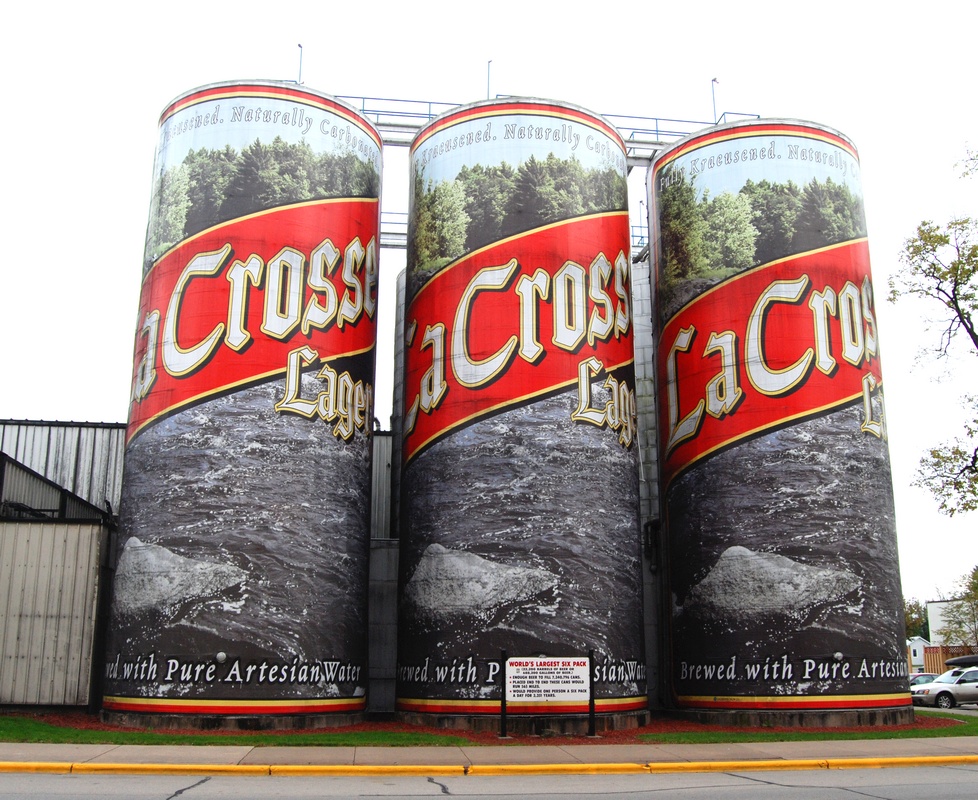
Some of the other attractions in town, downtown La Crosse is a pretty vibrant area. It’s very different from when I lived there in college. It’s in much better shape than it was back then. There’s a mix of places to eat and drink. It’s probably the highlight for most folks. There are a lot of bars, many of them are geared toward the college population, but not exclusively. And there’s some really good food downtown too, some fine dining restaurants. I just want to give you an idea of a couple places I really enjoy visiting if you’re just looking for a sweet snack of some kind, Meringue Bakery is definitely a place you need to visit. The Bodega Brew Pub has had a cafe in it, in that building since 1875. It’s a very fun community space with dozens and dozens of beers to select from, but just a good place to hang out and talk with folks. Turtle Stack Brewery is one of those local brew pubs that makes fine hand crafted beers definitely worth a visit. If you’re looking for a good meal, for a way to treat yourself. There are lots of options, but I would steer you toward Love Child or The Waterfront as my top two choices. And if you’re downtown during the daytime, check out the La Crosse area Heritage Center, which is the Historical Society’s main museum. For something on the sillier side, a little south of downtown in the old brewery complex, you can stop for a selfie in front of the world’s largest six pack. And who wouldn’t like a picture like that?
Dean Klinkenberg 15:33
There are lots of festivals throughout the year in La Crosse, but the city is best known for their Oktoberfest celebration, which, gosh, I’m guessing, I think it was started in the 1960s, it’s been around a long time, and it draws 10s of 1000s of people to this area. It’s a lot of fun. I highly recommend, at least, you know, one time in your life going there for Oktoberfest, but plan ahead, because rooms book well in advance, and if you show up at the last minute expecting you’ll find a place to stay, you’re likely to be very disappointed. Kind of around the same time of year, the Hmong New Year celebration in Veterans Park toward West Salem I really enjoy going there. I think I’ve been there three times for that. It’s a different kinds of party, but it’s a chance to sort of connect with the Hmong community that was resettled in the La Crosse area after the end of the Vietnam War.
Dean Klinkenberg 16:25
Now, when you leave La Crosse, you’re probably going to want to take Wisconsin Highway 35 south that is one of the most scenic stretches of the Great River Road, and it’ll take you down toward Prairie du Chien. And really, by the time you get to Prairie du Chien, after that, the road begins to wander a little bit away from the river, and you don’t see the views nearly as often, but that stretch really from Lake Pepin all the way down, there are really fantastic views of the Mississippi.
Dean Klinkenberg 16:52
So when you get to Prairie du Chien, there are a few things that I highly recommend doing. You got to spend all the time driving around St Feriole Island and checking out the historic buildings, some of which date back to the early 1800s. There’s also a sculpture park on the island by artist Florence Bird that represent different aspects of the city’s history. The Fort Crawford Museum in town preserves the legacy of the old frontier fort that was built before there was much of a population in Prairie Du Chien. And Valley Fish and Cheese is a little shop run by one of the few remaining commercial fishermen in the area. So there are fish for sale in his store that were freshly caught in the river itself. I highly recommend doing that. You can get some of it fresh and uncooked, and some of the fish that he catches, he smokes and sells that way too. Smoked carp is surprisingly good, so you should probably let yourself try that at least once in your life. And then south of town, Wyalusing State Park is one of the incredible state parks along the Mississippi River as well with great views. There are places where you can camp right on the edge of the bluff and have million dollar views, but you’re only paying a few bucks a night for the privilege. Again, like if you want to stay on one of those sites peak travel season, you should probably go online and book those sites in advance. All those sites are reservable.
Dean Klinkenberg 18:24
And if you keep going down the Great River Road, if you continue down the state or the county roads south of Prairie du Chien and down to Cassville, The Stone Field and State Agricultural Museum is definitely worth a visit. It’s a re-creation of a 19th century village, a lot of antique farm equipment. So if you go down the Iowa side, particularly crossing over from Lansing, and continuing on your way down, you’ll find a series of small towns. And each kind of has their own appeal, has their own things to do. I like you know, in Lansing, there’s a Museum of River History that is kind of hidden. It’s next to a coffee shop on the riverfront. I think it does a really good job of telling the story of commercial fishing. They do that very well. If the coffee shop is open, the museum is also going to be open, so make a stop there.
Dean Klinkenberg 19:15
Further south of there, close to Marquette, Effigy Mounds National Monument has to be on your short list of places to visit. The National Monument preserves mounds that were built hundreds to maybe 1300 years ago, and many of them were built in the shape of animals. Hence the effigy part. To see many of them, you’re going to have to do a little bit of work. They tend to be on top of the bluffs, and the visitor center is at river level, so there is a path that will take you up to the top of the bluff to start walking around and visiting some of the mounds. Aside from the mounds, the views of the river from on top of the bluff are outstanding. So it’s a win win.
Dean Klinkenberg 19:58
And then if you as you continue on south, when you get to the town of Guttenberg, you may feel like you’ve taken a wrong turn and ended up in Europe, not a mistake. The town was built by German immigrants and still maintains a flavor, and they are very proud of their German heritage to this day.
Dean Klinkenberg 20:17
Well, let’s continue on now to the cities of Dubuque and Galena. This is an area that was really built on the backs of lead mining. Commercial lead mining began in this area, really in the 1820s with earnest and money from the lead mining built both of these communities. Dubuque is the bigger city. Has more going on, a wider range of accommodations and pretty good amount of food choices as well. So let’s start there. A few of the things that you really should do as long as you’re here in town, Eagle Point Park, another one of these bluff top parks with great views. But what I really like about this is the park buildings were built by a man, were designed by a man who was inspired by Frank Lloyd Wright. So they have a prairie style architecture that that will look familiar to you, and there’s just lots of room to spread out and enjoy a picnic up there. The National Mississippi River Museum and Aquarium should be on your short list of places to visit as well an expansive place several different exhibits. They obviously have a focus on ecosystems and fish life related to the Mississippi, but they have a whole other area that focuses on the Gulf of Mexico and basically where rivers meet the sea, delta ecosystems. So that’s really an interesting place to wander around in general. So if you like visiting aquariums and looking at fish and learning about aquatic habitats, this is a good place. It’s also a History Museum. So they have exhibits on river shipping and some exhibits on local history as well. One of the more unique places in town is the Fenelon Place Elevator, which is a short ride up the side of a hill that will take you from town level up the bluff. This elevator has been in operation since 1882 and is still going strong.
Dean Klinkenberg 22:17
The city has a lot of historic architecture. You can just walk around downtown or adjacent neighborhoods to enjoy the outstanding mixture of architecture. For something more specific, the churches in town, I think, are really gorgeous, and there’s a lot of amazing stained glass windows. If you have time to tour St Luke’s Church downtown, they have dozens of Tiffany windows definitely should be a place to stop in and visit. Check their hours, though, the last time I looked they were only open to visitors on Mondays, Monday through Thursday during the day, so you won’t be able to do it to see those windows on the weekends.
Dean Klinkenberg 22:56
Convivium is a fine neighborhood place on the north side that serves good coffee and breakfast and has a heavy community vibe, which I really enjoy. Jubeck New World Brewing is one of those hyper local breweries that offers great beer and conversation for something completely different. The Europa House seems like an unlikely place for this. They look very much like a dive bar, and it feels like a dive bar when you’re inside, to be honest, but they serve fantastic German food. So go there for dinner some evening. Check their hours again, because they tend to be more weekend hours, and you can enjoy some traditional and delicious German food. And then for something more upscale, more fine dining, head to Brazen Open Kitchen.
Dean Klinkenberg 23:49
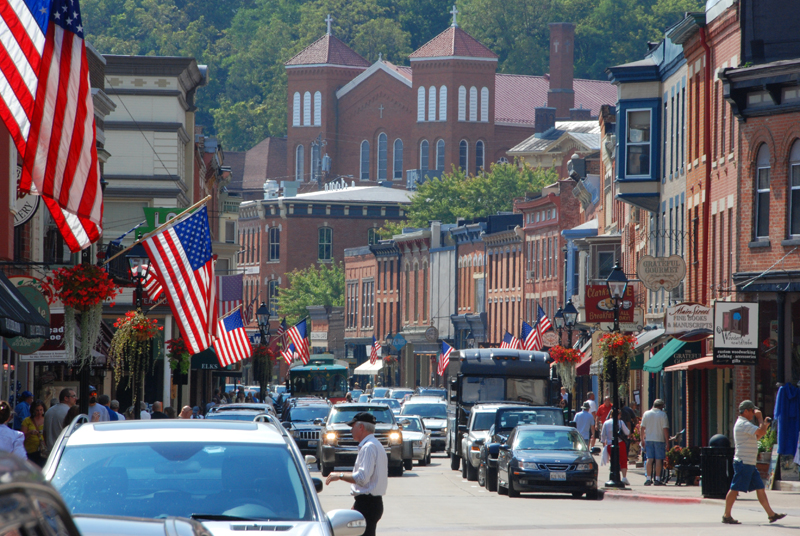
Now in the Galena area, really the main way, I think, the best way, I think, to really experience Galena is on foot. The main street is captivating in its own, the way that the buildings gently follow the bend of the Galena River. You’ll find almost exclusively locally owned shops and restaurants and all that beautiful architecture, mostly three and four story buildings. So I would say, just take your time, taking that half a day or more, and just walk up and down that street, go in the shops and find something to enjoy there, find a place to stop for a bite to eat or a beverage of your choice. Near the near one end of that stretch, The Dowling House is the oldest existing building in town. It was built in 1826, and it’s kind of fun to tour that.
Dean Klinkenberg 24:37
Just outside of downtown, there’s a home where Ulysses S Grant lived for a few years, and that is now open as a museum that you can tour, and also, kind of in the downtown area, The Galena U.S, Grant Museum is the local history museum that’s got a heavy focus on the lead mining history, plus also Ulysses S Grant.
Dean Klinkenberg 24:59
For a snack, something sweet, maybe even something slightly savory, if you catch them in the right time of day, the Galena Bake House offers really good selection of sweet and savory snacks, and you will find an abundance of bed and breakfasts. I don’t know that there’s another place along the Mississippi that has a higher concentration of bed and breakfast inns to choose from, and they basically range from beautiful to high end luxury. So choose what suits your mood. Just outside of town there, the Witkowsky Wildlife Area is an expansive wildlife area with lots of hiking trails you could spend easily a day just hiking around there, and they go through quite a nice range of ecosystems, including prairies and forests and some upland hills. So that’s a good place to just go and stretch your legs for a good long hike.
Dean Klinkenberg 25:53
Now, there’s one other place in this area that had that was tied to the mining industry as well, and that’s the town of Potosi. It’s a much smaller community than Galena and Dubuque, and yet they still have attractions that should make you detour there for a quick visit. If nothing else, you should go to the Potosi Brewery. Again, fantastic beer, good food. historic building. It’s got, you know, hits on all the notes, and just outside of town as you’re headed toward the river, if you go under, if you keep going onto the dirt road and under the railroad trestle, and follow the road along the dike, that’ll take you to the end of the dike, to an area that a lot of folks call Potosi Point, which is a really fantastic place just to sit and watch the river. You’re basically sitting out in the middle of the river on this narrow dike, and there are a lot of shallow wetlands around. It attracts a lot of birds. You might even spot muskrat or an occasional beaver as you’re sitting there.
Dean Klinkenberg 26:50
So as we drive on now to the Quad Cities, the couple things I want to point you to. The city of Bellevue is a beautiful river town, laid back place, probably the one thing, the one place where you should stop there is the River Ridge Brewing Company. See, there is probably more beer than food in this in these episodes, you know, my priorities, but the River Ridge Brewing Company is right next to the river. There they have outdoor seating. You can enjoy river views along with a good beer. Highly recommend that place and south of town, the Green Island Wildlife Management Area. It’s another one of those hidden gems along the Mississippi. It’s a large area, almost all wetlands, that attract lots and lots of birds. It’s a favorite spot for birders to go all year, but especially during migration season, if you have a boat with you, canoe or kayak, it’s a great place to paddle around, but you don’t need a boat to enjoy the bird life there.
Dean Klinkenberg 27:50
When you get into Clinton, you might want to stick around for a while and take in a minor league baseball team. There are a few towns along the Mississippi that have minor league baseball, and Clinton Stadium is right next to the river. And they also have another a really unique brewery, another brewery, you say, yeah, another brewery. There’s an old church has been converted into a brew pub called the Great Revivalist Brewery. And I recommend to stop there for for a meal and a pint.
Dean Klinkenberg 28:18
And then on the other side of the river, there are a couple places I feel compelled to highlight, up around Savannah, Mississippi Palisades State Park is a fantastic State Park, good hiking trails, a huge campground. Fulton has a lot of folks with Dutch ancestry, so they built a replica of a windmill right on the river. She had stopped there. It’s open more in the summer than other times of year, and occasionally they have it running where they are actually processing grain. There’s also at the Fulton Meat Market, another one of those small town butcher shops, they often stock some Dutch food items. So that’s kind of a fun place to stop.
Dean Klinkenberg 29:00
Hey, Dean Klinkenberg here, interrupting myself. Just wanted to remind you that if you’d like to know more about the Mississippi River, check out my books. I write the Mississippi Valley Traveler guide books for people who want to get to know the Mississippi better. I also write the Frank Dodge mystery series that is set in places along the Mississippi. My newest book ‘The Wild Mississippi,’ goes deep into the world of Old Man River. Learn about the varied and complex ecosystems supported by the Mississippi, the plant and animal life that depends on them. And where you can go to experience it all. Find any of these wherever books are sold.
Dean Klinkenberg 29:42
Alright, we’re moving right along. Let’s roll on into the Quad Cities region where quad means five, and where the Mississippi River runs from east to west, which will mess up your sense of direction, if you’re like me, and you’ll use the river to help you navigate around. People have lived here in this Quad Cities region for at least 12,000 years. In the 17th century, the Sauk and Meskwaki people moved to the region, and they were the indigenous people that the first Europeans encountered when they came to this area. The river has played a big role in the region’s development, partly through steamboats and transportation, and eventually through manufacturing, which got very big, especially manufacturing for farm implements and tractors, until that all began to decline in the 1980s. If you’re looking for a fun way to get on the river, The Channel Cat Water Taxi has four stops just upriver of lock and dam 15. If you do all four stops on one ride, it’ll take you about an hour to do a complete route. And you’ll also notice that there are miles and miles of riverfront trails that are great for walking and for biking. Right along the river, the village of Le Claire is at the upper end of the Quad Cities region, and it’s at the upper end of what used to be a set of rapids that stopped or started a lot of steamboat traffic, depending upon which direction they were coming from, boats would either unload or load from Le Claire. And in part because of this location, Le Claire was home to a lot of riverboat pilots in town. Today, you’ll find the Buffalo Bill Museum, which is kind of a local history museum and is named for the famous Wild West star who was born in the area. You’ll also find a trifecta of places to sample local beverages, if you’re so inclined. The Mississippi River Distillery for distilled beverages, Wide River Vineyards for wine, and Green Tree Brewery for beer. So you can hop around and find something for everyone. The signature event in the region is Tug Fest, which I mentioned at the top of episode one. It’s one of those bizarre festivals where folks take fairly seriously, actually, this tug of war contest with a giant rope that strung from shore to shore. People from Le Claire, Iowa compete against tuggers from Port Byron, Illinois. It’s a fun county fair kind of atmosphere, and you should put it on your list to visit if you happen to be in the area around the time
Dean Klinkenberg 32:18
Continuing on down into Bettendorf, it’s a suburban community for the most part. There are some decent places to eat and drink, and if you have children with you, you may want to stop in at the Family Museum, a kid friendly Science and Nature focused museum. Down in Davenport, the biggest city in the Quad Cities region, the Bix Beiderbecke Museum pays tribute to the famous cornetist who grew up in the area and died way too young. The German American Heritage Center is a really interesting and expansive tribute to the 1000, well, say, millions and millions of Germans who migrated from Germany to the United States, many of whom settled in the Quad Cities area. The Palmer Mansion was built by the founders of the profession of chiropractic, and definitely worth a tour. You should call in advance to schedule tour. They tend to be limited to just maybe one two days a week. There are a lot of eccentricities inside. It’s one of those places where you begin to understand, when you have a lot of money, you get to do all kinds of weird things. Just outside of town. Nahant Marsh is a successful reclamation of an area. It had been a hunting ground for many decades, and was polluted with lead buckshot from all the hunting. It was cleaned up and restored, and is today, beautiful marshy area and Nature Center. And for big events that center around Davenport, they host a big St Patrick’s Day parade and lay claim to what the what is probably the only bi state St Patrick’s Day parade in the country. So they they cross the river bridge, and the parade marches between Davenport and Rock Island, Illinois. And in mid August, there’s a big paddle, paddling themed event called Floatzilla, where they get hundreds and sometimes up to 1000 or more paddlers on the Mississippi River. At the same time, there’s an island in the middle of the region called Arsenal Island that is the home of a military base installation. There are several sites worth visiting on the island. You will need to pass through security to get onto the island, and that may take a little bit of time, so bring your patience. But the sites are worth visiting. One of them is the Davenport House, which is the 1833 home of the founder of the City of Davenport, or the namesake. There’s a national cemetery and a confederate cemetery housing a couple 1000 Confederate soldiers who died while in prison during the Civil War at the arsenal. The Rock Island Arsenal museum features small arms and as was reopened after significant renovation a couple of years ago. Definitely worth a visit. And a river themed place to stop is the Mississippi River Visitor Center, which is right next to lock and dam 15, right next to the swing bridge. Lots of interesting information about engineering on the Mississippi and great views of the river and boats as they lock through on the Illinois side, Rock Island is the location where the Sauk people had their home village for centuries that they called Saukenuk. It’s now part of what’s called Black Hawk State Historic Site, which is mostly a big park, but has a little museum focused on the history of the the Sauk and Meskwaki people.
Dean Klinkenberg 32:20
And for a pleasant place to grab a beer, I’d suggest Radical Effects. Brew Works. They’re a nano brewery, in the sense that they brew a small quantity of their own brew, and then they also have selections from other places as well.
Dean Klinkenberg 33:01
In neighboring Moline, one of my favorite places to walk around is Sylvan Island, which is the site of a former massive steel factory. Not much of that left today, except the concrete foundations, but it’s a fun place to wander around. There are a couple of big historic homes built by Deere money, John Deere money, the Deere-Wiman House at the Butterworth Center. They do regular tours, and there are some really fun and unique features in each of those houses. They’re not just beautiful houses. And speaking of John Deere, the in downtown Moline, the John Deere Pavilion, it’s the company store, in a sense, it’s a place you can go to hop on a giant combine, put yourself in the seat of different farm implements, and get a sense for what it might be like to drive one of those big beast around the field. Of course, they won’t let you take it out of the building, but you get to sit in the seat.
Dean Klinkenberg 36:51
For places to eat. I really love Lemongrass, which serves a mix of different sort of Southeast Asian or Asian cuisines. The food is excellent there, and the menu changes some with the across time. Coya’s Cafe is a little bit a low key Mexican place that serves a lot of Mexican items that I don’t recall seeing in many other Mexican American restaurants. Definitely worth the stop some very good food. And Bent River Brewing Company for that evening beer and live music to enjoy.
Dean Klinkenberg 37:26
Now, as you continue out of the Quad Cities down the Iowa side is probably the preferred way to go. You’ll pass through several towns that were once industrial centers of their own. Muscatine was the first one, and was the center of a pearl button industry for 30 or 40 years or so. They would harvest mussels from the Mississippi and cut buttons out of the shells of the mussels. You can learn all about that the National Pearl Button Museum. And when you’re ready for something of the little sillier in the Riverfront Park, you can take a selfie with the world’s largest slice of watermelon.
Dean Klinkenberg 38:05
As you continue on down the Great River Road, I highly recommend a stop at Port Louisa National Wildlife Refuge by the visitor center. There are a couple of hiking trails that go down the bluff and into the bottoms and to some very scenic areas. It’s a great place to really be away from the crowds and get a chance to walk around the back waters and bottom lands of the Mississippi without much, without much traffic, or with really nobody else around you.
Dean Klinkenberg 38:32
The next city you’ll encounter is Burlington. The Des Moines County History Museum is in the old library. A big space, beautiful space, and lots of fun exhibits on the history of the region. Snake Alley is in every tourism brochure. It’s one of the crookedest streets in the world, and it was actually built for functional reasons. You can still drive down it today, just go very slowly. Burlington is another one of the towns that has a minor league baseball team, the Burlington Bees. So if you’re there for an evening in the summer, you might check and check out and see if they have a home game. Downtown has a number of beautiful buildings, a mixture of shops and places to eat, and a lot of housing and a lot of ongoing work to really restore and bring the downtown area back adjacent to downtown. Martinis Grill has some of the best views you’ll find at any restaurant anywhere, expansive views looking out over the Mississippi. Definitely worth a place to stop, at least for a drink.
Dean Klinkenberg 39:34
Continuing on down the road, Fort Madison is our next town. An old history. It’s a town that was a frontier fort for a while. And there is a a re-creation of that frontier fort on the riverfront. It’s also a town that was the house that houses the State Penitentiary that’s been around since, oh gosh, probably 1830s or so, or 1840s. At one time it was the headquarters of the Schaefer Pen Company, which made fantastic and long lasting pens. There’s a small museum in town that honors the history of the Schaefer Pen Company. It’s worth checking out. Check their hours to make sure they’re open. And the North Lake County Historical Society Museum is in the old Santa Fe Railroad Depot. Covers a lot of the history of Fort Madison in the area, with an emphasis on railroading, as you might expect. For a step back in time, if you’re a diner person and you love diner food, the Fort Diner is a throwback, an old fashioned diner. It’s definitely worth stopping there for a hearty meal in very close quarters.
Dean Klinkenberg 40:49
Next town up is Keokuk, which, at one time, when the dam was completed, the hydropower dam was completed, it was the widest dam in the world. You can learn more about that at the Keokuk-Hamilton Dam Museum in downtown Keokuk. And then you can go down to the decommissioned bridge just below the dam and get a really good view looking out over this massive structure and the river itself. If you need some caffeine, Lost Canvas Coffee is a nice, delicious, friendly place to stop downtown.
Dean Klinkenberg 41:18
And on the other side of the river, Nauvoo, Illinois, is one of the most important places in the mythology of The Latter Day Saints Church, the Mormons. It’s one of their important historic sites. Most of the town is, in fact, a historic site. And you can take guided tours, or you can wander around on your own, you’re likely to be approached by missionaries from the church no matter where you go. Just know that that’s likely to happen. For a broader overview of the history of the area, the Weld House Museum covers much more than just the history of the Mormon church.
Dean Klinkenberg 41:57
Driving on down to Quincy, Quincy, Illinois. The Quincy Museum and the history museum on the square are two places where you can get a good overview of the history of Quincy itself, as well as a sample of some of the really interesting architecture in town. You wouldn’t expect to find so much elaborate, well done architecture from different eras of time, as you will find in Quincy, you can pick up a brochure that’ll give you an architectural tour around town at the Visitor Center, which, appropriately enough, is in one of those interesting buildings, a Moorish style house that was built overlooking the river that’s called Villa Catherine. Quincy has a string of riverfront parks, some on the bluff, some down at river level. All of them are great places to hang out and watch the water flow. The Ratskeller in the old Dick Brothers Brewery Complex is a cool place to grab a drink, and if you need breakfast or lunch, there’s no place better than Thymes Square Cafe. That’s t, h, y, m, s, Thymes Square Cafe, which emphasizes local ingredients and always puts out a good meal.
Dean Klinkenberg 43:06
Well, we’re going to cross the river back into Missouri for a little bit, and we’re going to talk about Hannibal briefly. You may have heard a few things about Hannibal, Mark Twain’s boyhood home, and I think the museum, the Mark Twain Museum and boyhood home are definitely worth a visit. The Museum does a pretty good job of, I think, educating about all of Mark Twain’s works and his legacy, much of the town seems to be, say, a Disneyfied version of Mark Twain. I’m not always a fan of all of that, so there’s a lot of goofiness that goes on that I’m not sure Twain would be so impressed with today. So definitely go to the museum and the boyhood home. Go to Jim’s journey, which is a small museum that preserves the legacy of the African American community in town and will be the focus of an upcoming podcast, by the way.
Dean Klinkenberg 44:00
For a good hike just outside of town to the north Julian Steyermark Woods. The trails kind of wind up and around bluffs that are adjacent to the floodplain, and there’s a pretty good grove of pawpaw trees there, if you know what those are. If you need some caffeine or a good bite to eat, Java Jive downtown is one of my go to stops whenever I’m in the area. I stop there frequently for lunch or just refill my coffee cup when you leave town.
Dean Klinkenberg 44:31
If you want to take the scenic route, Highway 79 is the way to go. It goes from Hannibal down to Interstate 70 in suburban St Louis, and along the way, you’ll pass through the communities of Louisiana and Clarksville, which are worth driving around a little bit and seeing what’s there. You’ll also pass a couple of preserves or nature areas that are worth hiking around a little bit, Ted Shanks Conservation area and the Clarence Cannon National Wildlife Refuge. Neither one really has extensive hiking trails. It’s more you can drive around and park. It’s a good place to to watch birds at different times of the year, especially during migration season. But there aren’t really extensive hiking trails there.
Dean Klinkenberg 45:13
All right, now we’re going to jump back to the other side of the river again, the stretch of Illinois Highway 100 between Grafton and Alton is one of the absolutely most scenic spots along the Mississippi. At the very least, you’re going to want to drive it. It’s popular with bicyclists and with motorcyclists as well, so be prepared to share the road a little bit with other vehicles. Grafton has really embraced the tourism industry. So you’ll find a lot of boutique places to stay there, quite a few bars and restaurants to eat at, some right next to the river. And you’ll find Aeries Winery on top of the bluff overlooking town on the river, which probably, again, like Martinis in Burlington, has really stunning views, and it can be a nice place to enjoy a glass of wine and a snack as you watch the sun go down.
Dean Klinkenberg 46:07
In the same area, particularly around Grafton and north, there’s still a handful of ferries that will move you across the area rivers. It’s a fun experience, if you haven’t been on a river ferry before, the Brussels Ferry crosses the Illinois River just north of Grafton and connects to Calhoun County, which a peninsula in Illinois. That ferry is free. The Grafton Ferry connects to Missouri. There is a fee to use that. And further north of there, the Golden Eagle Ferry also connects Missouri and Illinois across the Mississippi River, and there’s a fee to use that as well. Also in the region up there, near the Brussels Ferry, the Two Rivers National Wildlife Refuge has several different properties where they are protecting bottom lands, for the most part, wetlands, and it’s a good place to go, and if nothing else, just kind of pick a place to sit and watch for a little while. Not a lot of hiking trails again, but lots of birds, if you catch it at the right time of year.
Dean Klinkenberg 47:04
As you’re driving from Grafton down Highway 100 I highly recommend the stop at the Olin Nature Preserve in Godfrey. There’s a lot more places to hike there. Some of it will take you up to some pretty good views overlooking the Mississippi Valley. Some of it will descend down into a creek valley with some very scenic limestone creek beds. Watch some small waterfalls and plenty of shade, and then in Alton proper. There are quite a few businesses downtown, a mix of some shops, some places to eat, a bar to down below that area at river level, the Old Bakery Brewery is a fantastic place to stop for a high quality beer and some good food. If you want another one of those selfies with something unusual, look for the statue of Robert Wadlow, who was the world’s tallest man. The statue is a life size replica, and you can stand next to him and feel even smaller than you may otherwise.
Dean Klinkenberg 48:11
Further down river, the Great Rivers Museum at the Mel Price Lock and Dam provides another good overview of the history of shipping on the Mississippi, again, curiously omitting how much it costs and not talking about how much of it is taxpayer supported. But still, you know, it’s a good overview of shipping on the rivers. Right across the river from that on the Missouri side Riverlands and the Audubon Center are good places for bird watching and just to spend some time hanging out along the wetlands and back waters of the Mississippi.
Dean Klinkenberg 48:45
From there, you’re next going to reach the confluence where the Missouri and Mississippi Rivers meet. There are three different places where you can get a view of the confluence, if you really want to get up close and personal, then go to the Jones Confluence Point State Park, where, depending upon how high the water is, you can step right out on this narrow peninsula of land where you have the Mississippi River on your left and the Missouri River on your right.
Dean Klinkenberg 49:16
On the other side of the Missouri River, Columbia Bottoms is a more expansive area of bottom lands that has some hiking trails. It’s a little harder to get to the confluence viewing point, since flooding has washed out some roads. You can hike there from a parking lot. It’s about a mile hike to get there. But there are some places to walk around and hike, and there are some places to fish as well. So it’s one of my favorite spots to visit in the St Louis area. And speaking of St Louis, we’ll focus again on the river corridor for the most part, like we did with the Twin Cities. One of the must stop places is the Old Chain of Rocks Bridge, which was part of Route 66 when it was in service and it has been a pedestrian and bicycle bridge now for quite a few years. You can get to it on either side of the river. There’s now a new park on the Missouri side, The Chain of Rocks Park, which provides secure parking, and you’re right there next to the bridge, and you can walk right out and get spectacular views of the namesake Chain of Rocks, as well as a couple of curious towers that you can read about when you’re there.
Dean Klinkenberg 50:23
Naturally, if you’re in St Louis, you’re gonna have to go to The Arch, which is officially The Gateway Arch National Park. The museum underneath the arch is definitely worth time to visit and explore. Like other sites, you’ll have to pass through security. There’s a metal detector inside, so there are limits on what you can bring inside. Be aware of that. And adjacent to that, the Eads Bridge is one of the oldest existing bridges across the Mississippi River, and it still looks elegant in its older age today. You can see that from The Arch Grounds, and you can walk right up to it if you wish. Downtown has a lot of fantastic architecture, and there are groups that do guided tours around downtown. That’s a good way to pass the time. If you’re interested in the building arts, one of those places that you’ll want to visit that is a piece of that is a work of art unto itself, is the City Museum, which is kind of an adult playground, but the kids will be okay there too. And then if you’re looking for a good opportunity to get out on the water, you know you have the the tour boats that are, you book a ticket for through the Gateway Arch. They operate from the the base of The Arch, and they’ll take you on a replica of a steamboat for a quick little tour up and down the river. Or you can contact Big Muddy Adventures, and you can go out on the Mississippi in a canoe, in a big canoe, with a whole bunch of other people and experts who know what they’re doing. So I highly recommend that experience make time for that.
Dean Klinkenberg 51:54
Adjacent to the city, to the south ,Jefferson Barracks County Park is a sprawling public park that has several museums related to the military history and some other history of the the park itself, it was a military establishment for a long time, for decades, and a small part of it is remains so today. And there’s also a national cemetery at the southern end of the or adjacent to the southern end of the park. St Louis, like a lot of big cities, is a collection of neighborhoods, and St Louis has some fantastic neighborhoods to wander around if you’re going to stick to the river. Soulard is a great place to go and walk around and admire the architecture, much of which went up before the Civil War, and there are lots of good places to eat and enjoy some evening entertainment as well. Forest Park has most of the cultural institutions, including the art museum, the history museum, etc, several places you can explore there. Now, once you get hungry in St Louis, you can you can get the usual stuff. You can find some fine dining. We have some chefs that are routinely nominated for James Beard Awards. You can scout all that out. If you’re interested in something that’s a little more uniquely St Louisan, St Louis style pizza. You’ll hear a little bit about that. It’s a thin crust pizza, and usually topped with Provel cheese, which is a blend of some different cheeses. The St Paul Sandwich is kind of like egg foo young on white bread. I guess you’ll find that at some of the Chinese restaurants, it’s actually pretty tasty. I enjoy a good St Paul Sandwich. Toasted ravioli is another St Louis thing you’ll see on the menus, usually the appetizer menus for a lot of restaurants, particularly those serving Italian food. Concretes are frozen, delicious desserts. You’ll want to maybe go to Ted Drewe’s or find some place like that for frozen for one of those frozen treats and Crown Candy Kitchen is an old institution that they do serve actual candy, but they also have a kitchen where they serve incredible BLTs and some other delicious items. They can get very busy certain times of the year. Don’t be deterred if there’s a line out the door.
Dean Klinkenberg 54:11
As far as festivals go, we got a lot of festivals throughout the year. Like any decent city of our size, we have a surprisingly big Mardi Gras, something like the third or fourth largest Mardi Gras parade in the country. Happens here, in spite of our unpredictable weather in the spring, and we also have the Big Muddy Blues Festival to pay homage to our blues heritage. So St Louis is part of a corridor where there are a number of French colonial settlements, and you can find reminders of that in certain places, from St Louis all the way south for 100 miles or so.
Dean Klinkenberg 54:47
One of those is in Cahokia, Illinois, which is now a suburb of St Louis. Church of the Holy Family is a Catholic church that was built in 1799. It’s a beautiful piece of architecture and quite a throwback, and definitely worth a stop. And just up the road from that Cahokia Mound State Historic Site preserves the mounds built by very advanced indigenous civilization that that was really at its peak about 1000 years ago, and had a two or 300 year period where they really blossomed. The mounds, if they had been built of stone instead of dirt, would be world famous, but because they use dirt, and I think maybe people are easier, it’s easier for folks to dismiss the significance and the expertise and engineering that went into them, but it’s a fascinating site to visit. There are whole books about Cahokia Mounds. I recommend checking those out. The Visitor Center as of this summer, as of June of 2025 is still closed for renovation, and it might be 2026 before it’s open. So check on that. But definitely, at the very least, get yourself a good book and read about it.
Dean Klinkenberg 55:58
As you make your way south, Kimmswick is a good place to stop, lots of shops to visit, and you have to get some pie, at least, at The Blue Owl, maybe a full meal if you’re ready for lunch. A little way south of there, Magnolia Hollow Conservation Area is one of my favorite places to hike around. It starts on top of the bluff, and the trails wind down to the bottom lands, and eventually touch the Mississippi. Great place in fall especially.
Dean Klinkenberg 56:29
Into Saint Genevieve proper. It is one of those places that where you can’t ignore the fact that it was a French colonial settlement for a long time. Much of the old part of town is is part of the National Historic Park. The buildings have been preserved very well. You can see half a dozen or more incredible examples of French colonial architecture, from the late 1700s to the early 1800s and for more of a sense of the day to day life, the Center for French Colonial Life is a must stop place, and they, I think they still occasionally will do some tours around town as well. It’s worth checking with them to see if they’re doing that. The Saint Genevieve Museum Learning Center, kind of a kid friendly place. It mixes history and geology specific to the region, and there’s quite a bit more than you might think it’s definitely worth a stop, and there are several wineries in the area. You can pick up a map showing you where they are. Most of them are out in the country, so some of them have places to eat where you can enjoy a glass of wine in a pastoral setting as you snack on your food.
Dean Klinkenberg 57:40
Just down the ways from there and across the river in Chester, you’ll find a lot of statues that were built to commemorate Popeye and many of the characters from the Popeye comics. That’s because the creator of Popeye, Elzie Sager, Sager was born in Chester, and just north of town, the Menard House is another one of the buildings from that French colonial era. I think it’s a really interesting place to visit for a slice of life from that period around the early 1800s and the Fort de Chartres State Historic Site is also a little bit north of there. It’s a reconstructed 17th Century or 18th century stone fort that really had a surprisingly short period of service. But it’s an impressive reconstruction, and it’s a site that hosts a rendezvous every year, very popular rendezvous, if you know what those are. It’s a fun experience to visit and do some shopping there.
Dean Klinkenberg 58:44
Continuing on south, Cape Girardeau is up next. And in Cape Girardeau, one of the things you’ll want to do is walk along the flood wall downtown, which has been painted with a series of murals representing the town’s history and some of the characters from town. The Cape River Heritage Museum is the place that really focuses on local history and Minglewood Breweries, another one of those small town breweries, craft breweries, that serves a very good product and is good place to stop and mingle with folks. Southern Illinois, yeah, much of southern Illinois is now part of Shawnee National Forest. It’s kind of a collection of federal and state parks and protected lands and preserves. There’s a lot of hiking and camping. There’s a couple of sections where you can visit the cypress swamps, which is at the northern end of their range. Snake Road, it’s one of the more popular spots to visit along there. It’s a three mile stretch of road that cuts between the bluff and wetlands that’s closed twice a year in the spring and in the fall, so snakes can move about between the bluffs and the wetlands. So walk along there in spring or fall, and you may be able to spot one of the like 17 varieties or one of the 17 species of snakes that live in that area. Some of them are venomous, so don’t reach out and try to touch them. Even if you don’t see any snakes, the adjoining wetlands, I think, are really beautiful. I love going there in spring, when a lot of wildflowers are blooming, but it’s it’s a good place to visit in fall, too, when there’s a lot of birds around.
Dean Klinkenberg 1:00:20
A little bit of ways away from the river, Giant City State Park is one of my favorite spots to go for a night escape. They have a lodge. It’s famous for its fried chicken, and you can rent a small cabin or stay in a bigger cabin. In the state park itself, there’s also a campground, so in that same general area in southern Illinois, in the town of Murfreesboro, a lot of people will stop there for barbecue. They’ve got a couple of very good barbecue joints that are worth stopping at. There’s also the General John Logan Museum, which I don’t know that it gets as much love as it deserves. Look it up on my, go to MississippiValleyTraveler.com/podcast and look through the previous episodes, and you’ll find an entire episode where I talk with folks from that museum, if you want to find out more. But it’s definitely a place you ought to detour to visit. A very interesting story. There a bunch of wineries scattered around Southern Illinois as well. So you can, you can take a tour, visiting and sampling wines throughout Southern Illinois. And there are a bunch of cabins and small inns and B & Bs. So if you want a quiet place to stay, there are lots of options for that.
Dean Klinkenberg 1:01:34
Well, we are now reaching the end of the Upper Mississippi. We’re going to pull into Cairo, Illinois, which marks the official end of the upper or middle Mississippi, depending upon which terminology you want to use. Cairo is a town that’s going through some pretty hard times, and it’s hard to imagine that they’re going to pull too much out of it. They’ve lost a lot of population. It’s not the most inviting looking place. It’s got a pretty big history, though, and it’s situated at a very important spot, at the confluence of the Ohio and Mississippi Rivers. There are a couple things to visit here if you have some time. Magnolia Manor is one of those big old historic homes that is fun to visit. You need to call ahead to reserve a time for a tour if you’re going to visit there, though, they don’t keep regular hours. If you’re hungry and you need a place to eat, stop in at Shemwells for some good barbecue. And then, before you continue on further along the Great River Road and enter the South, stop at Fort Defiance State Park where you can get an up close view at the spot where the Ohio and Mississippi Rivers come together. The area is prone to flooding, so depending on the time of year, you may or may not be able to get there or walk around, but it’s definitely a place to try to get to if you can.
Dean Klinkenberg 1:02:54
Well, goodness, I hope all this has given you some ideas about things you can do along the Great River Road that that covers the entire upper Mississippi River. Looks like I have to do another episode here at some point to cover the Lower Mississippi River. So look for that coming up in the ensuing weeks. I may release that one when we get into slightly more favorable weather, when you may be more inclined to travel through The South. July, August maybe not ideal times for a road trip down there, but, but yeah, watch for that to come.
Dean Klinkenberg 1:03:25
Thanks for listening. If you enjoyed this episode, subscribe to the series on your favorite podcast app so you don’t miss out on future episodes. I offer the podcast for free, but when you support the show with a few bucks through Patreon to help keep the program going, just go to patreon.com/deanklinkenberg.
Dean Klinkenberg 1:03:45
If you want to know more about the Mississippi River, check out my books. I write the Mississippi Valley Traveler guide books for people who want to get to know the Mississippi better. I also write the Frank Dodge mystery series that’s set in places along the river. Find them wherever books are sold. The Mississippi Valley Traveler podcast is written and produced by me, Dean Klinkenberg. Original Music by Noah Fence, see you next time you.